


How did builders shift from the erection of one structure at a time to the mass construction of hundreds of thousands? "American Bridge" explores a radical reimagining, a new way of building that introduced uniformity and modularity on a global scale while enabling the connectivity essential to the rise of the nation-state. With tales of bygone infrastructure and astonishing images, Gregory Dreicer, our guest on the first episode of Season 6 of "Unfrozen" (also the first episode to feature two Gregs!) spans a deep gap in history. He tracks the transnational creative flows that propelled the development of beam, truss, and skeleton frame as industrial essentials, shaped by classical, capitalist, techno-utopian beliefs that still animate engineering and architecture.
Show Notes
Intro/Outro: “Lattice,” by Tipper
--
Discussed:
- American Bridge: Reinventing Building, Making History
- Gregory Dreicer
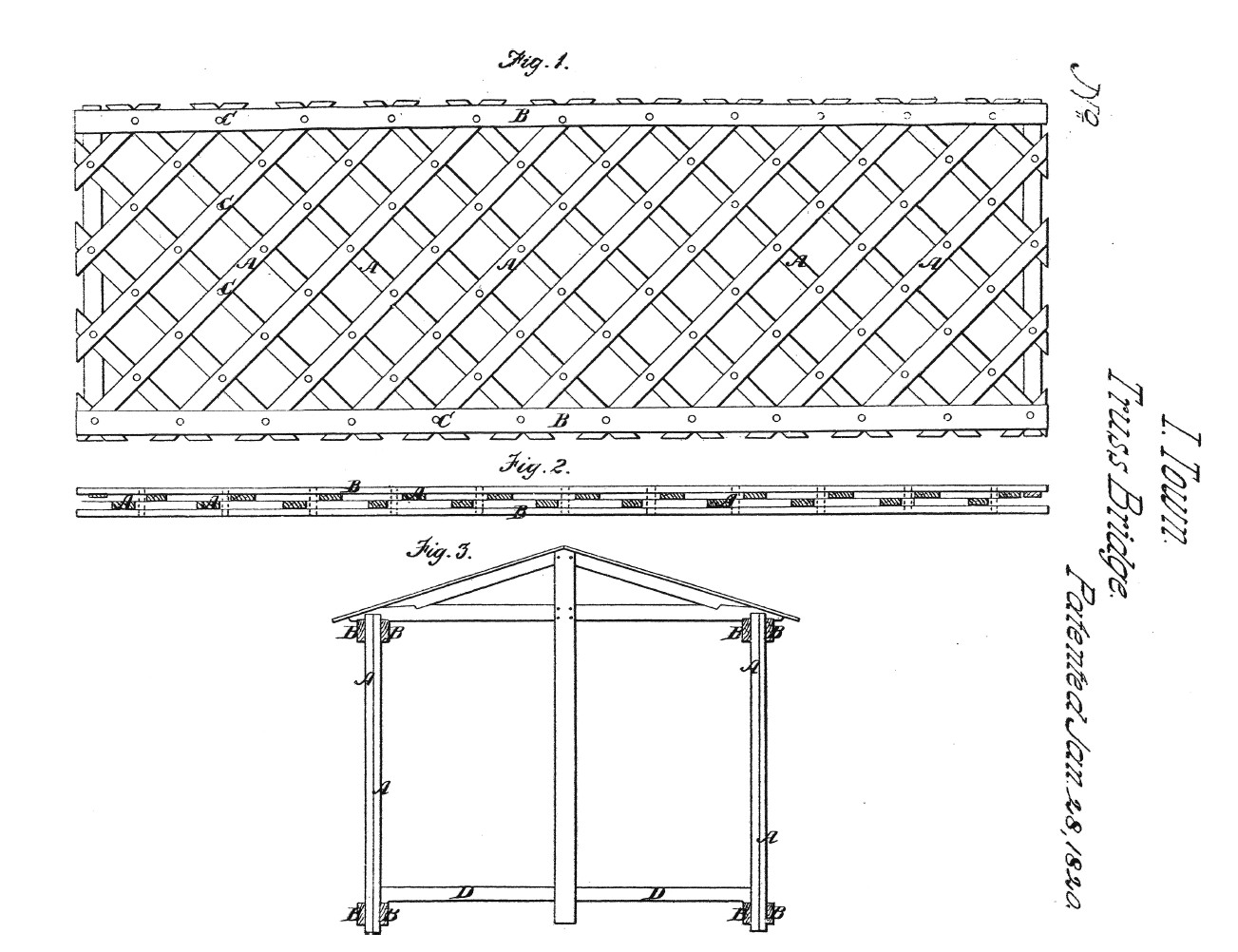
- The lattice truss bridge, patented 1820 by Ithiel Town
- Howe truss, patented 1840
- Warren truss, patented 1848
- A.J. Davis
- W. Brian Arthur
- Stuart Kauffman
- Lo-TEK: Design by Radical Indigenism, Julia Watson
- Britannia Bridge, Robert Stephenson
- Bezos’ “good bubble”
- Tom Peters’ theory of the Manhattan grid
- Structural redundancy, or the lack thereof, case in point Key Bridge, Baltimore
- Wooden lattice bridges in the US:
- Iron lattice bridges in the US:
- Bridge in Brown Township, Pennsylvania
- Northampton Lattice Truss Bridge, Massachusetts
- Bartonsville Covered Bridge
- Brown Covered Bridge
- Burt Henry Covered Bridge
- Cornish-Windsor Covered Bridge
- Euharlee Covered Bridge
- Green River Covered Bridge
- Kingsley Covered Bridge
- Newton Falls Covered Bridge, Newton Falls, Ohio
- Poole's Mill Covered Bridge
- Root Road Covered Bridge
- Waterford Covered Bridge
- Watson Mill Covered Bridge
- Windsor Mills Covered Bridge
- Worrall Covered Bridge
- Frankenfield Covered Bridge
- Uhlerstown Covered Bridge
- Van Tran Flat Bridge
Pierce County, Nebraska