


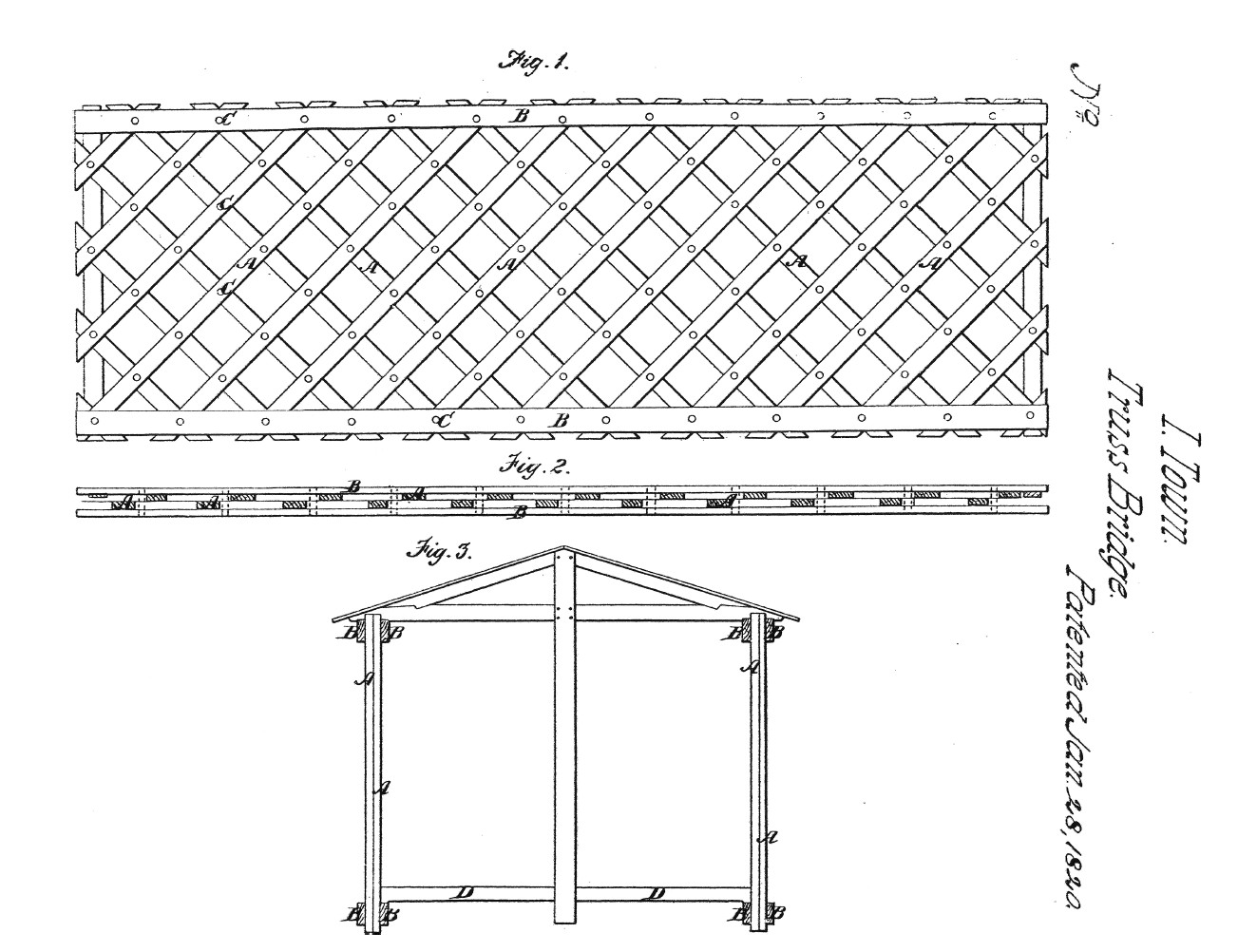
How did builders shift from the erection of one structure at a time to the mass construction of hundreds of thousands? "American Bridge" explores a radical reimagining, a new way of building that introduced uniformity and modularity on a global scale while enabling the connectivity essential to the rise of the nation-state. With tales of bygone infrastructure and astonishing images, Gregory Dreicer, our guest on the first episode of Season 6 of "Unfrozen" (also the first episode to feature two Gregs!) spans a deep gap in history. He tracks the transnational creative flows that propelled the development of beam, truss, and skeleton frame as industrial essentials, shaped by classical, capitalist, techno-utopian beliefs that still animate engineering and architecture.
Show Notes
Intro/Outro: “Lattice,” by Tipper
--
Discussed:
- American Bridge: Reinventing Building, Making History
- Gregory Dreicer
- Lattice bridge patented 1820 by Ithiel Town
- A.J. Davis
- Nationalism and national character (e.g. “American,” “British”)
- Wooden bridges and iron bridges
- Evolutionary analogies (“technology evolves”)
- Evolutionary hierarchies
- Industrialization myths
- Industrialization of construction
- Invention of the beam
- Uniform parts
- Knowledge types: “technology” and “science”
- Howe truss, patented 1840
- Warren truss, patented 1848
- Invention as networked, transnational process
- Lo-TEK: Design by Radical Indigenism, Julia Watson
- Britannia Bridge, Robert Stephenson
- Railway boom and Bezos’ “good bubble”
- Railway construction labor
- Tom F. Peters’, Manhattan grid, redundancy
- Structural redundancy and Key Bridge, Baltimore
- Iron as symbol
- Covered bridges
- Techno-utopianism
- History of engineering and design
- Myth of abundance of wood in the US
Listen On
Also In Season 6
-
132. Sound and Architecture in Harmony
Unfrozen started as a blog in 2011, using for its title the quote from Johann Wo -
131. Chatting with Barbarians
Forgive them, for they know not what they do. We have already passed the point w -
130. Build or Die
In this episode, Unfrozen continues to focus on a topic of intense and contempor -
129. Chain Drain
The AECO (architecture / engineering / construction / operation) supply chain is