



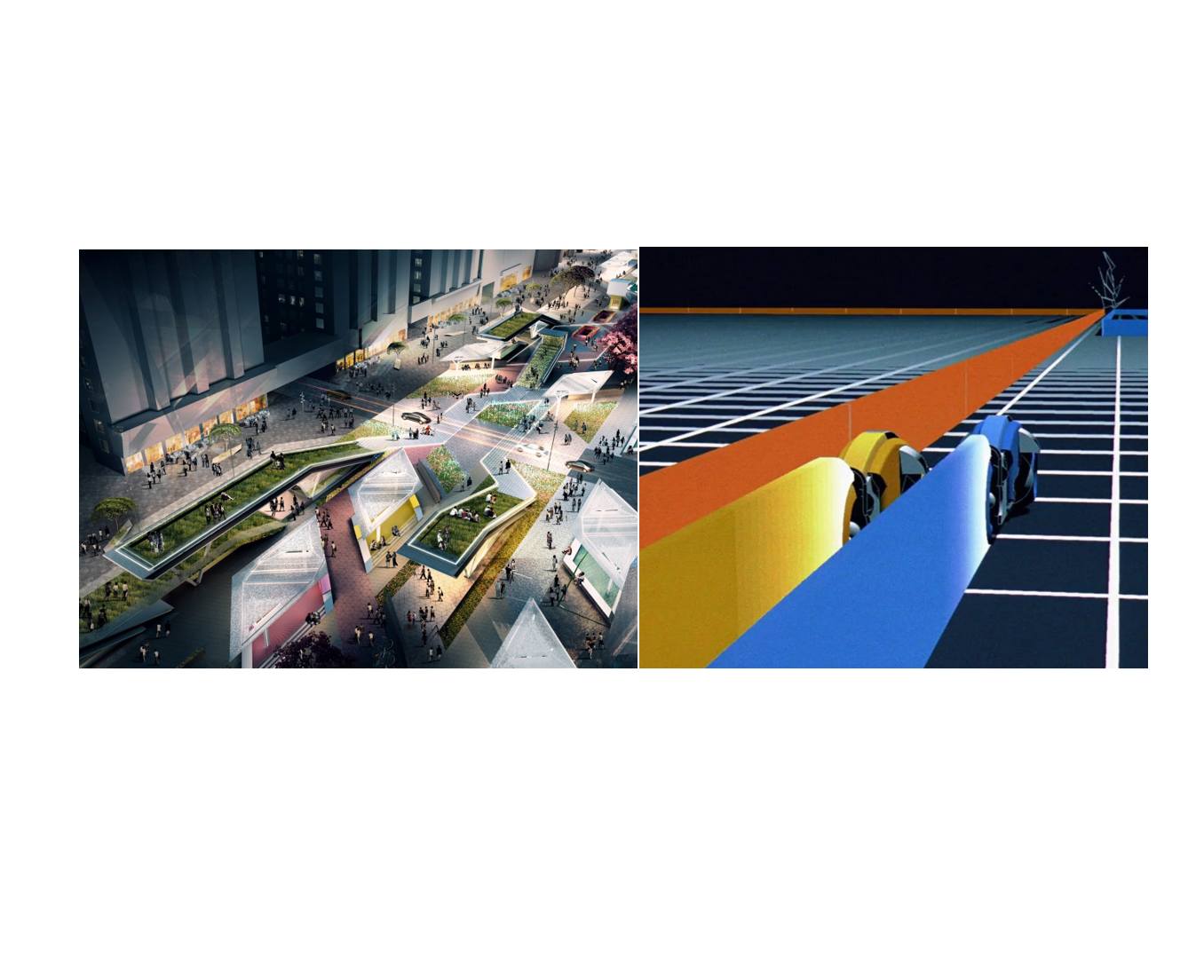
It may seem intuitive that the worlds of cinema, art, architecture, production and exhibition design are interwoven and can be mutually reinforcing and enlightening. But very people work at the nexus of all of these. Laura Belevica, director of exhibition design at the Academy Museum of Motion Pictures, is one of them. Laura's path runs from Latvia to architecture practice in Shenzhen, through children's book illustration, animation color scripts and visual pitch work for cinematographers, to designing some of the Academy Museum's most talked-about exhibitions. Along the way, TRON keeps showing up: as inspiration for a circuit-board streetscape in Shenzhen, as a highlight of the museum's cyberpunk exhibition, and in a documentary that led her to one of the original film's animators.
Show Notes
Intro/Outro: “It'll be Just Like Tron,” by The Cooper Vane
==
Guest
Laura Belevica is a Latvian architect, illustrator and multimedia artist based in Los Angeles, and Director of Exhibition Design at the Academy Museum of Motion Pictures. She studied economics and business administration in Riga and earned a Master of Architecture in the United States before practicing in Shenzhen, China.
- Laura Belevica, CVU people profile
- Laura Belevica, personal website
- CONNECTEDkind, the drawing initiative Laura launched during COVID-19
- Laura Belevica, contributor page, Orion Magazine (Shadow Series)
--
Academy Museum exhibitions discussed
- Academy Museum of Motion Pictures
- John Waters: Pope of Trash (Sept 17, 2023 to Aug 4, 2024), curated by Jenny He with Dara Jaffe. Laura's first exhibition at the museum.
- Cyberpunk: Envisioning Possible Futures Through Cinema (Oct 6, 2024 to Apr 12, 2026), featuring an original costume and concept art from Tron (1982).
- Color in Motion: Chromatic Explorations of Cinema (Oct 2024 to July 13, 2025), where the ruby slippers sat at the end of a rainbow of costumes.
- Barbie to Anna Karenina: The Cinematic Worlds of Sarah Greenwood and Katie Spencer, curated by Michelle Puetz; the museum's first exhibition centered on production design.
- Stories of Cinema: Identity, the costume-focused gallery where the ruby slippers are currently displayed.
- The Horror Show (Sept 26, 2026 to July 25, 2027), the "big exhibition we just opened" that led Laura to Caligari.
- Dorothy's Ruby Slippers, Academy Museum collection
People
- Sarah Greenwood, production designer (Barbie, Anna Karenina, Beauty and the Beast)
- Katie Spencer, set decorator and Greenwood's longtime collaborator (see the exhibition page)
- John Waters, filmmaker
- Joseph Kosinski, director of Tron: Legacy, trained in architecture at Columbia GSAPP
- Bill Kroyer, animator and computer image choreographer on Tron (1982)
- Glenn Vilppu, drawing teacher to generations of animators and subject of Laura's documentary
- Joseph Campbell, mythologist, author of The Hero with a Thousand Faces
- Ken Adam, production designer of the War Room in Dr. Strangelove
Buildings, places and firms
- Shenye TaiRan Building, Shenzhen, The Skyscraper Center (CVU). Completed 2012; 10 Year Award of Excellence, 2022.
- Shenye TaiRan Building / ZHUBO DESIGN, ArchDaily
- CVU Awards recipients
- Hua Qiang Bei Road / WORKac, ArchDaily: the 2010 competition-winning scheme by WORKac with Zhubo, ARUP and Balmori Associates
- Hua Qiang Bei Street Urban Regeneration Proposal, paper by Laura Belevica and Aaron Robin
- Huaqiangbei reopens with high-tech dazzle, EyeShenzhen (2017)
- Zhubo Design, Shenzhen architecture and planning practice
- Times Square, New York
- Solomon R. Guggenheim Museum
Films
- Tron (1982), dir. Steven Lisberger
- Tron: Legacy (2010), dir. Joseph Kosinski
- Barbie (2023), dir. Greta Gerwig
- Anna Karenina (2012), dir. Joe Wright
- Beauty and the Beast (2017), dir. Bill Condon
- The Cabinet of Dr. Caligari (1920), dir. Robert Wiene
- 2001: A Space Odyssey (1968), dir. Stanley Kubrick
- Dr. Strangelove (1964), dir. Stanley Kubrick
- The Wizard of Oz (1939), dir. Victor Fleming
Topics and further reading
- German Expressionist cinema and its set design
- Cyberpunk
- The hero's journey
- Seeing the Digital World, in Hollywood: Joseph Kosinski on Columbia and digital tools, Canadian Centre for Architecture
- Bill Kroyer, ACM SIGGRAPH History Archive
- Dr Strangelove: in praise of one of cinema's great film sets, Den of Geek
- Step into Barbie Land and Beast's castle at this museum exhibition, LAist
Show Transcript
Daniel Safarik 00:31
Hello and welcome to Unfrozen. This is episode 135 at the movies. I'm Dan Safarik. Our guest today is Laura Belevica. She's the director of exhibition design at the Academy Museum of Motion Pictures in Los Angeles. Welcome, Laura.
Laura Belevica 00:49
Hi, I'm so excited to talk to you today.
Daniel Safarik 00:53
Laura has an interesting story. She originally came from Latvia and was working as an architect in China when I had the pleasure to meet her, and then she got into illustration and eventually this role at the Academy Museum. So take us on that journey.
Laura Belevica 01:12
Well, first of all, I I've always been interested in storytelling. I I actually as I was working as an architect in China, was also dreaming about being more active in arts, and when my children were born, decided that I was courageous enough. If I had, if I could, if I could make a human being. I could also be brave enough to put my own art out there in the world. So, my first steps were through children book illustrations. So I started working on on illustrating my first children's book, published that, and that led to an invitation to do a color script for animation studio in Latvia, and part of that was you're entrusted with a script. And I remember that first day when you when I received this document that I never I've never seen a script before. And in order to do a color script. You kind of have to figure out the story arc of the of the film, and I dove right in and realized I had a lot to say. I discovered Joseph Campbell, and had a lot of notes for the director, even even connected to the characters' dialogs and so not only color world building in general and I realized I had this this type of mind that could see beyond the words of what was or could have been expressed through story or through the visual world and as I was designing in in China in real life, I looked back at that and realized I was doing pretty much the same thing. Because as a foreign architect in the world at the time that I was operating in, oftentimes I would work on the pitches or early concepts. So my presentations, a lot of time was spent on getting the client to the point of understanding why we need to build certain things before I even even showed the design. It was a lot of stories, a lot of concepting, a lot of imagining the future. So in a way, it's very similar, and then from that experience working in animation with ColorScript, and after moving to Los Angeles, I was looking for ways I could continue doing that because because I realized I'm very interested in world building that it goes beyond the real physical world because it seemed a lot more vast. My last project in China was an urban redevelopment project that was at the heart of Shenzhen, where we were living at the time, and it was a massive public space regeneration project that had to had to do with. It was very complex, very political, so I came up with a very kind of overarching big identity concept for how it would become the landmark public space of Shenzhen, I was looking in New York and the Times Square and how that how that was the heart of of of the city, and tried to imagine what would that be for Shenzhen, and somebody mentioned to me. That I should look at Tron.
Daniel Safarik 05:20
Okay, that was a little gratuitous. That was a band called The Cooper Vane that I was in. We recorded a song called "It’ll be Just Like Tron." I promise it won't happen again.
Laura Belevica 05:30
That changed, or actually, that didn't change. That actually just like kind of had this this moment of like realizing, wait a second, I know. I know now, kind of what what I need to do because at the time, this place that I was looking at it was a one-kilometer-long public space that suddenly was available only because of large infrastructural upgrade. The city was rebuilding, adding metro lines in this very chaotic commercial industrial part of city that was well known for its factories, and that's where one of the largest skyscrapers was built in the in in the city, and it was very, very in the minds at the time, very much like this this software techy part of like a technology hub, but there was no Public space, or like an intentionality about how the how the public space was was going to look like, and because of this infrastructural upgrade and the the decision the city made that it will now will also house a large shopping mall underground. Essentially, they decided to revamp that whole area. And by the time the project landed on my desk, the international competition had happened. The firm I worked at the time had won the competition, but the the original concept that won was no longer possible because of all the infrastructural needs of the at the time for the metro. So when I got the project, it was a it was essentially a roof of a shopping mall at a ground level because we had metro station, metro exits, shafts, urgent emergency exits, and now it was really sort of figuring out a way to make something like make something iconic, knowing that there's some things you have already predetermined. And when I watched Tron Legacy, I it inspired me to think about the digital world and. and I knew that I'm working in an environment in a city that is in a way very very forward thinking. They were hoping to I they were hoping to put Shenzhen on the map as an innovation a city that thinks about innovation, thinks about technology, and moving from hardware to software. So I decided we have to rethink and and find a way to instead of fixing what this identity is create a sort of a grid, where the future could be reinvented and and upgraded. So in a way, the city and the groundscape imagine could become if you could think of it as as this chip, or like the infrastructural first layer, the software or the public spaces or or environments could then keep evolving, but you would still have some sort of logic underneath. So my my my inspiration also came from the fact that I discovered that the director Joseph Kosinski actually was trained as an architect. So when I when I came to LA, that was another reason why I thought if architecture, if I if I am now thinking about what I could do. In in LA, suddenly architecture was no longer just one option. Now that I have done storytelling, I've looked at and done some work in in in animation. I was looking for ways to use my my experience in world building and storytelling, and I started doing freelance work for cinematographers, looking at scripts. When they, for example, when they receive a script and when they're trying to get the project, oftentimes they get interviewed by the directors and the producers, and they have to create a pitch for what they see in the story, and I became this sort of like secret additional team member behind the scenes for them, because what I would do is I would look at the script, and I would create a visual visual breakdown of the symbols or the themes that I could see in the in the story. I'm fascinated about ways we could enhance the story through visual ways, and it helped them to create a unique angle on how they were interpreting The film, and so it combines storytelling, it combines cinematography, and and imagination in a way because all of all of that all of it is really connected.
Laura Belevica 11:34
I also realized that Joseph Kosinski, I saw an interview of him explaining how he decided to go to Colombia at the time, because when he decided or wanted to pursue architecture, Colombia was one of the early adapters of Visual effects and and technology that was typically reserved for automotive industries, and they were putting at the time this very expensive tool, visual development tool, in the hands of architecture students. So apart from just with CAD and and drafting, there was this what we think is normal now at the time was was cutting edge, and that led Joseph Kaczynski to go and pursue architecture in that specific school. And then he, after graduating, never really pursued architecture, but wanted to explore the intersection between film and architecture, and now I see that it's really also for me it it's another example of that because in my current job I am using I'm using the language or architecture, visual storytelling is happening through space as visitors walking through the exhibitions. Architecture design in general becomes this way of telling stories, and my job is really to to translate the curatorial vision for an exhibition, which is essentially like what a director or screenwriter would do in film, curatorial intent really is what guides it.
Daniel Safarik 13:34
Okay, so you finish with this complex architectural assignment, you find yourself at the Academy Museum, and your first assignment is my
Laura Belevica 13:43
first exhibition. Actually, was John Waters,
Daniel Safarik 13:46
and if I have this part right,
Laura Belevica 13:48
which is
Daniel Safarik 13:50
you had never seen a John Waters movie before being assigned this exhibition,
Laura Belevica 13:54
that is correct. I had to. I think that it actually gave me coming as an outsider to an institution, but focusing on somebody who is an outcast, as an independent filmmaker, actually gave me a lot of courage and freedom to explore and embody that type of attitude to what the film, his films warranted. Now that they were going to be celebrated in exhibition, it really really helped because now as I was learning about him and his philosophy, his approach to filmmaking, and even self promotion, and and and even just approach to to to life, I realized that it can be helpful for anyone who is trying to do something new. I I was coming from architectural world, but I had a lot to learn. My my learning curve was had to be very very fast. I joined Academy Museum in let me think. I think it was 2021, actually January 2023. The museum opened in 2021. I joined in 2023 in January, and we opened John Waters that September. So in nine months, I worked side by side with the curatorial department, Jenny He and and her team and my team on the design side, to to create this world. And each gallery represented one of his films, and and it was a interesting and really rewarding experience because here he was as a living artist filmmaker, being celebrated in this way. And then, what was fantastic was that eventually I was. asked to design an exhibition on cyberpunk, and one of the highlights of cyberpunk exhibition was Tron, the original Tron from 1982, and here it is again. In fact, Tron has been following me throughout. I didn't didn't mention this before, but the original Tron film came up as I was working on my documentary even before joining Academy Museum. When I moved back to LA, I accidentally or or sort of without a big plan, started a documentary following my uncle-in-law, who is an art teacher, Glenn Bilpo, and he's in has taught many many animators in in and when I was interviewing some of his students, I came across Bill Croyer, and Bill Croyer is the original animator on Tron, 1982, and he knew Glenn, and he said that what he was working in in even though it was about a digital space and about the imaginary world of technology, really the basic tools of hand-drawn craft is what needs what an animator needs, and the basis of that is really we're going back to hand, hand and craft and and drawing and art. So that's been also really interesting to see that at the end of the day, no matter how far we move away from from the basic fundamentals and talk about cyber worlds or future. It's all comes back down to the hand and the human touch. And and as I was working on the exhibition about cyberpunk, there were also really interesting interesting discoveries for me because I had to watch all the films, and I realized cyberpunk as a subgenre of of science fiction really was trying to find that humanity in the in the dystopian worlds. And the filmmakers, even though right now you look at those films, they are seem like they are current, they were made in the 70s.
Daniel Safarik 18:46
Yeah, I think one of the really enduring things about the original Tron movie was that it was done all with hand renderings. There was no CGI, and it was about even though it was about literally being sucked into an arcade game, into this digital realm, there's something very like authentic and handcrafted about it. Strangely, that I think really sticks with people. That must have been so fun to to bring to life alongside all these other cyberpunk classics. To say nothing of bringing John Waters's world to life. My gosh. Do you look back at your architecture work differently now that you've been doing exhibition design around cinema? It
Laura Belevica 19:34
was really interesting for me to go back to Chicago. I had already since then left China. Had already started working in LA as a freelance book illustrator and and conceptual visual artist in film, and even during COVID started an art initiative called Connected Kind. Where I was working with, kind of trying to figure out a way to connect people who were disconnected. It was based in my own art method that I had developed because I was, I felt, I felt like moving from an urban, very dense environment in China to very quiet life in Los Angeles felt like I needed to put some some this creativity somewhere. I had I had I was raising my children, staying at home at the time. I I had just given birth to my third baby, my third child, and so this drawing method was just a way to channel my my own creativity, and and then when COVID happened, and launched this way of drawing for other people, so they could feel like they have a way of reframing their their constraints and crisis, because connected kind was really based in this way: understanding that no matter what happens, there's a way you can reframe and rethink the way you look at it. And it was inviting people to go outside in nature and and and take photographs and draw around the shadows of natural objects, and then imagine receiving or hearing the news that a building you've designed has now received a major, major acknowledgement, and then going back to that world and and and speaking about that building and and and even just understanding that what I was thinking back at the time in the way I thought about the typology of an urban environment and how an office building could become a hub for the community that lives in a way lives at work, you know, because our office we spend so much time at our jobs that it is our life. It becomes our life. And when I was working on that building, I was really conscious about how isolated we are in our office buildings or typical towers, and how the real only point of interaction is the elevator or the lobby, and everyone everyone goes to their individual floors. So that building was in a in a way a departure from that. But at the very heart of the design was really community and thinking about how human beings Could feel like they are connected.
Daniel Safarik 22:45
It's important to interject here and distinguish two projects Laura is talking about. The Huachong Bay Street Redevelopment Project in Shenzhen is the urban design project that embossed circuit board-like strips onto the pavement over a subterranean shopping mall and metro station, which for all the world looks like Tron, the Shenyue Tairan Building, also in Shenzhen, is an office building with stepped setbacks that rise in a helix pattern around a courtyard, with each rooftop planted with greenery. It was completed in 2012, and it won the 10-year award from my organization, the Council on Vertical Urbanism, in 2022, Laura came to Chicago to accept the award. Four years later, we're tying it all together.
Laura Belevica 23:30
Exactly, and the the building itself is actually I originally pitched it as a mountain because the develop it was going to be the flagship building for the developer, whose name happens to be also related to mountain Tairan. Actually, means as strong as a mountain. So when I decided that it could be this landscape in a way, that where the building is holding this this ecosystem courtyard. typology seemed the best option because Shenzhen is hot, and if you create a courtyard, you are able to create a public space on the on the on the center of of that real estate. Another benefit from having a courtyard building is that you, as you work in one side of it, you're aware of the people around you, and you're still in the same, you're still in the same place. And so, essentially, instead of being one skyscraper with one elevator core, it actually had four elevator cores, and in the center of the courtyard, there was actually also an access to the parking lot, because I was hoping that people wouldn't just park and go straight to their respective elevator course. They would have an alternative option of going to the courtyard, and then walk on the ground level. To their office, and then of course stepping back came from the location because one side of the building could be lower and and be more friendly to the to the local scale, while the other was facing a very intense highway, so it could become this icon on on the kind of larger scale.
Daniel Safarik 25:31
Speaking of icons and working at different scales, the exhibit that I saw when I came to visit you in Los Angeles was about Sarah Greenwood and Katie Spencer, the production designers behind none other than Barbie, as well as Anna Karenina and Beauty and the Beast. That had to be an incredible experience.
Laura Belevica 25:55
It was incredible. It was life changing because it was our first exhibition that has in our museum that has ever highlighted or celebrated, or centered around production design, we were very, very intentionally trying to figure out a way to tell the story about these incredible artists, Sarah Greenwood and and Kenny Spencer, and they have worked and collaborated over 25 years. Have set among the and it's a team. They always work together, and they have seven Oscar nominations. and And their their work is incredible, and the exhibition was centered around three of their films: Anna Karenina, Beauty and the Beast, and Barbie. And what was really special about this exhibition also was that they were wanted and were very much involved, which means that I got to spend time with them. I start to understand the way they think, the way they work, and even though at first it seemed like a daunting task to design for designers, and they keep talking about how how hard of a job I had, I think I had the best job because I was there, kind of witnessing that their brilliance and their curiosity, and realizing that my curiosity and my imagination really is how these worlds happen, and how much production designers actually shape the production and the choices of of that you end up seeing on screen, and a lot of times because, and especially when it's done well, production design receipts, and you are immersed in the story and you're living the life through the characters on screen, it's often overlooked. People don't know what this even is. What is production design? And when I asked them, even they said it's tricky because it's not really the objects that they make; it's the journey they take from a script to the screen, and the objects really are like the traces of that. So, in a way, at a museum, we take those materials. Often in exhibitions, we create worlds around those objects. But here, they were telling us that objects were not the story, and so it was the: how do you tell a story through space about creative process, about the iteration, about the the fact that the initial sketch is as important for them as the final result. The 1000s and 1000s of images that they go through in order to land on a specific idea, the conversations and meetings they have about a single color. Like for Barbie, they told us if you get anything, you can have any color as long as it's pink. Exactly, you got to get the pink right. And you know, for me, that was actually also a really right timing because I've been thinking about exhibition design and how it really is there to serve the curatorial content and the original objects. We can be really, really creative and bold in our decisions, but really the content of the exhibition really is the story and the objects. We have to always be at the sort of in this world where we elevate, enhance the experience for the visitors for them to go and watch the actual original film. So when the visitor goes through our exhibitions, if they think that now they want to go back and watch the film because they've gleaned about something that they had never thought about, or they they have been reminded about a film that they have maybe watched a long time ago, then we've done our job well. Production design and exhibition design in that sense is very very alike, because we we are become invisible when we do our job well. And when they understood that is why why I was so invested in telling their story, they then we got all very much on the same team, and they were sharing everything gave us all the information we needed, and also guided us. So it was very, very rewarding. And also, the biggest, biggest challenge was how do you involve the visitors in their process because they play all, and they of course there's all these teams that they work with. They've said that many times.
Laura Belevica 30:40
There are nothing without their teams, and one of their main main goals of this exhibition was to tell people that anyone has place in film. There are all these different careers you can have in film. It's an inclusive industry, and they were hoping that we would show that in the exhibition, so they had that as as part of the motive. They they wanted to show their office space, what what they call a blank space, where they sit down and they create.
Daniel Safarik 31:15
That was one of the more interesting aspects of the exhibition. I mean, not only did you have the Barbie House, the weird Barbie House, and of course the Mojo Dojo Casa House of Ken, and the cul-de-sac that everybody lives on. You also had a mock-up of the creative space where the production designers would do their work, and it was like a kind of invitation to be part of the creative process yourself as a visitor, which was very different from the potentially land commercial orientation that you might expect a Barbie exhibition to do.
Laura Belevica 31:51
Also, they wanted to peel back the curtain and show that the production designers are artists working in an environment with with all this complexity and budgets and schedules and and physical models and and and their office is a meeting space for all these people coming together and figuring things out on the ground and pivoting on finding solutions when you have suddenly a situation like Nana Karenina where you think you are making the movie in Russia, and you just you realize unless you figure out how you can do it in a studio in UK, it's not gonna happen. And so they pivot and they create a movie set in a theater, derelict theater, and that is part of their their creativity and their ability to think outside the box, in a way, and I think that the it was really hard, and actually, to even distill, like you said, to distill those imaginary worlds. There was the fairy tale of Beauty and the Beast, which is set in 16th century France. There's the Russia, 19th century Russia and Barbie Land, but then we also had this reserved the space for their office. What I realized is that because we had them on our team, they were able to help us and help us guide what is essential about each of these films. We let the objects that we picked that the curator Michelle put picked for this exhibition to tell that story, and you know how in Barbie, she goes from from her perfect world to the real world, and she goes through different space time continuum and jumps the different worlds, finally to discover her maker, that's what I realized the visitor could journey could be going from Anna Karenina from Russia to France and Barbie and Beauty and the Beast to Barbie, and at the very end the blank space, this office recreated office space, became a moment where where the visitor could find or discover the creators behind these films, so this, in a way, was became a really important, integral part of of of the sequence of the films, and I think it's very important to discover that in any of the exhibitions, and that's what we try to do through our various iterations of our of our shows. We try to try to explain the craft and show the human touch and the stories behind these films, so that you gain a better understanding and appreciation of what goes in Making them,
Daniel Safarik 34:43
yeah. I mean, the framing of a an exhibition, you know, is of course done in 3d. You're translating an architectural skill, a 3d design space skill, and trying to make sure that the linear narrative that is inherent to film isn't lost. But you're not just. Retelling the story of the film, you're telling the story of the making of the film, and you're trying to retain the themes that the film is getting across. And yet, you also want to take people behind and through the scenes, quite literally. It's it's got to be a really interesting way to think about space.
Laura Belevica 35:23
And also, what's really interesting is that our we've discussed this actually with Sarah and Katie. They come; their background comes from theater, and so some of the tools they use in film actually are in-camera tricks borrowed from theater. And what we're doing in exhibition is also kind of a scenography, but the visitor becomes the cinematographer. Their their eyes, the way they and where they focus, is essentially framing their experience. And so, suddenly, we have. You would think, yes, we perhaps have less control because we're no longer in the frame. We're not deciding what you see, but I also think it's there is a positive and very very interesting moment when by surrendering control you actually let the visitors be immersed physically through their bodies in this environment, and if we start to think through design about ways they could be affected through the things that they see but also do, and the memory you can make as a visitor by encountering something, learning about it, and then also applying that, then you suddenly have a lot more. It's a lot more tactile. And what we did with Barbie actually was interesting, because the last space in that exhibition is an office space, and because Sarah and Katie actually have this mentality that their office is this meeting hub for everyone, and their intention to bring everyone and feel welcome, and also see how anybody could become involved in this industry. We decided it was very important to create that moment for the visitors, so we extended their desks, so the people who came could actually sit down in their office space and play, and we had an interactive made specifically for that purpose. Where it was so intuitive, it was like a dollhouse with a with a press with the pressing of a button. You could switch the background of what was the view outside the dollhouse, and we had these small props and furniture pieces, and without any explanation, people intuitively knew what to do with that, and that was wonderful because it related back to the Beauty and the Beast, where she, when Belle comes to the castle and she's sitting down at the desk, and all these objects are telling the story about who, who is, what's going on? So in a way, these little tiny props. Even though you were at the time sitting down and you're playing, in a way, what we're doing is subliminally telling the story of production design and how it relates to clay and curiosity and experimentation. And the backdrop of that is the the setup of of blank space? We bought the furniture to match to the setup that they always have on set. But Sarah and Katie came and they dressed that environment with the original papers, sketches, props, jackets, even even even little trinkets that they had on their desks. It was literally coming from the set of of Barbie, and so that's that's kind of the environment with them talking in the background because we also had an interview that we we were showing in that space.
Daniel Safarik 38:59
It's interesting. The academy, you know, originally came about to legitimize cinema as an art form, and so this museum is part of that legacy. And I think it's interesting to see how that's developed alongside museums that are more traditional, like say the Guggenheim, doing these blockbuster-type exhibitions that some people have criticized as being sort of too lowbrow, and so you have this interesting opportunity at the Academy Museum to do something that is quite different, where you're actually introducing people to a craft, showing them that they could have a career in film, and it's not just about regurgitating or re-consuming a narrative that's already been crafted and asking people to pay to see it again, it's it's a very different kind of message. It's quite clever.
Laura Belevica 39:52
Absolutely, and in a way, actually, that relates exactly back to the mission. And vision of academy, we we as institution we are dedicated to celebrate the excellence of the film, but the power of the medium, but also inspire people to come and and and and share the love of cinema storyteller, but also be become part of that world, and what we are doing with our exhibitions is really celebrating the people that make these films, and that is why I find it extremely satisfying to do my job because when I work on these exhibitions, I get to learn About these incredible people that oftentimes dedicate their lifetimes in advancing some something that they are passionate about. So it really like every exhibition is like a like a semester in film school, but also in life, every exhibition like transforms how I think and what I what I do.
Daniel Safarik 41:11
Okay, the inevitable question: If there were a film that you could that you would dream to create an exhibition of, what would it be? And secondly, is there a film whose production design you find so compelling that you would like to see it realized in real life as an architect? In other words, you'd like to design that world into existence.
Laura Belevica 41:39
Well, I have I have a lot of films that I absolutely love. For if we're talking about specifically design or production design, I could name quite a few. I recently, because of the horror show that was my last big exhibition that I we just opened, I discovered the cabinet of Dr. Caligari, and how how incredibly advanced at the time this film was in terms of its set design. The German expressionists and that whole world was very much experimenting with how we could create spaces on screen that actually reflect the emotional states of the characters, which then becomes the way that we design or think about the world of, or even any any any film in a way is is trying to tap into the emotion, even the choice of music, and and so to me that is a very iconic example. Of course, one of my favorite films is 2001: Space Odyssey, and I also absolutely love Sir Ken Adams' work and Doctor Strangelove and his War Room. It's hard to imagine an exhibition or dream about exhibitions. It's like when you when we when you are in the world of exhibition design. I'm I'm. I'm I'm I'm absorbed so much about the the in the world of what I'm doing that I'm like every and actually because of that I don't I don't have like a list of exhibitions I would love to make because each one has its own unique it's like a Pandora's box of things that I can discover, and I I think that's because I get to work with incredible people. We are I mean I'm surrounded surrounded with with so many excellent thinkers and makers and and every exhibition leads to something completely unexpected, and the curatorial or even just the way a curator thinks is fascinating, and the way they frame their story. For example, we've we've had an exhibition, one of our crown jewels of Academy Museum's collection is ruby slippers, and we have we have exhibited this important object in so far in three different iterations at the museum because it's very popular object. People these are
Daniel Safarik 44:41
Dorothy's ruby slippers.
Laura Belevica 44:43
Correct from Mizor Davaz, the ruby slippers. But because it is surrounded by a three by a narrative, every time a very different narrative, the design ends up being very different. In the one of the iterations, it was in an exhibition. Called Color in Motion, which I worked on, and we were placing Ruby's slippers in the context of a color color exhibition in cinematography and and the choices of colors. So then it became a a gallery that was celebrating a rainbow, a whole set of rainbow of colors with costumes from all these different films corresponding to different colors, and then Ruby Slippers was the at the end of the rainbow with with with the sparkle, and then as you can like if you look now, Ruby Slippers is part of our identity gallery, and and it and we are seeing it as part of the work of costume designer and how that is how how identity of character is shaped by the choices of a costume designer, which is completely different angle. So you can take you can take an object and through your own research, could look at it at a completely or the narrative that you set it, or the context that you set it with within, and come up with a completely different solution in terms of in terms of the encounter with the with it.
Daniel Safarik 46:22
Well, I want to thank you for taking us on this journey, cross-disciplinary, from architecture, illustration to cinematography to exhibition design. It's been fun to go on this ride with you.
Laura Belevica 46:36
Thank you so much, and thank you for giving me an opportunity to look back and and and and see this see this journey with new eyes too.
Daniel Safarik 46:47
That's Laura Belevica, head of exhibition design for the Academy Museum of Motion Pictures in Los Angeles. And because Tron has been omnipresent through this entire conversation, and because it's my podcast, I'm going to close out with an extremely gratuitous drop of the track. “It'll Be Just like Tron” by the Cooper Vane.
Listen On
Also In Season 6
-
134. The Imperfect City
When we want to talk about improving cities, it's essential that we approach the -
133. Regen360
Driven by the same relentless passion that produced the world's most prominent e -
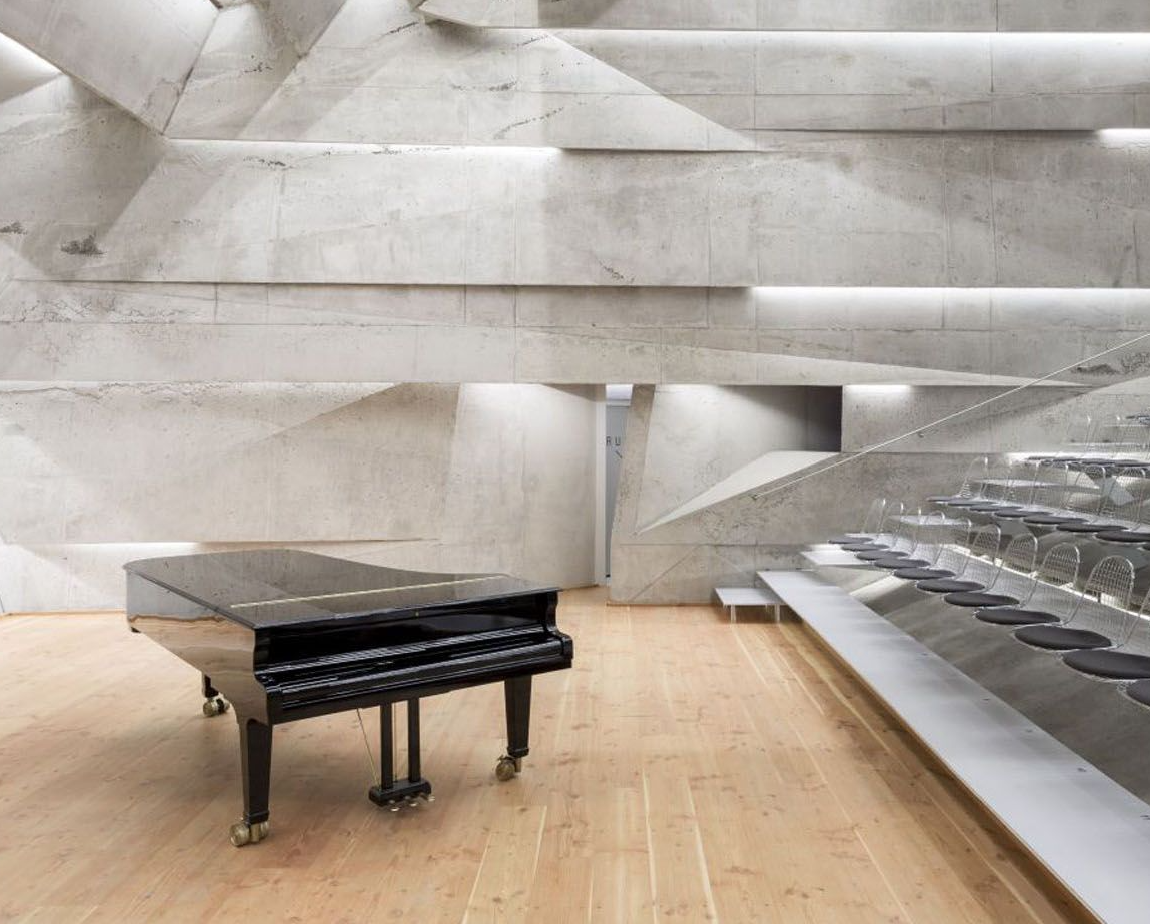
132. Sound and Architecture in Harmony
Unfrozen started as a blog in 2011, using for its title the quote from Johann Wo
Transcript
Daniel Safarik 00:31 Hello and welcome to Unfrozen. This is episode 135 at the movies. I'm Dan Safarik. Our guest today is Laura Belevica.
She's the director of exhibition design at the Academy Museum of Motion Pictures in Los Angeles. Welcome, Laura. Laura Belevica 00:49 Hi, I'm so excited to talk to you today. Daniel Safarik 00:53 Laura has an interesting story.
She originally came from Latvia and was working as an architect in China when I had the pleasure to meet her, and then she got into illustration and eventually this role at the Academy Museum. So take us on that journey. Laura Belevica 01:12 Well, first of all, I I've always been interested in storytelling. I I actually as I was working as an architect in China, was also dreaming about being more active in arts, and when my children were born, decided that I was courageous enough.
If I had, if I could, if I could make a human being. I could also be brave enough to put my own art out there in the world. So, my first steps were through children book illustrations. So I started working on on illustrating my first children's book, published that, and that led to an invitation to do a color script for animation studio in Latvia, and part of that was you're entrusted with a script.
And I remember that first day when you when I received this document that I never I've never seen a script before. And in order to do a color script. You kind of have to figure out the story arc of the of the film, and I dove right in and realized I had a lot to say. I discovered Joseph Campbell, and had a lot of notes for the director, even even connected to the characters' dialogs and so not only color world building in general and I realized I had this this type of mind that could see beyond the words of what was or could have been expressed through story or through the visual world and as I was designing in in China in real life, I looked back at that and realized I was doing pretty much the same thing.
Because as a foreign architect in the world at the time that I was operating in, oftentimes I would work on the pitches or early concepts. So my presentations, a lot of time was spent on getting the client to the point of understanding why we need to build certain things before I even even showed the design. It was a lot of stories, a lot of concepting, a lot of imagining the future. So in a way, it's very similar, and then from that experience working in animation with ColorScript, and after moving to Los Angeles, I was looking for ways I could continue doing that because because I realized I'm very interested in world building that it goes beyond the real physical world because it seemed a lot more vast.
My last project in China was an urban redevelopment project that was at the heart of Shenzhen, where we were living at the time, and it was a massive public space regeneration project that had to had to do with. It was very complex, very political, so I came up with a very kind of overarching big identity concept for how it would become the landmark public space of Shenzhen, I was looking in New York and the Times Square and how that how that was the heart of of of the city, and tried to imagine what would that be for Shenzhen, and somebody mentioned to me. That I should look at Tron. Daniel Safarik 05:20 Okay, that was a little gratuitous.
That was a band called The Cooper Vane that I was in. We recorded a song called "It’ll be Just Like Tron." I promise it won't happen again. Laura Belevica 05:30 That changed, or actually, that didn't change. That actually just like kind of had this this moment of like realizing, wait a second, I know.
I know now, kind of what what I need to do because at the time, this place that I was looking at it was a one-kilometer-long public space that suddenly was available only because of large infrastructural upgrade. The city was rebuilding, adding metro lines in this very chaotic commercial industrial part of city that was well known for its factories, and that's where one of the largest skyscrapers was built in the in in the city, and it was very, very in the minds at the time, very much like this this software techy part of like a technology hub, but there was no Public space, or like an intentionality about how the how the public space was was going to look like, and because of this infrastructural upgrade and the the decision the city made that it will now will also house a large shopping mall underground. Essentially, they decided to revamp that whole area. And by the time the project landed on my desk, the international competition had happened.
The firm I worked at the time had won the competition, but the the original concept that won was no longer possible because of all the infrastructural needs of the at the time for the metro. So when I got the project, it was a it was essentially a roof of a shopping mall at a ground level because we had metro station, metro exits, shafts, urgent emergency exits, and now it was really sort of figuring out a way to make something like make something iconic, knowing that there's some things you have already predetermined. And when I watched Tron Legacy, I it inspired me to think about the digital world and. and I knew that I'm working in an environment in a city that is in a way very very forward thinking.
They were hoping to I they were hoping to put Shenzhen on the map as an innovation a city that thinks about innovation, thinks about technology, and moving from hardware to software. So I decided we have to rethink and and find a way to instead of fixing what this identity is create a sort of a grid, where the future could be reinvented and and upgraded. So in a way, the city and the groundscape imagine could become if you could think of it as as this chip, or like the infrastructural first layer, the software or the public spaces or or environments could then keep evolving, but you would still have some sort of logic underneath. So my my my inspiration also came from the fact that I discovered that the director Joseph Kosinski actually was trained as an architect.
So when I when I came to LA, that was another reason why I thought if architecture, if I if I am now thinking about what I could do. In in LA, suddenly architecture was no longer just one option. Now that I have done storytelling, I've looked at and done some work in in in animation. I was looking for ways to use my my experience in world building and storytelling, and I started doing freelance work for cinematographers, looking at scripts.
When they, for example, when they receive a script and when they're trying to get the project, oftentimes they get interviewed by the directors and the producers, and they have to create a pitch for what they see in the story, and I became this sort of like secret additional team member behind the scenes for them, because what I would do is I would look at the script, and I would create a visual visual breakdown of the symbols or the themes that I could see in the in the story. I'm fascinated about ways we could enhance the story through visual ways, and it helped them to create a unique angle on how they were interpreting The film, and so it combines storytelling, it combines cinematography, and and imagination in a way because all of all of that all of it is really connected. Laura Belevica 11:34 I also realized that Joseph Kosinski, I saw an interview of him explaining how he decided to go to Colombia at the time, because when he decided or wanted to pursue architecture, Colombia was one of the early adapters of Visual effects and and technology that was typically reserved for automotive industries, and they were putting at the time this very expensive tool, visual development tool, in the hands of architecture students. So apart from just with CAD and and drafting, there was this what we think is normal now at the time was was cutting edge, and that led Joseph Kaczynski to go and pursue architecture in that specific school.
And then he, after graduating, never really pursued architecture, but wanted to explore the intersection between film and architecture, and now I see that it's really also for me it it's another example of that because in my current job I am using I'm using the language or architecture, visual storytelling is happening through space as visitors walking through the exhibitions. Architecture design in general becomes this way of telling stories, and my job is really to to translate the curatorial vision for an exhibition, which is essentially like what a director or screenwriter would do in film, curatorial intent really is what guides it. Daniel Safarik 13:34 Okay, so you finish with this complex architectural assignment, you find yourself at the Academy Museum, and your first assignment is my Laura Belevica 13:43 first exhibition. Actually, was John Waters, Daniel Safarik 13:46 and if I have this part right, Laura Belevica 13:48 which is Daniel Safarik 13:50 you had never seen a John Waters movie before being assigned this exhibition, Laura Belevica 13:54 that is correct.
I had to. I think that it actually gave me coming as an outsider to an institution, but focusing on somebody who is an outcast, as an independent filmmaker, actually gave me a lot of courage and freedom to explore and embody that type of attitude to what the film, his films warranted. Now that they were going to be celebrated in exhibition, it really really helped because now as I was learning about him and his philosophy, his approach to filmmaking, and even self promotion, and and and even just approach to to to life, I realized that it can be helpful for anyone who is trying to do something new. I I was coming from architectural world, but I had a lot to learn.
My my learning curve was had to be very very fast. I joined Academy Museum in let me think. I think it was 2021, actually January 2023. The museum opened in 2021.
I joined in 2023 in January, and we opened John Waters that September. So in nine months, I worked side by side with the curatorial department, Jenny He and and her team and my team on the design side, to to create this world. And each gallery represented one of his films, and and it was a interesting and really rewarding experience because here he was as a living artist filmmaker, being celebrated in this way. And then, what was fantastic was that eventually I was.
asked to design an exhibition on cyberpunk, and one of the highlights of cyberpunk exhibition was Tron, the original Tron from 1982, and here it is again. In fact, Tron has been following me throughout. I didn't didn't mention this before, but the original Tron film came up as I was working on my documentary even before joining Academy Museum. When I moved back to LA, I accidentally or or sort of without a big plan, started a documentary following my uncle-in-law, who is an art teacher, Glenn Bilpo, and he's in has taught many many animators in in and when I was interviewing some of his students, I came across Bill Croyer, and Bill Croyer is the original animator on Tron, 1982, and he knew Glenn, and he said that what he was working in in even though it was about a digital space and about the imaginary world of technology, really the basic tools of hand-drawn craft is what needs what an animator needs, and the basis of that is really we're going back to hand, hand and craft and and drawing and art.
So that's been also really interesting to see that at the end of the day, no matter how far we move away from from the basic fundamentals and talk about cyber worlds or future. It's all comes back down to the hand and the human touch. And and as I was working on the exhibition about cyberpunk, there were also really interesting interesting discoveries for me because I had to watch all the films, and I realized cyberpunk as a subgenre of of science fiction really was trying to find that humanity in the in the dystopian worlds. And the filmmakers, even though right now you look at those films, they are seem like they are current, they were made in the 70s.
Daniel Safarik 18:46 Yeah, I think one of the really enduring things about the original Tron movie was that it was done all with hand renderings. There was no CGI, and it was about even though it was about literally being sucked into an arcade game, into this digital realm, there's something very like authentic and handcrafted about it. Strangely, that I think really sticks with people. That must have been so fun to to bring to life alongside all these other cyberpunk classics.
To say nothing of bringing John Waters's world to life. My gosh. Do you look back at your architecture work differently now that you've been doing exhibition design around cinema? It Laura Belevica 19:34 was really interesting for me to go back to Chicago.
I had already since then left China. Had already started working in LA as a freelance book illustrator and and conceptual visual artist in film, and even during COVID started an art initiative called Connected Kind. Where I was working with, kind of trying to figure out a way to connect people who were disconnected. It was based in my own art method that I had developed because I was, I felt, I felt like moving from an urban, very dense environment in China to very quiet life in Los Angeles felt like I needed to put some some this creativity somewhere.
I had I had I was raising my children, staying at home at the time. I I had just given birth to my third baby, my third child, and so this drawing method was just a way to channel my my own creativity, and and then when COVID happened, and launched this way of drawing for other people, so they could feel like they have a way of reframing their their constraints and crisis, because connected kind was really based in this way: understanding that no matter what happens, there's a way you can reframe and rethink the way you look at it. And it was inviting people to go outside in nature and and and take photographs and draw around the shadows of natural objects, and then imagine receiving or hearing the news that a building you've designed has now received a major, major acknowledgement, and then going back to that world and and and speaking about that building and and and even just understanding that what I was thinking back at the time in the way I thought about the typology of an urban environment and how an office building could become a hub for the community that lives in a way lives at work, you know, because our office we spend so much time at our jobs that it is our life. It becomes our life.
And when I was working on that building, I was really conscious about how isolated we are in our office buildings or typical towers, and how the real only point of interaction is the elevator or the lobby, and everyone everyone goes to their individual floors. So that building was in a in a way a departure from that. But at the very heart of the design was really community and thinking about how human beings Could feel like they are connected. Daniel Safarik 22:45 It's important to interject here and distinguish two projects Laura is talking about.
The Huachong Bay Street Redevelopment Project in Shenzhen is the urban design project that embossed circuit board-like strips onto the pavement over a subterranean shopping mall and metro station, which for all the world looks like Tron, the Shenyue Tairan Building, also in Shenzhen, is an office building with stepped setbacks that rise in a helix pattern around a courtyard, with each rooftop planted with greenery. It was completed in 2012, and it won the 10-year award from my organization, the Council on Vertical Urbanism, in 2022, Laura came to Chicago to accept the award. Four years later, we're tying it all together. Laura Belevica 23:30 Exactly, and the the building itself is actually I originally pitched it as a mountain because the develop it was going to be the flagship building for the developer, whose name happens to be also related to mountain Tairan.
Actually, means as strong as a mountain. So when I decided that it could be this landscape in a way, that where the building is holding this this ecosystem courtyard. typology seemed the best option because Shenzhen is hot, and if you create a courtyard, you are able to create a public space on the on the on the center of of that real estate. Another benefit from having a courtyard building is that you, as you work in one side of it, you're aware of the people around you, and you're still in the same, you're still in the same place.
And so, essentially, instead of being one skyscraper with one elevator core, it actually had four elevator cores, and in the center of the courtyard, there was actually also an access to the parking lot, because I was hoping that people wouldn't just park and go straight to their respective elevator course. They would have an alternative option of going to the courtyard, and then walk on the ground level. To their office, and then of course stepping back came from the location because one side of the building could be lower and and be more friendly to the to the local scale, while the other was facing a very intense highway, so it could become this icon on on the kind of larger scale. Daniel Safarik 25:31 Speaking of icons and working at different scales, the exhibit that I saw when I came to visit you in Los Angeles was about Sarah Greenwood and Katie Spencer, the production designers behind none other than Barbie, as well as Anna Karenina and Beauty and the Beast.
That had to be an incredible experience. Laura Belevica 25:55 It was incredible. It was life changing because it was our first exhibition that has in our museum that has ever highlighted or celebrated, or centered around production design, we were very, very intentionally trying to figure out a way to tell the story about these incredible artists, Sarah Greenwood and and Kenny Spencer, and they have worked and collaborated over 25 years. Have set among the and it's a team.
They always work together, and they have seven Oscar nominations. and And their their work is incredible, and the exhibition was centered around three of their films: Anna Karenina, Beauty and the Beast, and Barbie. And what was really special about this exhibition also was that they were wanted and were very much involved, which means that I got to spend time with them. I start to understand the way they think, the way they work, and even though at first it seemed like a daunting task to design for designers, and they keep talking about how how hard of a job I had, I think I had the best job because I was there, kind of witnessing that their brilliance and their curiosity, and realizing that my curiosity and my imagination really is how these worlds happen, and how much production designers actually shape the production and the choices of of that you end up seeing on screen, and a lot of times because, and especially when it's done well, production design receipts, and you are immersed in the story and you're living the life through the characters on screen, it's often overlooked.
People don't know what this even is. What is production design? And when I asked them, even they said it's tricky because it's not really the objects that they make; it's the journey they take from a script to the screen, and the objects really are like the traces of that. So, in a way, at a museum, we take those materials.
Often in exhibitions, we create worlds around those objects. But here, they were telling us that objects were not the story, and so it was the: how do you tell a story through space about creative process, about the iteration, about the the fact that the initial sketch is as important for them as the final result. The 1000s and 1000s of images that they go through in order to land on a specific idea, the conversations and meetings they have about a single color. Like for Barbie, they told us if you get anything, you can have any color as long as it's pink.
Exactly, you got to get the pink right. And you know, for me, that was actually also a really right timing because I've been thinking about exhibition design and how it really is there to serve the curatorial content and the original objects. We can be really, really creative and bold in our decisions, but really the content of the exhibition really is the story and the objects. We have to always be at the sort of in this world where we elevate, enhance the experience for the visitors for them to go and watch the actual original film.
So when the visitor goes through our exhibitions, if they think that now they want to go back and watch the film because they've gleaned about something that they had never thought about, or they they have been reminded about a film that they have maybe watched a long time ago, then we've done our job well. Production design and exhibition design in that sense is very very alike, because we we are become invisible when we do our job well. And when they understood that is why why I was so invested in telling their story, they then we got all very much on the same team, and they were sharing everything gave us all the information we needed, and also guided us. So it was very, very rewarding.
And also, the biggest, biggest challenge was how do you involve the visitors in their process because they play all, and they of course there's all these teams that they work with. They've said that many times. Laura Belevica 30:40 There are nothing without their teams, and one of their main main goals of this exhibition was to tell people that anyone has place in film. There are all these different careers you can have in film.
It's an inclusive industry, and they were hoping that we would show that in the exhibition, so they had that as as part of the motive. They they wanted to show their office space, what what they call a blank space, where they sit down and they create. Daniel Safarik 31:15 That was one of the more interesting aspects of the exhibition. I mean, not only did you have the Barbie House, the weird Barbie House, and of course the Mojo Dojo Casa House of Ken, and the cul-de-sac that everybody lives on.
You also had a mock-up of the creative space where the production designers would do their work, and it was like a kind of invitation to be part of the creative process yourself as a visitor, which was very different from the potentially land commercial orientation that you might expect a Barbie exhibition to do. Laura Belevica 31:51 Also, they wanted to peel back the curtain and show that the production designers are artists working in an environment with with all this complexity and budgets and schedules and and physical models and and and their office is a meeting space for all these people coming together and figuring things out on the ground and pivoting on finding solutions when you have suddenly a situation like Nana Karenina where you think you are making the movie in Russia, and you just you realize unless you figure out how you can do it in a studio in UK, it's not gonna happen. And so they pivot and they create a movie set in a theater, derelict theater, and that is part of their their creativity and their ability to think outside the box, in a way, and I think that the it was really hard, and actually, to even distill, like you said, to distill those imaginary worlds. There was the fairy tale of Beauty and the Beast, which is set in 16th century France.
There's the Russia, 19th century Russia and Barbie Land, but then we also had this reserved the space for their office. What I realized is that because we had them on our team, they were able to help us and help us guide what is essential about each of these films. We let the objects that we picked that the curator Michelle put picked for this exhibition to tell that story, and you know how in Barbie, she goes from from her perfect world to the real world, and she goes through different space time continuum and jumps the different worlds, finally to discover her maker, that's what I realized the visitor could journey could be going from Anna Karenina from Russia to France and Barbie and Beauty and the Beast to Barbie, and at the very end the blank space, this office recreated office space, became a moment where where the visitor could find or discover the creators behind these films, so this, in a way, was became a really important, integral part of of of the sequence of the films, and I think it's very important to discover that in any of the exhibitions, and that's what we try to do through our various iterations of our of our shows. We try to try to explain the craft and show the human touch and the stories behind these films, so that you gain a better understanding and appreciation of what goes in Making them, Daniel Safarik 34:43 yeah.
I mean, the framing of a an exhibition, you know, is of course done in 3d. You're translating an architectural skill, a 3d design space skill, and trying to make sure that the linear narrative that is inherent to film isn't lost. But you're not just. Retelling the story of the film, you're telling the story of the making of the film, and you're trying to retain the themes that the film is getting across.
And yet, you also want to take people behind and through the scenes, quite literally. It's it's got to be a really interesting way to think about space. Laura Belevica 35:23 And also, what's really interesting is that our we've discussed this actually with Sarah and Katie. They come; their background comes from theater, and so some of the tools they use in film actually are in-camera tricks borrowed from theater.
And what we're doing in exhibition is also kind of a scenography, but the visitor becomes the cinematographer. Their their eyes, the way they and where they focus, is essentially framing their experience. And so, suddenly, we have. You would think, yes, we perhaps have less control because we're no longer in the frame.
We're not deciding what you see, but I also think it's there is a positive and very very interesting moment when by surrendering control you actually let the visitors be immersed physically through their bodies in this environment, and if we start to think through design about ways they could be affected through the things that they see but also do, and the memory you can make as a visitor by encountering something, learning about it, and then also applying that, then you suddenly have a lot more. It's a lot more tactile. And what we did with Barbie actually was interesting, because the last space in that exhibition is an office space, and because Sarah and Katie actually have this mentality that their office is this meeting hub for everyone, and their intention to bring everyone and feel welcome, and also see how anybody could become involved in this industry. We decided it was very important to create that moment for the visitors, so we extended their desks, so the people who came could actually sit down in their office space and play, and we had an interactive made specifically for that purpose.
Where it was so intuitive, it was like a dollhouse with a with a press with the pressing of a button. You could switch the background of what was the view outside the dollhouse, and we had these small props and furniture pieces, and without any explanation, people intuitively knew what to do with that, and that was wonderful because it related back to the Beauty and the Beast, where she, when Belle comes to the castle and she's sitting down at the desk, and all these objects are telling the story about who, who is, what's going on? So in a way, these little tiny props. Even though you were at the time sitting down and you're playing, in a way, what we're doing is subliminally telling the story of production design and how it relates to clay and curiosity and experimentation.
And the backdrop of that is the the setup of of blank space? We bought the furniture to match to the setup that they always have on set. But Sarah and Katie came and they dressed that environment with the original papers, sketches, props, jackets, even even even little trinkets that they had on their desks. It was literally coming from the set of of Barbie, and so that's that's kind of the environment with them talking in the background because we also had an interview that we we were showing in that space.
Daniel Safarik 38:59 It's interesting. The academy, you know, originally came about to legitimize cinema as an art form, and so this museum is part of that legacy. And I think it's interesting to see how that's developed alongside museums that are more traditional, like say the Guggenheim, doing these blockbuster-type exhibitions that some people have criticized as being sort of too lowbrow, and so you have this interesting opportunity at the Academy Museum to do something that is quite different, where you're actually introducing people to a craft, showing them that they could have a career in film, and it's not just about regurgitating or re-consuming a narrative that's already been crafted and asking people to pay to see it again, it's it's a very different kind of message. It's quite clever.
Laura Belevica 39:52 Absolutely, and in a way, actually, that relates exactly back to the mission. And vision of academy, we we as institution we are dedicated to celebrate the excellence of the film, but the power of the medium, but also inspire people to come and and and and share the love of cinema storyteller, but also be become part of that world, and what we are doing with our exhibitions is really celebrating the people that make these films, and that is why I find it extremely satisfying to do my job because when I work on these exhibitions, I get to learn About these incredible people that oftentimes dedicate their lifetimes in advancing some something that they are passionate about. So it really like every exhibition is like a like a semester in film school, but also in life, every exhibition like transforms how I think and what I what I do. Daniel Safarik 41:11 Okay, the inevitable question: If there were a film that you could that you would dream to create an exhibition of, what would it be?
And secondly, is there a film whose production design you find so compelling that you would like to see it realized in real life as an architect? In other words, you'd like to design that world into existence. Laura Belevica 41:39 Well, I have I have a lot of films that I absolutely love. For if we're talking about specifically design or production design, I could name quite a few.
I recently, because of the horror show that was my last big exhibition that I we just opened, I discovered the cabinet of Dr. Caligari, and how how incredibly advanced at the time this film was in terms of its set design. The German expressionists and that whole world was very much experimenting with how we could create spaces on screen that actually reflect the emotional states of the characters, which then becomes the way that we design or think about the world of, or even any any any film in a way is is trying to tap into the emotion, even the choice of music, and and so to me that is a very iconic example. Of course, one of my favorite films is 2001: Space Odyssey, and I also absolutely love Sir Ken Adams' work and Doctor Strangelove and his War Room.
It's hard to imagine an exhibition or dream about exhibitions. It's like when you when we when you are in the world of exhibition design. I'm I'm. I'm I'm I'm absorbed so much about the the in the world of what I'm doing that I'm like every and actually because of that I don't I don't have like a list of exhibitions I would love to make because each one has its own unique it's like a Pandora's box of things that I can discover, and I I think that's because I get to work with incredible people.
We are I mean I'm surrounded surrounded with with so many excellent thinkers and makers and and every exhibition leads to something completely unexpected, and the curatorial or even just the way a curator thinks is fascinating, and the way they frame their story. For example, we've we've had an exhibition, one of our crown jewels of Academy Museum's collection is ruby slippers, and we have we have exhibited this important object in so far in three different iterations at the museum because it's very popular object. People these are Daniel Safarik 44:41 Dorothy's ruby slippers. Laura Belevica 44:43 Correct from Mizor Davaz, the ruby slippers.
But because it is surrounded by a three by a narrative, every time a very different narrative, the design ends up being very different. In the one of the iterations, it was in an exhibition. Called Color in Motion, which I worked on, and we were placing Ruby's slippers in the context of a color color exhibition in cinematography and and the choices of colors. So then it became a a gallery that was celebrating a rainbow, a whole set of rainbow of colors with costumes from all these different films corresponding to different colors, and then Ruby Slippers was the at the end of the rainbow with with with the sparkle, and then as you can like if you look now, Ruby Slippers is part of our identity gallery, and and it and we are seeing it as part of the work of costume designer and how that is how how identity of character is shaped by the choices of a costume designer, which is completely different angle.
So you can take you can take an object and through your own research, could look at it at a completely or the narrative that you set it, or the context that you set it with within, and come up with a completely different solution in terms of in terms of the encounter with the with it. Daniel Safarik 46:22 Well, I want to thank you for taking us on this journey, cross-disciplinary, from architecture, illustration to cinematography to exhibition design. It's been fun to go on this ride with you. Laura Belevica 46:36 Thank you so much, and thank you for giving me an opportunity to look back and and and and see this see this journey with new eyes too.
Daniel Safarik 46:47 That's Laura Belevica, head of exhibition design for the Academy Museum of Motion Pictures in Los Angeles. And because Tron has been omnipresent through this entire conversation, and because it's my podcast, I'm going to close out with an extremely gratuitous drop of the track. “It'll Be Just like Tron” by the Cooper Vane.