



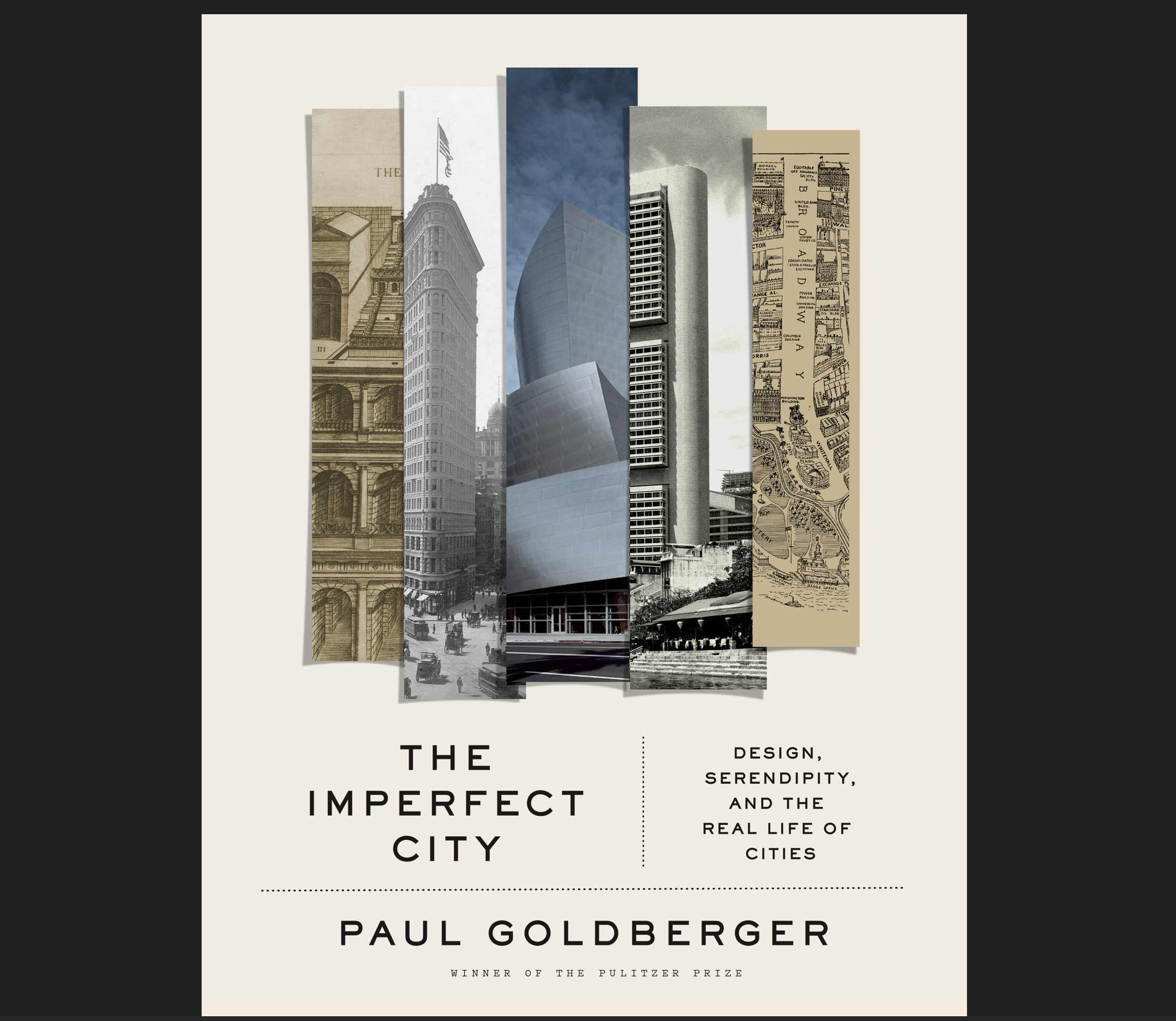
When we want to talk about improving cities, it's essential that we approach the question with a sense of balance - a bit more of "both/and" and less of "either/or" - prescient advice in these polarized times. That's part of the wisdom shared by Paul Goldberger, the Pulitzer-Prize-winning architecture critic of the New Yorker and many other publications, whose new book "The Imperfect City: Design, Serendipity, and Real Life of Cities," is a lesson in a balance - how we can value and preserve what's beautiful, pursue design ambition and ambitious social goals, and accept a certain level of ugliness and disorder that is inherent to cities. Join us on this episode of Unfrozen, where we manage to mention Hermes at least three times, Jane Jacobs a few more, and Parker Posey once, by accident.
Show Notes
Intro: “Station Approach,” by Elbow
Discussed:
The book and the guest
- The Imperfect City: Design, Serendipity, and the Real Life of Cities, Paul Goldberger (Knopf)
- Paul Goldberger
- Why Architecture Matters, Paul Goldberger (Yale University Press)
- Paul Romer
New York: markets, preservation, and Jacobs
- Greenwich Village Historic District
- SoHo–Cast Iron Historic District
- Jane Jacobs, The Death and Life of Great American Cities
- Jane Jacobs' former home at 555 Hudson Street hits the market
- Robert Moses
- NYC Landmarks Preservation Commission
- YIMBY movement
Financialization and sameness
- Coal Drops Yard, King's Cross, London (Heatherwick Studio)
- Joe & The Juice
- Hudson Yards
- Sharon Zukin, Naked City: The Death and Life of Authentic Urban Places
Informality and the megacity
- Unfrozen Episode 31: Emergent Tokyo, with Jorge Almazán
- Unfrozen Episode 115: Homegrown Cities, with Matias Echanove and Rahul Srivastava of urbz
- Richard Sennett, The Uses of Disorder
- Pablo Sendra and Richard Sennett, Designing Disorder: Experiments and Disruptions in the City (Verso)
- Dharavi, Mumbai
Glass, material, and codes
- Seagram Building, Mies van der Rohe
- Form-based code
Planning, politics, and the market
- City of Yes for Housing Opportunity, NYC Department of City Planning
- The House of Yes (1997), starring Parker Posey, for the deep cuts
- Zohran Mamdani, Mayor of New York City
- Nithya Raman wins the Los Angeles mayor's race
- Stafford Beer, "The purpose of a system is what it does"
Democracy and speed
Nostalgia and the avant-garde
- California Forever, Solano County
- Gabriel Metcalf on California Forever's vision (The Planning Report)
- American Housing Corporation and its prefab rowhouse (Fast Company)
- Monumental Labs and robotic stone carving (Architectural Record)
- Robert A.M. Stern Architects (RAMSA)
- Lewis Mumford
London and Singapore
- 2026 VU Summit, London: "Density and Identity", Council on Vertical Urbanism (via New London Architecture)
- URA Conservation Programme, Singapore
- Pamelia Lee and the conservation of Singapore's shophouses (MIT)
Edge, mess, and Los Angeles
- The High Line
- Times Square
- Outro: “Let it Be,” by The Beatles
Show Transcript
Greg Lindsay 00:30
Hello and welcome to Unfrozen, episode 134, The Imperfect City. I'm your co-host Greg Lindsay,
Daniel Safarik 00:35
and I'm Dan Safarik. And once again, we are more than pleased to have in the studio with us today, Paul Goldberger, the Pulitzer Prize-winning journalist behind many of your favorite works of architectural criticism through the years, and he's just come out with a new book called *The Imperfect City*. And we are so pleased to have Paul with us again today. Welcome.
Paul Goldberger 00:56
Thanks, Dan and Greg. Great to be here.
Daniel Safarik 00:59
Okay, the imperfect city. There's a lot of architecture books out there. There's a lot of architecture books that call themselves a theory of or a manifesto, and you start right off with this one saying this is against a theory of cities. If that's the case, what is it setting out to be?
Paul Goldberger 01:18
What it's setting out to be is an alternative way of looking at cities and thinking about them. I think, you know, the subtitle is design serendipity and the real life of cities, and it's really about the relationship of design and planning and all the stuff that goes along with it, including regulation and all that to just the stuff that happens, the natural organic stuff. Some of which is good, some of which is bad. But no city is the result entirely of intention and planning. On the other hand, if we leave it all to just what happens, it's usually pretty horrible, and so you know, I'm trying to look at cities as as combinations of the two. It's it's a it's a viewpoint that that nobody's ever done before. Even though I think it's actually closer to reality that that every place is a combination we could say of intentions and accidents. Sometimes the intentions are good. Sometimes the intentions are bad. Sometimes the accidents are good. Sometimes the accidents are bad. But it's a you know so it's it's about looking at things as they really are, and not believing that there's any simple theory or dogma that is going to explain everything because there never is. It's never right. You're you're always going to find too many exceptions to it, even if you try.
Greg Lindsay 02:55
I was going to say there is no shortage of economists, physicists, others from outside the profession who tried to come up with a working theory of cities, but coming back to but your your thoughts, Paul. Obviously, given your decades of covering it, what is the role of design and of architecture in particular? You know, is Churchill correct that our buildings shape us after that, or you know, or someone like a Paul Romer, for example, would argue that design plays almost no role. You know, that regulation. I think
Paul Goldberger 03:20
Churchill is right, but it's not the whole story. Yes, it's true. And in fact, I put that Churchill line at the beginning of another book I wrote called Why Architecture Matters. He said, "We shape our buildings, and thereafter our buildings shape us." Yes, our buildings play a huge role in shaping us, but they don't do it totally. And there's a million other factors that come into play as well. And but buildings are the backdrop for our lives, and it's the one art form that we can never get away from. You know, if there's music you don't like, you can generally choose not to listen to it. If there's, you know, a movie you're not interested in, you don't go you don't watch it, but architecture you kind of can't avoid it's always there, and so yes it does play a role in our lives all the time, and design matters it just doesn't matter as totally as designers like to pretend it does, and that's all. So you know, in a way, I could also say that this book is partly my own kind of shout against binary thinking, which is much too common today. You know, everything's either good or bad. Everything either explains everything or explains nothing and is wrong. In fact, the world has never been that simple, and we should stop pretending it is. And I think one of the reasons cities are so fascinating is actually because they are hard to understand, and no simple theory explains them completely. I mean, cities are a mix of. The social, the cultural, the economic, even the the the political, even the way those different elements, and of course the esthetic. So I could say the social, the cultural, the esthetic, the economic, and the political, and even the way all those things relate to each other changes from city to city and from time to time within each city, and so it's far more to me exciting and interesting to try to figure out all that stuff than to create a huge all-explaining theory that's going to explain it all because it's invariably going to be wrong.
Daniel Safarik 05:47
You know, maybe it's just you know nostalgia at work, but I I kept arriving at this idea that it seemed to be that you were arguing that the marketplace today is less capable of creating a livable, beautiful city than it might have been 200 years ago, and there's lots of things we could point to as evidence of that. But I kind of like to hear where that is. Sure, no, you're
Paul Goldberger 06:09
again. You're absolutely right. That is one of the things I say. Even though, ironically, one of the things that made me want to write this book was realizing how many good things about cities came about almost kind of naturally years ago, without planning, without regulation, and and how hard that is to do now, and it seems only to get harder. So, you know, the the city that naturally gave us no. Let's let's stay in New York for example. Look at both Greenwich Village and Soho, two amazing historic districts with beautiful buildings. They were created by the free market, basically. You know, they were created to make money, to house people, to house businesses, to do commercial things. They were not created with any kind of larger plan in mind, and yet they're both great in totally different ways, of course, because they arose at different times. Now they're still there only because the government that had no role in creating them had to step in to protect them through you know landmark historic district status, or they would have disappeared completely. And so, but of course, they still continue to evolve and change. We're lucky that the village is what it is still physically, but it's not the same place demographically, not the same place economically. You know, when when Jane Jacobs, who probably played a bigger role than anyone in getting us to be conscious of these things and the importance of older neighborhoods and the way in which they kind of arose naturally and organically, you know, she used to live in Greenwich Village in a house on Hudson Street that she and her husband bought in the late 1940s for $7,000. Now that house was recently put on the market by a much later owner for $5.9 million. Now, a writer like Jane Jacobs, even allowing for inflation, could not buy a house for $5.9 million today. And so, you know the neighborhood is becoming far less the interesting heterogeneous mixture of different kinds of people and cultures and stuff that she quite correctly celebrated, and said that you know any involvement from the government is just going to screw this up, which it would have. In fact, Robert Moses had all these plans to rip it apart and turn it into some horrible bunch of high rises. But today, ironically, the only thing that saves what of it we have is the government, which is has the city government in this case declaring it a historic district, but how do we save the rest of it? How do we save the the kind of life that went on within it? That's much harder, and we're not doing as well with that.
Greg Lindsay 09:35
I know Dan has a list of questions on the individual chapters and the cities you cover, but I do want to ask first before we get to that, so yes, you know we're all trained or ingrained as budding urbanists that you know in Jane Jacobs versus Robert Moses, Moses is the villain, and government planning and overreach is the villain. Although given financialization and given how Jane Jacobs is somewhat reviled by the Yimby movement because of her emphasis on conservation, leading to. The preservation financialization. If the government can't do it and the market can't do it, Paul, what is the? Is it a combination? Is it a third thing? How do we get unstuck again?
Paul Goldberger 10:09
It's okay. Okay. First, you just summed up the situation really well. I mean, that is, and it is. It has to be a combination. I think that's the whole point. That this is not either or; it's both and. I mean, the point of this book is not to either revile the government or private enterprise. It's to say that if they don't work together in a in a fashion that that kind of involves mutual respect, let's say, and is nimble and changing and willing to change in response to the circumstances, then nothing's gonna nothing's gonna work. And you know you you have to look at this also against the backdrop of everything continually changing anyway, so you know you you cannot freeze a city in time. We do freeze certain buildings or neighborhoods because we consider them really precious parts of our legacy. And I'm sorry, Yimby, you're wrong. You know, I mean, the historic, the landmarks and historic preservation movement has been a much more positive than negative force, not just in New York but everywhere. And you know, for all the complaints about it stifling development, I think you know it's something like 4% of the buildings in New York City are protected. I mean, that's all. It's nothing, and the reason we don't have enough affordable housing is not because of landmarks. That's nonsense. Now, at the same time, I do react against the abuse of the historic, the landmarks preservation process, as a way of of governing land use, and sometimes there are cases in which people want to save a neighborhood or a building not because they really so love and cherish what's there, but because they fear what's going to replace it, and and and you know a lot of that has happened. And while you can understand that impulse, that's not right. You can't do that. And when that happens, that actually gives fuel to the Yimby argument that you know these people are just sentimentalists who are trying to kind of exploit the rules for the purpose of discouraging new construction. A city needs to keep building. A city cannot change. A city that tries to freeze itself is a dead city. But that doesn't mean that there's not a significant difference between certain precious things that are important to save, and things that we can say whatever you know, let it let it go. So it's all about balance. I mean, in a way, I could say this whole book is about balance. It's about balancing between different things and different forces, because the city, the reality of the city is that it emerges out of so many different forces interacting in such interesting and complicated ways that you know we the equilibrium that we need comes from respecting all these forces. I think, and and having some nuance and having some ability, as I said, maybe this maybe it's 2n words we could say nimble and nuance. All right, we need those are both things that are missing in most discussions of cities. But I'm I'm calling out for more both of those.
Daniel Safarik 14:03
You know, in your survey of you surveyed about eight or nine global cities and drew pretty different conclusions about all of them, and in some ways, you seem to be working toward a conclusion that there wasn't really a kind of a perfect city formula, and one would kind of hope there wouldn't be, considering that the diversity of the world is one of the reasons why we all like traveling, right?
Paul Goldberger 14:27
What's the point of every place is the same? Bad enough that every airport's the same, but I mean, you know, but you want to at least get into cities that are different.
Daniel Safarik 14:36
Yeah, I mean, I went through the Cold Drops Yards in London a couple weeks ago, which I thought was very well done in terms of execution, wayfinding, and preservation of historic structures. But I was also saying to myself, if I see another Joe in the juice, I'm going to put a brick through the window.
Paul Goldberger 14:53
Yeah, yeah, yeah. Sure, sure, sure.
Daniel Safarik 14:56
You know, because it's it's just the homogenization sets in like immediate. As soon as the the commercial doors are open,
Paul Goldberger 15:03
I know, I know, I know. I mean, you don't like you don't like flying all the way across the world to have the very special opportunity to be able to shop at an Hermes boutique.
Daniel Safarik 15:15
Yeah, exactly. I mean, they even have them in the subway stations in in Singapore, as you point out,
Paul Goldberger 15:21
in Singapore, yes, exactly, exactly, yes, yes, for sure.
Daniel Safarik 15:25
Yeah, I think I think what we're getting at a little bit here is that it's it's almost sort of an answer to the previous question, which is the financialization of real estate capital has played a big role, I think, in in you know making even purposefully restorative or preservative developments still kind of come off a little corporate. Let alone anything like that's a clear clear build, like like Hudson Yards, which is a disaster on many levels.
Greg Lindsay 15:58
And and related to that, Paul, you know, gentrification is where they get thrown around too much, but like Sharon Zuckin, for example, has written about that. You know that that feeling of neighborhoods like Jane Jacobs' Greenwich Village was on a you know again, I guess to borrow from complexity science, right? It was an unstable equilibrium, right? It was going to tip at one point or the other. So I guess yeah, how do we how do we prevent that tipping from happening into homogeneity? And what are some of the examples you've seen globally of how do we not ossify, but also not become homogenous?
Paul Goldberger 16:23
Yeah, no, no, Greg, that's that's the right question to ask, and I don't feel we're getting moving in the right direction. When I was in Williamsburg the other day and and walked past an Hermes boutique on which is designed to look like a brick warehouse, right? I see some
Greg Lindsay 16:40
photos. It's crazy.
Paul Goldberger 16:41
I know, I know, I know, and that that therefore is supposed to make it cool and Williamsburg-like. I mean, I guess my feeling about that is it's sort of silly, but if that's the worst problem we have, we'll survive it. I mean, may we be so lucky as to have, you know, an Hermes boutique looking rather foolish in Williamsburg be the worst issue in New York. And so, but you know, yes, I mean, it is it is an issue, and it's it's it's kind of silly in some ways, but it's also an inevitable result of the financialization of the world, which plays out not only in terms of huge pools of global investment capital washing across the world, with much less of a vested interest in the specifics of neighborhoods in which investment is being made, or buildings are being built, but it also plays out in the homogenization of culture and and and in the presence of a certain kind of wealthy aspirational Shopper, who is now kind of present in every culture. You know, it started out in Asian cultures. I mean, started out in Europe and then Asia and America, and and now it moves more and more down market. I think ultimately, on some level, they will these brands will damage themselves by becoming too ubiquitous. Actually, you know, I don't understand why Hermes doesn't understand that the very strategy that causes them to limit, you know, Birkin bags and to make them more valuable should apply to their stores as well, because you know when when you see one everywhere, it's kind of what's the point anymore? I mean, you know, this is not supposed to be McDonald's or CVS or what have you that's on every corner, and so I I I'm not sure it's ultimately in their best interest. But you know we we again global investment demands not just profit but growth, and the the relentless need for growth requires, it seems, this constant expansion. But I I think ultimately it is damaging to these. I mean, our our our my subject and our subject today is much more the places than those stores, but I think they're neither helping the many of the places nor are they helping themselves in the long term. But the other issue, in fact, is is that there's not enough thinking in. The long term, which might seem to contradict what I said a few minutes ago about nimble being a really key thing, but at the same time, you know, we are we are maximizing short term profits almost always over long term thinking, and that's ultimately not good because cities are. Yeah, I would totally
Greg Lindsay 20:25
agree. I think the most blackpilling thing that ever happened to me as an urbanist was really spending time with commercial real estate asset owners, where you really realize how hold times affect their portfolio approach and how they see the entire world. But I want to I want to go to the opposite end of the socioeconomic spectrum for a moment because the one sort of the most glaring omission in your book is a city like Lagos, for example. So we've had episode 31. We had emergent Tokyo. We had homegrown city with Rahul Matthias. I'm curious your thoughts on informality because you mentioned Richard Senner, you know, uses of disorder in his last book was designing disorder. You you cover it there, but I'm curious your thoughts on you know and and 1020 years ago, there was this vision of the teeming mega slum and these kinds of fear mongering about this too.
Paul Goldberger 21:07
Yes, and I when I was in Mumbai last year, I went to Darwin, the world's most infamous slum. Yes, and I am very interested in disorder and the role it plays. I did not deal with Lagos and some of the other, you know, megacities of the developing world solely because I have not been there, and I think that they are a sufficiently different animal, so that they require a degree of knowledge that I didn't have. I didn't want to do something badly, basically. But it's there's no question that they that that's that's a gap in the book. I'm not going to try to defend it and say they don't matter. They do matter. Maybe they matter more. But and I did discuss this with my editor, actually at Alfred Knopf, who said, "You know, I think I just think that's a sort of different thing, and we don't want to delay the book. We don't want to like expand the book vastly. We also felt he felt very strongly that the book is not an encyclopedia of cities, so the cities discussed in it stand for many others. But you know, if we come back to the the West for a moment, you know, there's not enough in it about London. There's barely anything about Berlin. There's not much of. I don't think there's any Mexico City in it. I don't think there's much more than a little bit of Tokyo in it. Every one of which could have been in this book. So, you know, I had to, and and I do talk a little bit about the favelas in South in Latin America and so forth, and about the idea of the informal city, but I think Lagos and the other vast African cities are an entirely different thing. I want someday, you know, to go there, and maybe that's another book. You know, maybe that's you know, but exactly how all these things play out is something I want to study and know more about. Is frankly, although Mumbai and Istanbul, which are two amazing, amazing cities, I wanted to do whole chapters on both of them, and the editor said, "No, no, it's going to be too long," and we want to keep this book at a manageable length that general readers will want. So there's a lot of stuff about those two cities, but they didn't rate their own chapters reluctantly. But you know, what can I say?
Daniel Safarik 23:55
Returning maybe to the to the architectural scale for a minute, you know, there was there was a great quote in here about just what it is about the banality of glass architecture that kind of grates, you know, and that that reinforces this idea of commodification that's imposed by these these global forces of capital that we're talking about here. There was something about seeing one glass building after another that is different from one brick and stone building after another is one of the quotes. You know, is that an argument for material or form-based code, or you know, how would we guard against the real estate market's sort of copycat tendencies while still allowing to freedom to innovate?
Paul Goldberger 24:37
Yeah, yeah, I think that's a really good question. You know, I'm not generally a great believer in form-based codes, but also because I say I'm not believe I don't believe in absolute regulations, one size fits all for every circumstance. I think there probably are circumstances where. Material-based codes are a good idea. We, but there is there is something inherent in glass that just feels sort of brittle, and and a little bit cold. There is nothing more beautiful than a great glass building playing off against masonry buildings around it. I mean, the Seagram Building, when it was news, when it was new rather, was I mean it's still one of the most beautiful buildings ever built. But when it was surrounded by older buildings, it kind of looked like this amazing jewel in the middle of other stuff. And then as it gradually got filled in by other glass buildings, it was less so. So that's one, yeah, very important thing. And and I mean, I'm I'm not I actually live in a glass building now, so I mean I'm I'm definitely not against them, but they they don't make a whole city as well as masonry, brick, and stone buildings do, and that's something I've just you know a lot of this book is based on empirical knowledge. It's based on just looking and walking and thinking and coming to certain conclusions, you know, I'm that too is a a very Jane Jacobsian thing. I think you know that there's a great line she has at the beginning of her book, where she explains why there are no photographs or illustrations in her book, and she says, "For images of what I'm talking about, go outside and look around you, and then think, linger, and think about what you've seen." Well, that's what I'm sort of trying to do, and what I tried to do in writing the book was sort of make it a kind of result of just a lot of empirical thinking and observing, and the whole issue about glass came out of that, really, as much as anything else. So, but I know everyone wants an author to have answers and say, "Only well, if we only do this, this, and this, everything will be great. Maybe form-based codes can help to some extent. The evolution of taste helps. Definitely, just better architecture. You know. So again, you know, this this book is is about knowing when to step forward and when to step back, when to let the market do its thing, when to not trust the market to do its thing, and we know there are certain things the market simply can't do. One of them, of course, being affordable housing, which it's never been able to do to a very decent standard, if it had been able to, you know, we wouldn't have had to start building public housing back in the New Deal in the '30s. You know, I mean, you know, we we we have a tendency to kind of romanticize those periods, and indeed, they they were very appealing in a lot of ways because the government was so actively doing socially responsible things, and something that the federal government has not been particularly interested in recently. But they were doing it in part because even then the free market couldn't solve the problem.
Daniel Safarik 28:40
I mean, in terms of that area, you know, I think you mentioned the the House of Yes campaign that was actually city. Sorry, City of Yes. House of Yes is a movie starring Parker Posey from the from the 90s. If you remember that,
Paul Goldberger 28:55
ah, okay,
Daniel Safarik 28:56
throwback. Wow, Dan, really,
Greg Lindsay 28:58
really showing your obsessions there, Dan. But yes, but but but yeah, I'm curious, and also and and also Mayor Mamdani, of course, who has been striking out, which is now becoming this model post midterm elections, Nithya Raman, the mayor elect of LA. This idea of this sort of left YIMBY alliance here to unstick cities is that the model then, Paul, of a way of a market married to planning? I mean, that seems to be the emergent one.
Paul Goldberger 29:21
I think. I think. I think we need a market married to planning, but we need to know that the market, again, the market cannot be left alone, or it would have solved the problem. If if it was in the market's interest to solve the problem, it would have because markets do things in their own interest. That's what they are, and
Greg Lindsay 29:48
I got to quote Stafford beer: "A purpose of a system is what it does. It's doing what it is doing."
Paul Goldberger 29:52
Precisely, right, right, and so you know. But I think Mamdani is. You know, a remarkable not only because he is genuinely concerned about social issues, but because he is also, I think, smart and pragmatic, and realizes that he will be judged in the end by results, not by ideology, and I. I I wish he were a little more attuned to the let's say the esthetic or design component of this combination, but at the same time I don't think he is opposed to it. I hope he will begin to understand that, you know, it's really a three-legged stool. It's it's you know planning and government regulation. It's the free market and finding ways to incentivize it to do what is socially beneficial, and it's finding ways to assure that design quality will be high, because again, you know, we don't we're not building for the next four quarters. We're building for we hope the next 100 years, and so you know, and so much of what we have, both architecturally and in terms of infrastructure in our cities, is built because other generations invested for us. It was particularly true in the depression when there was not a lot of money. It would have been a very easy thing to say, well, we can't add any debt. In fact, they did exactly the opposite. They invested hugely, and today we are the beneficiaries of all of that. Not just in housing, but in bridges and tunnels and highways and parkways and all kinds of infrastructure, and we are not doing enough for the people who will follow us. We're concerned more about just what what can what can we benefit from ourselves real quick, or what can a politician cut the ribbon for in the next year or two? Well, this stuff, by its nature, doesn't take a year or two; it takes a lot longer.
Daniel Safarik 32:23
Yeah, some of the this chronic nature of trying to get projects completed is is is a subject of certainly Greg's research and quite a bit of my own. It does seem that to to be the case that even capital projects, whether undertaken by the government or private enterprise, now do take a lot longer than they used to, and that's that's part of the problem.
Paul Goldberger 32:44
They take a huge amount of time. It is definitely part of the problem, and in fact, we have. That's why Jane Jacobs' legacy is a complex one. I mean, we owe her so much. We're in so much in her debt for so much that's good. However, it's very possible the pendulum swung too far toward, you know, popular engagement, public engagement in planning questions, and at some point you need some authority that's going to make a decision and make something happen, and you know Robert Moses did so many bad things, particularly in the second half of his career, and rode so roughshod over that it was natural that the Jacobsian reaction would set in. But in fact, that too has gone maybe farther than necessary, and look, democracy is not the best system under which to build things. That doesn't mean we throw away democracy. It doesn't mean it's a mistake. It's just you know, democracy for many many things is the least efficient system there is. But do we want to throw it away for autocracy? No, I mean, especially the last couple of years should show us that that's not what we want to do. You know, I've always loved the statistic. I was told at one point a while ago when I was in Beijing around the opening of new airport there, and was told that the period from the decision to build the airport to hiring the architect to designing it to constructing it to opening it was short was five years, which was shorter than the length of the environmental impact hearings over the second runway at Heathrow, where you know, as you know, in Britain many of these same issues apply, and and so you know, in the time that they were fighting over whether to expand that airport, the Chinese conceived, designed, and built an entire airport that was much. Larger than Heathrow. Now, you know, would we therefore be better off having an autocracy? No, but you know, there's no free lunch, and we do pay a heavy price for democracy. And possibly we can do a little bit better at balancing some of these things and learning to be a little more nimble, a little more efficient, and so.
Greg Lindsay 35:24
And China, of course, also built in you know the so-called ghost cities of Le Corbusier towers, which many cases did fill in, and and that's why I'm thinking about for a moment about going back to esthetics and design. I do think it's interesting that there's just so much nostalgia. You you write about California Forever, which is you know designed as a sort of new urbanist Mayberry by former Spur planner Gabriel Metcalf is involved with that project, very well beloved person. And I think, for example, like there's a startup called American Housing Corporation that's using high tech modular construction techniques, but they want to do brownstones effectively. There's Monumental, another startup that wants to do stone construction. They want to make stone cheap again. In this, I'm curious your thoughts on like the necessity for progress or an avant-garde in design. Is nostalgia okay? Should we just build cities like the early 20th century, and that's fine if that's what it takes to get them built?
Paul Goldberger 36:15
Just build them that way? No, I don't think that's fine. But build some of them that way is fine, you know. Somebody asked me the other day what I thought of the kind of very retro limestone, super tall luxury condos by Robert A.M. Stern by Ramsa in New York, and I said I actually like them. I think they're really good, and they solve a lot of problems well. They're nice to look at. They're urbanistically very good, but if everything were done that way, it might be kind of boring. And I also want the art to keep moving forward. And I think part of pluralism is making room for a mix of things that look backward and things that look forward, you know. You can. I mean, I think it's nice that you know we have Ralph Lauren and we have Issey Miyake. So let's say you know, as fashion designers. I mean, it it it doesn't have to be. Everything does not have to be heading in the same direction. In fact, I think part of the richness of a great city is that it represents. an architectural pluralism as well as a political and social and demographic pluralism?
Daniel Safarik 37:31
It seems like the consciousness that there are layers is super important, right? Layers of time, layers of stylistic prevalence, layers of what is considered, what is ethicized by the society at a given point in time. Maybe I'm just saying that's because I just came from London, where that sort of thing is super obvious, and they're constantly turning up Roman ruins, you know, while excavating new skyscrapers, and then figuring out, you know, what to do with it. And does it become a museum in the basement, and that's so fascinating. Not every city has that that rich of a background that is so physically obvious, but most cities have layers of time that they can expose through through architectural work.
Paul Goldberger 38:19
Oh yeah, yeah. I mean, I I love Lewis Mumford's great line, "In a city, time becomes visible." One of my favorite lines, and it it's absolutely true. It's it's fundamental to what a city is, I think. I think the issue when you talk about London, I think the bigger issue there is not time, and not the presence of modern things, but scale, and the fact that London, unlike New York, has not traditionally been a city of tall buildings, but it's getting more and more of them. And how much difference does that make in the experience of the city overall, and you know, I mean, a lot of people. Some of them are good, some of them are not good, but all of them leave a lot of people feeling that the the degree of change in London, in some ways, is perceived as more wrenching than that of New York. For that reason,
Daniel Safarik 39:20
yeah, they're very, very conscious of it. I can tell you. I mean, we just had our conference there, and you know, it was sort of subject number one. But I did feel something different to what I felt, say, 1015 years ago, which was the last time we had a major conference there, where the subject was height versus heritage. You know, now it's density and identity was our theme.
Paul Goldberger 39:43
Ah, those are very very clever titles. I'll say yes, yes.
Daniel Safarik 39:49
But the second one, you know, also reflect the fact that the city, you know, was sort of leaning into this. You know, the idea that we're going to have to grow. First of all, there's a huge house. Crisis commuting patterns don't look like what they used to look like. They're going to have to authorize growth in different clusters. I would say that you know it does sort of seem that certainly most attention has been paid to the city of London itself, the square mile, where they have a very tight cluster with all these view corridors that they have to maintain, which leads to extreme creativity in the buildings that have resulted, but not every place has those types of conditions.
Paul Goldberger 40:29
But but but but Dan, I think that gets to my other point that being very specific to the place and to the conditions is is the key thing. In other words, there is not a general rule that you can't build tall or you can build tall. It's that you can do certain things in certain places depending on the impact it has. And I think it's that degree of nuanced planning that we need.
Daniel Safarik 41:00
Yeah. And do you think that the sort of devolved sort of planning mechanisms, such as well, they have the boroughs there, for example, where they have individual consent, but then they have the system for calling it up, as they call it, calling it in to the federal government if it's deemed to be of national importance. Do you think that that's a replicable model, even if it, even if applied to other cities that are different, you know, maybe not as old, or maybe not as doesn't they don't have as much of a higgledy piggledy pattern of development, for example.
Paul Goldberger 41:30
Yes, I think it is actually because you know buildings and neighborhoods and streets exist at different levels of historical importance and esthetic quality, and some deserve to be protected absolutely as they are. Some deserve to be kept, but can be modified for new uses and other demands. And some don't matter as much at all, and we can sacrifice them. So it's often a very nuanced discussion about how you tell the difference between these things. And so, yeah, and and and when it's really important, bringing in a higher level of government authority is often a good idea.
Daniel Safarik 42:20
Well, into that theme too, and also to the question of the messiness of democracy. You know, we contrasted, of course, the Chinese approach to the, let's say, the Western approach, which is vastly different. But then you have Singapore in the middle,
Paul Goldberger 42:33
yes,
Daniel Safarik 42:34
where there's
Paul Goldberger 42:35
quite a why I wanted to make Singapore a big part of this book.
Daniel Safarik 42:38
Yeah, which is like it's a design theme park in a lot of ways. You can do incredible, incredible things there. You capture it well. There is a sort of uncanniness about it where there is some preservation. It feels very conscientious and very limited, but
Paul Goldberger 42:56
and and very limited, conscientious, but happened because of a curious accident of a conversation between the sister-in-law of the prime minister and the prime minister, and only then did it become official government policy, which changed 180 degrees in an instant.
Daniel Safarik 43:16
There was no Jane Jacobs in Singapore. There was no job houses. No,
Paul Goldberger 43:21
no, nobody was paying attention or cared about them until the head of tourism decided, after visiting other countries and seeing how critical historic neighborhoods were to their tourism and economic development, that Singapore needed to do the same thing, and because she just happened to have been the brother-in-law of Lee Kuan Yew, the prime minister, she shared this with him very quickly. And because he was nothing if not pragmatic, he thought for a short while and said, "I guess you're right." And suddenly, they went from absolutely zero interest in preservation. Indeed, from thinking it was a hindrance to economic development to saving all these neighborhoods of shop houses, what they lack because of that is any kind of intermediate scale. You know, the shop houses are all very little, and all the new skyscrapers are gargantuan, and there's nothing, nothing in Singapore in between. Actually, it is kind of weird.
Daniel Safarik 44:23
Super dramatic, yeah, to witness that. So it,
Paul Goldberger 44:26
it, it's a, that's a strangeness. I mean, Singapore is fascinating to me because they have done almost everything right, and made what is maybe the Most frictionless developed city I know. It's very easy to be in Singapore, and everything works, but it lacks a certain kind of frisson, you might say. And it lacks it lacks edge. And it's almost too easy, and it's not. I don't think an accident that Singapore is not a particularly interesting city culturally. That you know, I think art and artists want places that have more edge to them and feel comfortable in places, and I think those places with edge are the ones that actually inspire creativity more. So, in fact, Singapore is great for day-to-day life, but it's not a city of great creativity. And you know, even the Chinese cities, despite the tension between culture and autocratic government, are actually culturally more alive than Singapore.
Daniel Safarik 45:53
Yeah, and that's an interesting contrast, isn't it? Yeah, I guess to to keep on the subject of, or to return back to the top, it's a sort of subject. It's sort of this central question of authenticity versus the frictionlessness of development, if we will. Are there places where you think that that that harmony has been hit particularly well? Maybe it's just a neighborhood as opposed to an entire city. I think you know one of the things I keep thinking back to is that the great success of something like the High Line, you know, where a piece of rotting infrastructure was transformed into you know a public asset that everyone likes, yet still draws an awful lot of criticism for having spurred high end real estate development on either side of it, and some people even argue that it's a privatized space because it's well policed. You know, like an aspect of Singapore. In other words, I'm just thinking about the neighborhood like Chelsea that's lost its lost its edge. I'm putting in scare quotes here for the listeners. Right,
Paul Goldberger 46:57
right, right, right, right. Well, Chelsea maybe has a little less edge, but you know, I mean, I just think let's not be silly about all this, and and I think that that's an argument that that's kind of like the old argument about Times Square, you know, which I mean, yes, Times Square has unquestionably lost some qualities it used to have. Some of them were actually kind of nice. I agree. More of them probably were not nice, and and the presence of physical risk is not, or let's say of undue physical risk, undue danger, is not something that I mean. That is too high a price to expect people to pay to be in a city. That's a little too much edge. It's a little too much edge, exactly. And it's like everything we've been talking about today. You know, it's not about one thing or the other, it's about where on the continuum it's best, and edge is best in the middle. Too much edge, it's like too much messiness. I think cities should be a little bit messy. I think that's their nature. Too much messiness is gross. Nobody wants to have to pick their way through garbage to walk down the street, but you know the absolute cleanliness of Singapore, where you know there's not even a gum wrapper. Do you actually is that maybe absolutely necessary? And maybe a little looser is kind of a little better in certain ways. So you know, that's kind of the book is kind of arguing that point, I think, as much as anything else, that you know, messiness is okay up to a point, and and so is all this other stuff. You know, so is casualness. So is unpredictability. Right.
Daniel Safarik 48:55
Well, I we only have a few minutes left, but I did want to make sure I get one word in here on a city that I have spent another good portion of time in, which is Los Angeles. You have a chapter on Los Angeles, which I was pleased to see, because that doesn't fit anyone's model of a perfect city. And you've definitely got had the kindest words toward it of anyone who's ever written for the New Yorker that I'm aware of. So thank you for that. I spent some time.
Paul Goldberger 49:23
I love I love L. and I've always been fascinated by it because it breaks the rules, but it is so clearly a great city, even though it does not do what is supposed to be the first premise of a great city, which is that vitality comes out of density. Well, it's not very dense, and yet there it is, full of vitality. So, so I've always found it enormously magnetic in a certain strange way, and I'm also one of the only dyed-in-the-wool New Yorkers I know who loves Los Angeles equally.
Daniel Safarik 50:01
Yeah, Woody Allen, you are not.
Paul Goldberger 50:04
No, no, absolutely not. The Woody Allen view of L.A. is the one that I emphatically reject. It is.
Daniel Safarik 50:11
It is interesting that you did a great quote in here again, of which there are many in the book, where you say, "I would rather have a fake Italian hill town than a real strip mall. Now you apply that statement to Los Angeles, you're going to get some you're going to get some blowback because everyone knows the authenticity is often found in those strip malls, and that's a hard thing as an architect who likes food to to accept, right? Because you want it to be in the fake Italian hill town, but oftentimes that's where your your cheesecake factory is, right?
Paul Goldberger 50:44
Right, but sometimes you actually find the best, you know, this amazing Thai restaurant and some weird strip mall that nobody, you know, is in some neighborhood in Koreatown or whatever, and and suddenly it is better than anything else. I agree, I agree, and and so, and look, I can even make my piece with some strip malls too.
Daniel Safarik 51:09
But I think what that amounts to too is maybe to tie it all together a little bit is is is your your statement about good background buildings, and if we made a concerted effort to have better background buildings, like the function that strip malls serve in a lot of auto-oriented cities, maybe we wouldn't we wouldn't have to have we wouldn't have to make a creator core like I'd rather have a fake Italian hill town than a real strip mall. You know, there would be more kind of Victorian row houses. There would be more.
Paul Goldberger 51:39
Yeah, no, I I totally agree, and and and you know, and look in in the pluralistic city, which is what I want. There's room for at least some of everything, and and and everything does not have to be beautiful. Everything does not have to be a landmark, and there's a time and place for just kind of ordinary stuff, but it's hard to find a strip mall that you really want to fall in love with. Though there's a difference between the stuff you tolerate and the stuff you love, but you don't have to love everything. Some of it's okay to just tolerate. You know, some of the point of this book is kind of yes, we want to aspire to the very best, and I don't want this book in any way to be interpreted as an argument for complacency. But you know, a little bit of it is also trying to say kind of like you know the Beatles song "Let It Be," let it be. You know, it's some of it. We don't have to work ourselves into a tizzy tizzy about everything.
Daniel Safarik 52:50
Exactly. Well, that's a great parting statement. Thank you so much, Paul Goldberger. Thank you, author of The Imperfect City, coming out in bookstores now. Check it out.
Paul Goldberger 53:03
Thank you, Dan. Thank you, Greg.
Listen On
Also In Season 6
-
133. Regen360
Driven by the same relentless passion that produced the world's most prominent e -
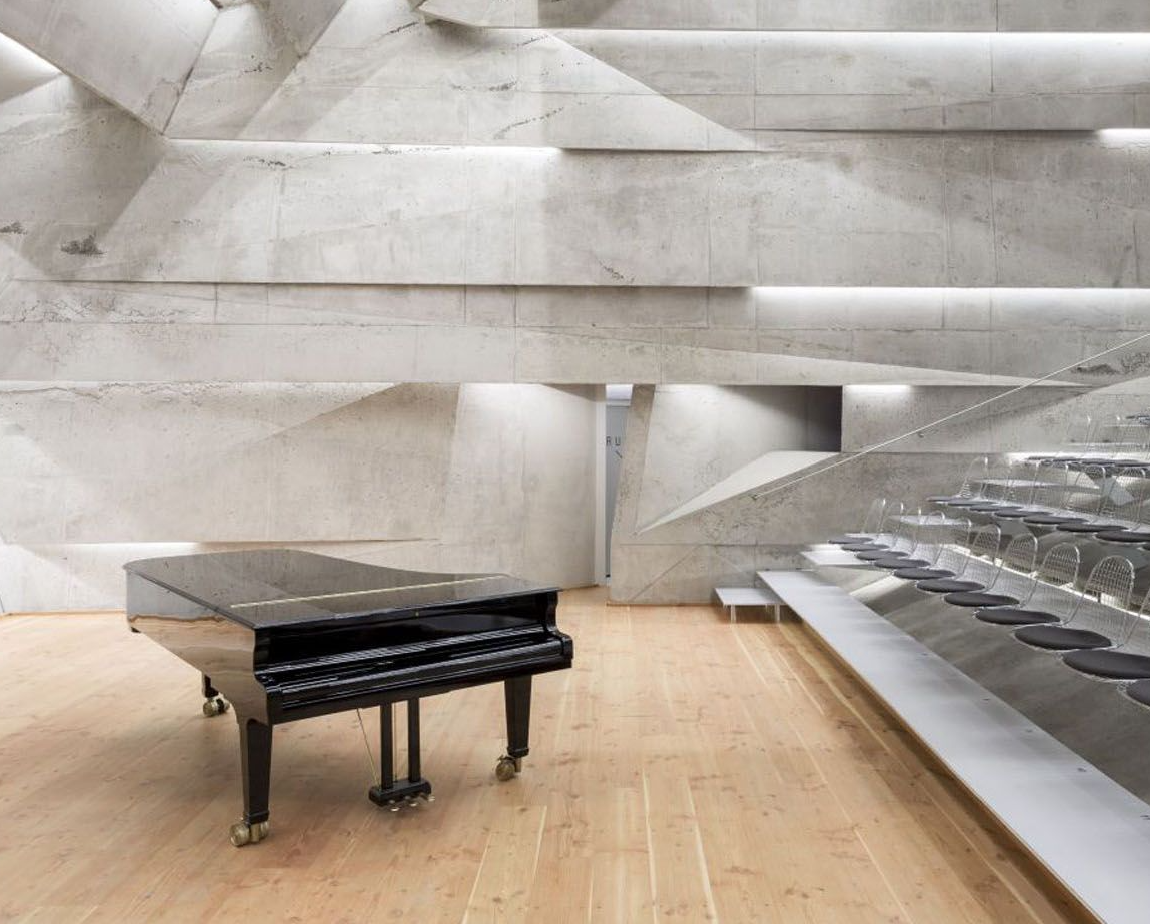
132. Sound and Architecture in Harmony
Unfrozen started as a blog in 2011, using for its title the quote from Johann Wo -

131. Chatting with Barbarians
Forgive them, for they know not what they do. We have already passed the point w
Transcript
Greg Lindsay 00:30 Hello and welcome to Unfrozen, episode 134, The Imperfect City. I'm your co-host Greg Lindsay, Daniel Safarik 00:35 and I'm Dan Safarik. And once again, we are more than pleased to have in the studio with us today, Paul Goldberger, the Pulitzer Prize-winning journalist behind many of your favorite works of architectural criticism through the years, and he's just come out with a new book called *The Imperfect City*. And we are so pleased to have Paul with us again today.
Welcome. Paul Goldberger 00:56 Thanks, Dan and Greg. Great to be here. Daniel Safarik 00:59 Okay, the imperfect city.
There's a lot of architecture books out there. There's a lot of architecture books that call themselves a theory of or a manifesto, and you start right off with this one saying this is against a theory of cities. If that's the case, what is it setting out to be? Paul Goldberger 01:18 What it's setting out to be is an alternative way of looking at cities and thinking about them.
I think, you know, the subtitle is design serendipity and the real life of cities, and it's really about the relationship of design and planning and all the stuff that goes along with it, including regulation and all that to just the stuff that happens, the natural organic stuff. Some of which is good, some of which is bad. But no city is the result entirely of intention and planning. On the other hand, if we leave it all to just what happens, it's usually pretty horrible, and so you know, I'm trying to look at cities as as combinations of the two.
It's it's a it's a viewpoint that that nobody's ever done before. Even though I think it's actually closer to reality that that every place is a combination we could say of intentions and accidents. Sometimes the intentions are good. Sometimes the intentions are bad.
Sometimes the accidents are good. Sometimes the accidents are bad. But it's a you know so it's it's about looking at things as they really are, and not believing that there's any simple theory or dogma that is going to explain everything because there never is. It's never right.
You're you're always going to find too many exceptions to it, even if you try. Greg Lindsay 02:55 I was going to say there is no shortage of economists, physicists, others from outside the profession who tried to come up with a working theory of cities, but coming back to but your your thoughts, Paul. Obviously, given your decades of covering it, what is the role of design and of architecture in particular? You know, is Churchill correct that our buildings shape us after that, or you know, or someone like a Paul Romer, for example, would argue that design plays almost no role.
You know, that regulation. I think Paul Goldberger 03:20 Churchill is right, but it's not the whole story. Yes, it's true. And in fact, I put that Churchill line at the beginning of another book I wrote called Why Architecture Matters.
He said, "We shape our buildings, and thereafter our buildings shape us." Yes, our buildings play a huge role in shaping us, but they don't do it totally. And there's a million other factors that come into play as well. And but buildings are the backdrop for our lives, and it's the one art form that we can never get away from. You know, if there's music you don't like, you can generally choose not to listen to it.
If there's, you know, a movie you're not interested in, you don't go you don't watch it, but architecture you kind of can't avoid it's always there, and so yes it does play a role in our lives all the time, and design matters it just doesn't matter as totally as designers like to pretend it does, and that's all. So you know, in a way, I could also say that this book is partly my own kind of shout against binary thinking, which is much too common today. You know, everything's either good or bad. Everything either explains everything or explains nothing and is wrong.
In fact, the world has never been that simple, and we should stop pretending it is. And I think one of the reasons cities are so fascinating is actually because they are hard to understand, and no simple theory explains them completely. I mean, cities are a mix of. The social, the cultural, the economic, even the the the political, even the way those different elements, and of course the esthetic.
So I could say the social, the cultural, the esthetic, the economic, and the political, and even the way all those things relate to each other changes from city to city and from time to time within each city, and so it's far more to me exciting and interesting to try to figure out all that stuff than to create a huge all-explaining theory that's going to explain it all because it's invariably going to be wrong. Daniel Safarik 05:47 You know, maybe it's just you know nostalgia at work, but I I kept arriving at this idea that it seemed to be that you were arguing that the marketplace today is less capable of creating a livable, beautiful city than it might have been 200 years ago, and there's lots of things we could point to as evidence of that. But I kind of like to hear where that is. Sure, no, you're Paul Goldberger 06:09 again.
You're absolutely right. That is one of the things I say. Even though, ironically, one of the things that made me want to write this book was realizing how many good things about cities came about almost kind of naturally years ago, without planning, without regulation, and and how hard that is to do now, and it seems only to get harder. So, you know, the the city that naturally gave us no.
Let's let's stay in New York for example. Look at both Greenwich Village and Soho, two amazing historic districts with beautiful buildings. They were created by the free market, basically. You know, they were created to make money, to house people, to house businesses, to do commercial things.
They were not created with any kind of larger plan in mind, and yet they're both great in totally different ways, of course, because they arose at different times. Now they're still there only because the government that had no role in creating them had to step in to protect them through you know landmark historic district status, or they would have disappeared completely. And so, but of course, they still continue to evolve and change. We're lucky that the village is what it is still physically, but it's not the same place demographically, not the same place economically.
You know, when when Jane Jacobs, who probably played a bigger role than anyone in getting us to be conscious of these things and the importance of older neighborhoods and the way in which they kind of arose naturally and organically, you know, she used to live in Greenwich Village in a house on Hudson Street that she and her husband bought in the late 1940s for $7,000. Now that house was recently put on the market by a much later owner for $5.9 million. Now, a writer like Jane Jacobs, even allowing for inflation, could not buy a house for $5.9 million today. And so, you know the neighborhood is becoming far less the interesting heterogeneous mixture of different kinds of people and cultures and stuff that she quite correctly celebrated, and said that you know any involvement from the government is just going to screw this up, which it would have.
In fact, Robert Moses had all these plans to rip it apart and turn it into some horrible bunch of high rises. But today, ironically, the only thing that saves what of it we have is the government, which is has the city government in this case declaring it a historic district, but how do we save the rest of it? How do we save the the kind of life that went on within it? That's much harder, and we're not doing as well with that.
Greg Lindsay 09:35 I know Dan has a list of questions on the individual chapters and the cities you cover, but I do want to ask first before we get to that, so yes, you know we're all trained or ingrained as budding urbanists that you know in Jane Jacobs versus Robert Moses, Moses is the villain, and government planning and overreach is the villain. Although given financialization and given how Jane Jacobs is somewhat reviled by the Yimby movement because of her emphasis on conservation, leading to. The preservation financialization. If the government can't do it and the market can't do it, Paul, what is the?
Is it a combination? Is it a third thing? How do we get unstuck again? Paul Goldberger 10:09 It's okay.
Okay. First, you just summed up the situation really well. I mean, that is, and it is. It has to be a combination.
I think that's the whole point. That this is not either or; it's both and. I mean, the point of this book is not to either revile the government or private enterprise. It's to say that if they don't work together in a in a fashion that that kind of involves mutual respect, let's say, and is nimble and changing and willing to change in response to the circumstances, then nothing's gonna nothing's gonna work.
And you know you you have to look at this also against the backdrop of everything continually changing anyway, so you know you you cannot freeze a city in time. We do freeze certain buildings or neighborhoods because we consider them really precious parts of our legacy. And I'm sorry, Yimby, you're wrong. You know, I mean, the historic, the landmarks and historic preservation movement has been a much more positive than negative force, not just in New York but everywhere.
And you know, for all the complaints about it stifling development, I think you know it's something like 4% of the buildings in New York City are protected. I mean, that's all. It's nothing, and the reason we don't have enough affordable housing is not because of landmarks. That's nonsense.
Now, at the same time, I do react against the abuse of the historic, the landmarks preservation process, as a way of of governing land use, and sometimes there are cases in which people want to save a neighborhood or a building not because they really so love and cherish what's there, but because they fear what's going to replace it, and and and you know a lot of that has happened. And while you can understand that impulse, that's not right. You can't do that. And when that happens, that actually gives fuel to the Yimby argument that you know these people are just sentimentalists who are trying to kind of exploit the rules for the purpose of discouraging new construction.
A city needs to keep building. A city cannot change. A city that tries to freeze itself is a dead city. But that doesn't mean that there's not a significant difference between certain precious things that are important to save, and things that we can say whatever you know, let it let it go.
So it's all about balance. I mean, in a way, I could say this whole book is about balance. It's about balancing between different things and different forces, because the city, the reality of the city is that it emerges out of so many different forces interacting in such interesting and complicated ways that you know we the equilibrium that we need comes from respecting all these forces. I think, and and having some nuance and having some ability, as I said, maybe this maybe it's 2n words we could say nimble and nuance.
All right, we need those are both things that are missing in most discussions of cities. But I'm I'm calling out for more both of those. Daniel Safarik 14:03 You know, in your survey of you surveyed about eight or nine global cities and drew pretty different conclusions about all of them, and in some ways, you seem to be working toward a conclusion that there wasn't really a kind of a perfect city formula, and one would kind of hope there wouldn't be, considering that the diversity of the world is one of the reasons why we all like traveling, right? Paul Goldberger 14:27 What's the point of every place is the same?
Bad enough that every airport's the same, but I mean, you know, but you want to at least get into cities that are different. Daniel Safarik 14:36 Yeah, I mean, I went through the Cold Drops Yards in London a couple weeks ago, which I thought was very well done in terms of execution, wayfinding, and preservation of historic structures. But I was also saying to myself, if I see another Joe in the juice, I'm going to put a brick through the window. Paul Goldberger 14:53 Yeah, yeah, yeah.
Sure, sure, sure. Daniel Safarik 14:56 You know, because it's it's just the homogenization sets in like immediate. As soon as the the commercial doors are open, Paul Goldberger 15:03 I know, I know, I know. I mean, you don't like you don't like flying all the way across the world to have the very special opportunity to be able to shop at an Hermes boutique.
Daniel Safarik 15:15 Yeah, exactly. I mean, they even have them in the subway stations in in Singapore, as you point out, Paul Goldberger 15:21 in Singapore, yes, exactly, exactly, yes, yes, for sure. Daniel Safarik 15:25 Yeah, I think I think what we're getting at a little bit here is that it's it's almost sort of an answer to the previous question, which is the financialization of real estate capital has played a big role, I think, in in you know making even purposefully restorative or preservative developments still kind of come off a little corporate. Let alone anything like that's a clear clear build, like like Hudson Yards, which is a disaster on many levels.
Greg Lindsay 15:58 And and related to that, Paul, you know, gentrification is where they get thrown around too much, but like Sharon Zuckin, for example, has written about that. You know that that feeling of neighborhoods like Jane Jacobs' Greenwich Village was on a you know again, I guess to borrow from complexity science, right? It was an unstable equilibrium, right? It was going to tip at one point or the other.
So I guess yeah, how do we how do we prevent that tipping from happening into homogeneity? And what are some of the examples you've seen globally of how do we not ossify, but also not become homogenous? Paul Goldberger 16:23 Yeah, no, no, Greg, that's that's the right question to ask, and I don't feel we're getting moving in the right direction. When I was in Williamsburg the other day and and walked past an Hermes boutique on which is designed to look like a brick warehouse, right?
I see some Greg Lindsay 16:40 photos. It's crazy. Paul Goldberger 16:41 I know, I know, I know, and that that therefore is supposed to make it cool and Williamsburg-like. I mean, I guess my feeling about that is it's sort of silly, but if that's the worst problem we have, we'll survive it.
I mean, may we be so lucky as to have, you know, an Hermes boutique looking rather foolish in Williamsburg be the worst issue in New York. And so, but you know, yes, I mean, it is it is an issue, and it's it's it's kind of silly in some ways, but it's also an inevitable result of the financialization of the world, which plays out not only in terms of huge pools of global investment capital washing across the world, with much less of a vested interest in the specifics of neighborhoods in which investment is being made, or buildings are being built, but it also plays out in the homogenization of culture and and and in the presence of a certain kind of wealthy aspirational Shopper, who is now kind of present in every culture. You know, it started out in Asian cultures. I mean, started out in Europe and then Asia and America, and and now it moves more and more down market.
I think ultimately, on some level, they will these brands will damage themselves by becoming too ubiquitous. Actually, you know, I don't understand why Hermes doesn't understand that the very strategy that causes them to limit, you know, Birkin bags and to make them more valuable should apply to their stores as well, because you know when when you see one everywhere, it's kind of what's the point anymore? I mean, you know, this is not supposed to be McDonald's or CVS or what have you that's on every corner, and so I I I'm not sure it's ultimately in their best interest. But you know we we again global investment demands not just profit but growth, and the the relentless need for growth requires, it seems, this constant expansion.
But I I think ultimately it is damaging to these. I mean, our our our my subject and our subject today is much more the places than those stores, but I think they're neither helping the many of the places nor are they helping themselves in the long term. But the other issue, in fact, is is that there's not enough thinking in. The long term, which might seem to contradict what I said a few minutes ago about nimble being a really key thing, but at the same time, you know, we are we are maximizing short term profits almost always over long term thinking, and that's ultimately not good because cities are.
Yeah, I would totally Greg Lindsay 20:25 agree. I think the most blackpilling thing that ever happened to me as an urbanist was really spending time with commercial real estate asset owners, where you really realize how hold times affect their portfolio approach and how they see the entire world. But I want to I want to go to the opposite end of the socioeconomic spectrum for a moment because the one sort of the most glaring omission in your book is a city like Lagos, for example. So we've had episode 31.
We had emergent Tokyo. We had homegrown city with Rahul Matthias. I'm curious your thoughts on informality because you mentioned Richard Senner, you know, uses of disorder in his last book was designing disorder. You you cover it there, but I'm curious your thoughts on you know and and 1020 years ago, there was this vision of the teeming mega slum and these kinds of fear mongering about this too.
Paul Goldberger 21:07 Yes, and I when I was in Mumbai last year, I went to Darwin, the world's most infamous slum. Yes, and I am very interested in disorder and the role it plays. I did not deal with Lagos and some of the other, you know, megacities of the developing world solely because I have not been there, and I think that they are a sufficiently different animal, so that they require a degree of knowledge that I didn't have. I didn't want to do something badly, basically.
But it's there's no question that they that that's that's a gap in the book. I'm not going to try to defend it and say they don't matter. They do matter. Maybe they matter more.
But and I did discuss this with my editor, actually at Alfred Knopf, who said, "You know, I think I just think that's a sort of different thing, and we don't want to delay the book. We don't want to like expand the book vastly. We also felt he felt very strongly that the book is not an encyclopedia of cities, so the cities discussed in it stand for many others. But you know, if we come back to the the West for a moment, you know, there's not enough in it about London.
There's barely anything about Berlin. There's not much of. I don't think there's any Mexico City in it. I don't think there's much more than a little bit of Tokyo in it.
Every one of which could have been in this book. So, you know, I had to, and and I do talk a little bit about the favelas in South in Latin America and so forth, and about the idea of the informal city, but I think Lagos and the other vast African cities are an entirely different thing. I want someday, you know, to go there, and maybe that's another book. You know, maybe that's you know, but exactly how all these things play out is something I want to study and know more about.
Is frankly, although Mumbai and Istanbul, which are two amazing, amazing cities, I wanted to do whole chapters on both of them, and the editor said, "No, no, it's going to be too long," and we want to keep this book at a manageable length that general readers will want. So there's a lot of stuff about those two cities, but they didn't rate their own chapters reluctantly. But you know, what can I say? Daniel Safarik 23:55 Returning maybe to the to the architectural scale for a minute, you know, there was there was a great quote in here about just what it is about the banality of glass architecture that kind of grates, you know, and that that reinforces this idea of commodification that's imposed by these these global forces of capital that we're talking about here.
There was something about seeing one glass building after another that is different from one brick and stone building after another is one of the quotes. You know, is that an argument for material or form-based code, or you know, how would we guard against the real estate market's sort of copycat tendencies while still allowing to freedom to innovate? Paul Goldberger 24:37 Yeah, yeah, I think that's a really good question. You know, I'm not generally a great believer in form-based codes, but also because I say I'm not believe I don't believe in absolute regulations, one size fits all for every circumstance.
I think there probably are circumstances where. Material-based codes are a good idea. We, but there is there is something inherent in glass that just feels sort of brittle, and and a little bit cold. There is nothing more beautiful than a great glass building playing off against masonry buildings around it.
I mean, the Seagram Building, when it was news, when it was new rather, was I mean it's still one of the most beautiful buildings ever built. But when it was surrounded by older buildings, it kind of looked like this amazing jewel in the middle of other stuff. And then as it gradually got filled in by other glass buildings, it was less so. So that's one, yeah, very important thing.
And and I mean, I'm I'm not I actually live in a glass building now, so I mean I'm I'm definitely not against them, but they they don't make a whole city as well as masonry, brick, and stone buildings do, and that's something I've just you know a lot of this book is based on empirical knowledge. It's based on just looking and walking and thinking and coming to certain conclusions, you know, I'm that too is a a very Jane Jacobsian thing. I think you know that there's a great line she has at the beginning of her book, where she explains why there are no photographs or illustrations in her book, and she says, "For images of what I'm talking about, go outside and look around you, and then think, linger, and think about what you've seen." Well, that's what I'm sort of trying to do, and what I tried to do in writing the book was sort of make it a kind of result of just a lot of empirical thinking and observing, and the whole issue about glass came out of that, really, as much as anything else. So, but I know everyone wants an author to have answers and say, "Only well, if we only do this, this, and this, everything will be great.
Maybe form-based codes can help to some extent. The evolution of taste helps. Definitely, just better architecture. You know.
So again, you know, this this book is is about knowing when to step forward and when to step back, when to let the market do its thing, when to not trust the market to do its thing, and we know there are certain things the market simply can't do. One of them, of course, being affordable housing, which it's never been able to do to a very decent standard, if it had been able to, you know, we wouldn't have had to start building public housing back in the New Deal in the '30s. You know, I mean, you know, we we we have a tendency to kind of romanticize those periods, and indeed, they they were very appealing in a lot of ways because the government was so actively doing socially responsible things, and something that the federal government has not been particularly interested in recently. But they were doing it in part because even then the free market couldn't solve the problem.
Daniel Safarik 28:40 I mean, in terms of that area, you know, I think you mentioned the the House of Yes campaign that was actually city. Sorry, City of Yes. House of Yes is a movie starring Parker Posey from the from the 90s. If you remember that, Paul Goldberger 28:55 ah, okay, Daniel Safarik 28:56 throwback.
Wow, Dan, really, Greg Lindsay 28:58 really showing your obsessions there, Dan. But yes, but but but yeah, I'm curious, and also and and also Mayor Mamdani, of course, who has been striking out, which is now becoming this model post midterm elections, Nithya Raman, the mayor elect of LA. This idea of this sort of left YIMBY alliance here to unstick cities is that the model then, Paul, of a way of a market married to planning? I mean, that seems to be the emergent one.
Paul Goldberger 29:21 I think. I think. I think we need a market married to planning, but we need to know that the market, again, the market cannot be left alone, or it would have solved the problem. If if it was in the market's interest to solve the problem, it would have because markets do things in their own interest.
That's what they are, and Greg Lindsay 29:48 I got to quote Stafford beer: "A purpose of a system is what it does. It's doing what it is doing." Paul Goldberger 29:52 Precisely, right, right, and so you know. But I think Mamdani is. You know, a remarkable not only because he is genuinely concerned about social issues, but because he is also, I think, smart and pragmatic, and realizes that he will be judged in the end by results, not by ideology, and I.
I I wish he were a little more attuned to the let's say the esthetic or design component of this combination, but at the same time I don't think he is opposed to it. I hope he will begin to understand that, you know, it's really a three-legged stool. It's it's you know planning and government regulation. It's the free market and finding ways to incentivize it to do what is socially beneficial, and it's finding ways to assure that design quality will be high, because again, you know, we don't we're not building for the next four quarters.
We're building for we hope the next 100 years, and so you know, and so much of what we have, both architecturally and in terms of infrastructure in our cities, is built because other generations invested for us. It was particularly true in the depression when there was not a lot of money. It would have been a very easy thing to say, well, we can't add any debt. In fact, they did exactly the opposite.
They invested hugely, and today we are the beneficiaries of all of that. Not just in housing, but in bridges and tunnels and highways and parkways and all kinds of infrastructure, and we are not doing enough for the people who will follow us. We're concerned more about just what what can what can we benefit from ourselves real quick, or what can a politician cut the ribbon for in the next year or two? Well, this stuff, by its nature, doesn't take a year or two; it takes a lot longer.
Daniel Safarik 32:23 Yeah, some of the this chronic nature of trying to get projects completed is is is a subject of certainly Greg's research and quite a bit of my own. It does seem that to to be the case that even capital projects, whether undertaken by the government or private enterprise, now do take a lot longer than they used to, and that's that's part of the problem. Paul Goldberger 32:44 They take a huge amount of time. It is definitely part of the problem, and in fact, we have.
That's why Jane Jacobs' legacy is a complex one. I mean, we owe her so much. We're in so much in her debt for so much that's good. However, it's very possible the pendulum swung too far toward, you know, popular engagement, public engagement in planning questions, and at some point you need some authority that's going to make a decision and make something happen, and you know Robert Moses did so many bad things, particularly in the second half of his career, and rode so roughshod over that it was natural that the Jacobsian reaction would set in.
But in fact, that too has gone maybe farther than necessary, and look, democracy is not the best system under which to build things. That doesn't mean we throw away democracy. It doesn't mean it's a mistake. It's just you know, democracy for many many things is the least efficient system there is.
But do we want to throw it away for autocracy? No, I mean, especially the last couple of years should show us that that's not what we want to do. You know, I've always loved the statistic. I was told at one point a while ago when I was in Beijing around the opening of new airport there, and was told that the period from the decision to build the airport to hiring the architect to designing it to constructing it to opening it was short was five years, which was shorter than the length of the environmental impact hearings over the second runway at Heathrow, where you know, as you know, in Britain many of these same issues apply, and and so you know, in the time that they were fighting over whether to expand that airport, the Chinese conceived, designed, and built an entire airport that was much.
Larger than Heathrow. Now, you know, would we therefore be better off having an autocracy? No, but you know, there's no free lunch, and we do pay a heavy price for democracy. And possibly we can do a little bit better at balancing some of these things and learning to be a little more nimble, a little more efficient, and so.
Greg Lindsay 35:24 And China, of course, also built in you know the so-called ghost cities of Le Corbusier towers, which many cases did fill in, and and that's why I'm thinking about for a moment about going back to esthetics and design. I do think it's interesting that there's just so much nostalgia. You you write about California Forever, which is you know designed as a sort of new urbanist Mayberry by former Spur planner Gabriel Metcalf is involved with that project, very well beloved person. And I think, for example, like there's a startup called American Housing Corporation that's using high tech modular construction techniques, but they want to do brownstones effectively.
There's Monumental, another startup that wants to do stone construction. They want to make stone cheap again. In this, I'm curious your thoughts on like the necessity for progress or an avant-garde in design. Is nostalgia okay?
Should we just build cities like the early 20th century, and that's fine if that's what it takes to get them built? Paul Goldberger 36:15 Just build them that way? No, I don't think that's fine. But build some of them that way is fine, you know.
Somebody asked me the other day what I thought of the kind of very retro limestone, super tall luxury condos by Robert A.M. Stern by Ramsa in New York, and I said I actually like them. I think they're really good, and they solve a lot of problems well. They're nice to look at.
They're urbanistically very good, but if everything were done that way, it might be kind of boring. And I also want the art to keep moving forward. And I think part of pluralism is making room for a mix of things that look backward and things that look forward, you know. You can.
I mean, I think it's nice that you know we have Ralph Lauren and we have Issey Miyake. So let's say you know, as fashion designers. I mean, it it it doesn't have to be. Everything does not have to be heading in the same direction.
In fact, I think part of the richness of a great city is that it represents. an architectural pluralism as well as a political and social and demographic pluralism? Daniel Safarik 37:31 It seems like the consciousness that there are layers is super important, right? Layers of time, layers of stylistic prevalence, layers of what is considered, what is ethicized by the society at a given point in time.
Maybe I'm just saying that's because I just came from London, where that sort of thing is super obvious, and they're constantly turning up Roman ruins, you know, while excavating new skyscrapers, and then figuring out, you know, what to do with it. And does it become a museum in the basement, and that's so fascinating. Not every city has that that rich of a background that is so physically obvious, but most cities have layers of time that they can expose through through architectural work. Paul Goldberger 38:19 Oh yeah, yeah.
I mean, I I love Lewis Mumford's great line, "In a city, time becomes visible." One of my favorite lines, and it it's absolutely true. It's it's fundamental to what a city is, I think. I think the issue when you talk about London, I think the bigger issue there is not time, and not the presence of modern things, but scale, and the fact that London, unlike New York, has not traditionally been a city of tall buildings, but it's getting more and more of them. And how much difference does that make in the experience of the city overall, and you know, I mean, a lot of people.
Some of them are good, some of them are not good, but all of them leave a lot of people feeling that the the degree of change in London, in some ways, is perceived as more wrenching than that of New York. For that reason, Daniel Safarik 39:20 yeah, they're very, very conscious of it. I can tell you. I mean, we just had our conference there, and you know, it was sort of subject number one.
But I did feel something different to what I felt, say, 1015 years ago, which was the last time we had a major conference there, where the subject was height versus heritage. You know, now it's density and identity was our theme. Paul Goldberger 39:43 Ah, those are very very clever titles. I'll say yes, yes.
Daniel Safarik 39:49 But the second one, you know, also reflect the fact that the city, you know, was sort of leaning into this. You know, the idea that we're going to have to grow. First of all, there's a huge house. Crisis commuting patterns don't look like what they used to look like.
They're going to have to authorize growth in different clusters. I would say that you know it does sort of seem that certainly most attention has been paid to the city of London itself, the square mile, where they have a very tight cluster with all these view corridors that they have to maintain, which leads to extreme creativity in the buildings that have resulted, but not every place has those types of conditions. Paul Goldberger 40:29 But but but but Dan, I think that gets to my other point that being very specific to the place and to the conditions is is the key thing. In other words, there is not a general rule that you can't build tall or you can build tall.
It's that you can do certain things in certain places depending on the impact it has. And I think it's that degree of nuanced planning that we need. Daniel Safarik 41:00 Yeah. And do you think that the sort of devolved sort of planning mechanisms, such as well, they have the boroughs there, for example, where they have individual consent, but then they have the system for calling it up, as they call it, calling it in to the federal government if it's deemed to be of national importance.
Do you think that that's a replicable model, even if it, even if applied to other cities that are different, you know, maybe not as old, or maybe not as doesn't they don't have as much of a higgledy piggledy pattern of development, for example. Paul Goldberger 41:30 Yes, I think it is actually because you know buildings and neighborhoods and streets exist at different levels of historical importance and esthetic quality, and some deserve to be protected absolutely as they are. Some deserve to be kept, but can be modified for new uses and other demands. And some don't matter as much at all, and we can sacrifice them.
So it's often a very nuanced discussion about how you tell the difference between these things. And so, yeah, and and and when it's really important, bringing in a higher level of government authority is often a good idea. Daniel Safarik 42:20 Well, into that theme too, and also to the question of the messiness of democracy. You know, we contrasted, of course, the Chinese approach to the, let's say, the Western approach, which is vastly different.
But then you have Singapore in the middle, Paul Goldberger 42:33 yes, Daniel Safarik 42:34 where there's Paul Goldberger 42:35 quite a why I wanted to make Singapore a big part of this book. Daniel Safarik 42:38 Yeah, which is like it's a design theme park in a lot of ways. You can do incredible, incredible things there. You capture it well.
There is a sort of uncanniness about it where there is some preservation. It feels very conscientious and very limited, but Paul Goldberger 42:56 and and very limited, conscientious, but happened because of a curious accident of a conversation between the sister-in-law of the prime minister and the prime minister, and only then did it become official government policy, which changed 180 degrees in an instant. Daniel Safarik 43:16 There was no Jane Jacobs in Singapore. There was no job houses.
No, Paul Goldberger 43:21 no, nobody was paying attention or cared about them until the head of tourism decided, after visiting other countries and seeing how critical historic neighborhoods were to their tourism and economic development, that Singapore needed to do the same thing, and because she just happened to have been the brother-in-law of Lee Kuan Yew, the prime minister, she shared this with him very quickly. And because he was nothing if not pragmatic, he thought for a short while and said, "I guess you're right." And suddenly, they went from absolutely zero interest in preservation. Indeed, from thinking it was a hindrance to economic development to saving all these neighborhoods of shop houses, what they lack because of that is any kind of intermediate scale. You know, the shop houses are all very little, and all the new skyscrapers are gargantuan, and there's nothing, nothing in Singapore in between.
Actually, it is kind of weird. Daniel Safarik 44:23 Super dramatic, yeah, to witness that. So it, Paul Goldberger 44:26 it, it's a, that's a strangeness. I mean, Singapore is fascinating to me because they have done almost everything right, and made what is maybe the Most frictionless developed city I know.
It's very easy to be in Singapore, and everything works, but it lacks a certain kind of frisson, you might say. And it lacks it lacks edge. And it's almost too easy, and it's not. I don't think an accident that Singapore is not a particularly interesting city culturally.
That you know, I think art and artists want places that have more edge to them and feel comfortable in places, and I think those places with edge are the ones that actually inspire creativity more. So, in fact, Singapore is great for day-to-day life, but it's not a city of great creativity. And you know, even the Chinese cities, despite the tension between culture and autocratic government, are actually culturally more alive than Singapore. Daniel Safarik 45:53 Yeah, and that's an interesting contrast, isn't it?
Yeah, I guess to to keep on the subject of, or to return back to the top, it's a sort of subject. It's sort of this central question of authenticity versus the frictionlessness of development, if we will. Are there places where you think that that that harmony has been hit particularly well? Maybe it's just a neighborhood as opposed to an entire city.
I think you know one of the things I keep thinking back to is that the great success of something like the High Line, you know, where a piece of rotting infrastructure was transformed into you know a public asset that everyone likes, yet still draws an awful lot of criticism for having spurred high end real estate development on either side of it, and some people even argue that it's a privatized space because it's well policed. You know, like an aspect of Singapore. In other words, I'm just thinking about the neighborhood like Chelsea that's lost its lost its edge. I'm putting in scare quotes here for the listeners.
Right, Paul Goldberger 46:57 right, right, right, right. Well, Chelsea maybe has a little less edge, but you know, I mean, I just think let's not be silly about all this, and and I think that that's an argument that that's kind of like the old argument about Times Square, you know, which I mean, yes, Times Square has unquestionably lost some qualities it used to have. Some of them were actually kind of nice. I agree.
More of them probably were not nice, and and the presence of physical risk is not, or let's say of undue physical risk, undue danger, is not something that I mean. That is too high a price to expect people to pay to be in a city. That's a little too much edge. It's a little too much edge, exactly.
And it's like everything we've been talking about today. You know, it's not about one thing or the other, it's about where on the continuum it's best, and edge is best in the middle. Too much edge, it's like too much messiness. I think cities should be a little bit messy.
I think that's their nature. Too much messiness is gross. Nobody wants to have to pick their way through garbage to walk down the street, but you know the absolute cleanliness of Singapore, where you know there's not even a gum wrapper. Do you actually is that maybe absolutely necessary?
And maybe a little looser is kind of a little better in certain ways. So you know, that's kind of the book is kind of arguing that point, I think, as much as anything else, that you know, messiness is okay up to a point, and and so is all this other stuff. You know, so is casualness. So is unpredictability.
Right. Daniel Safarik 48:55 Well, I we only have a few minutes left, but I did want to make sure I get one word in here on a city that I have spent another good portion of time in, which is Los Angeles. You have a chapter on Los Angeles, which I was pleased to see, because that doesn't fit anyone's model of a perfect city. And you've definitely got had the kindest words toward it of anyone who's ever written for the New Yorker that I'm aware of.
So thank you for that. I spent some time. Paul Goldberger 49:23 I love I love L. and I've always been fascinated by it because it breaks the rules, but it is so clearly a great city, even though it does not do what is supposed to be the first premise of a great city, which is that vitality comes out of density.
Well, it's not very dense, and yet there it is, full of vitality. So, so I've always found it enormously magnetic in a certain strange way, and I'm also one of the only dyed-in-the-wool New Yorkers I know who loves Los Angeles equally. Daniel Safarik 50:01 Yeah, Woody Allen, you are not. Paul Goldberger 50:04 No, no, absolutely not.
The Woody Allen view of L.A. is the one that I emphatically reject. It is. Daniel Safarik 50:11 It is interesting that you did a great quote in here again, of which there are many in the book, where you say, "I would rather have a fake Italian hill town than a real strip mall.
Now you apply that statement to Los Angeles, you're going to get some you're going to get some blowback because everyone knows the authenticity is often found in those strip malls, and that's a hard thing as an architect who likes food to to accept, right? Because you want it to be in the fake Italian hill town, but oftentimes that's where your your cheesecake factory is, right? Paul Goldberger 50:44 Right, but sometimes you actually find the best, you know, this amazing Thai restaurant and some weird strip mall that nobody, you know, is in some neighborhood in Koreatown or whatever, and and suddenly it is better than anything else. I agree, I agree, and and so, and look, I can even make my piece with some strip malls too.
Daniel Safarik 51:09 But I think what that amounts to too is maybe to tie it all together a little bit is is is your your statement about good background buildings, and if we made a concerted effort to have better background buildings, like the function that strip malls serve in a lot of auto-oriented cities, maybe we wouldn't we wouldn't have to have we wouldn't have to make a creator core like I'd rather have a fake Italian hill town than a real strip mall. You know, there would be more kind of Victorian row houses. There would be more. Paul Goldberger 51:39 Yeah, no, I I totally agree, and and and you know, and look in in the pluralistic city, which is what I want.
There's room for at least some of everything, and and and everything does not have to be beautiful. Everything does not have to be a landmark, and there's a time and place for just kind of ordinary stuff, but it's hard to find a strip mall that you really want to fall in love with. Though there's a difference between the stuff you tolerate and the stuff you love, but you don't have to love everything. Some of it's okay to just tolerate.
You know, some of the point of this book is kind of yes, we want to aspire to the very best, and I don't want this book in any way to be interpreted as an argument for complacency. But you know, a little bit of it is also trying to say kind of like you know the Beatles song "Let It Be," let it be. You know, it's some of it. We don't have to work ourselves into a tizzy tizzy about everything.
Daniel Safarik 52:50 Exactly. Well, that's a great parting statement. Thank you so much, Paul Goldberger. Thank you, author of The Imperfect City, coming out in bookstores now.
Check it out. Paul Goldberger 53:03 Thank you, Dan. Thank you, Greg.