


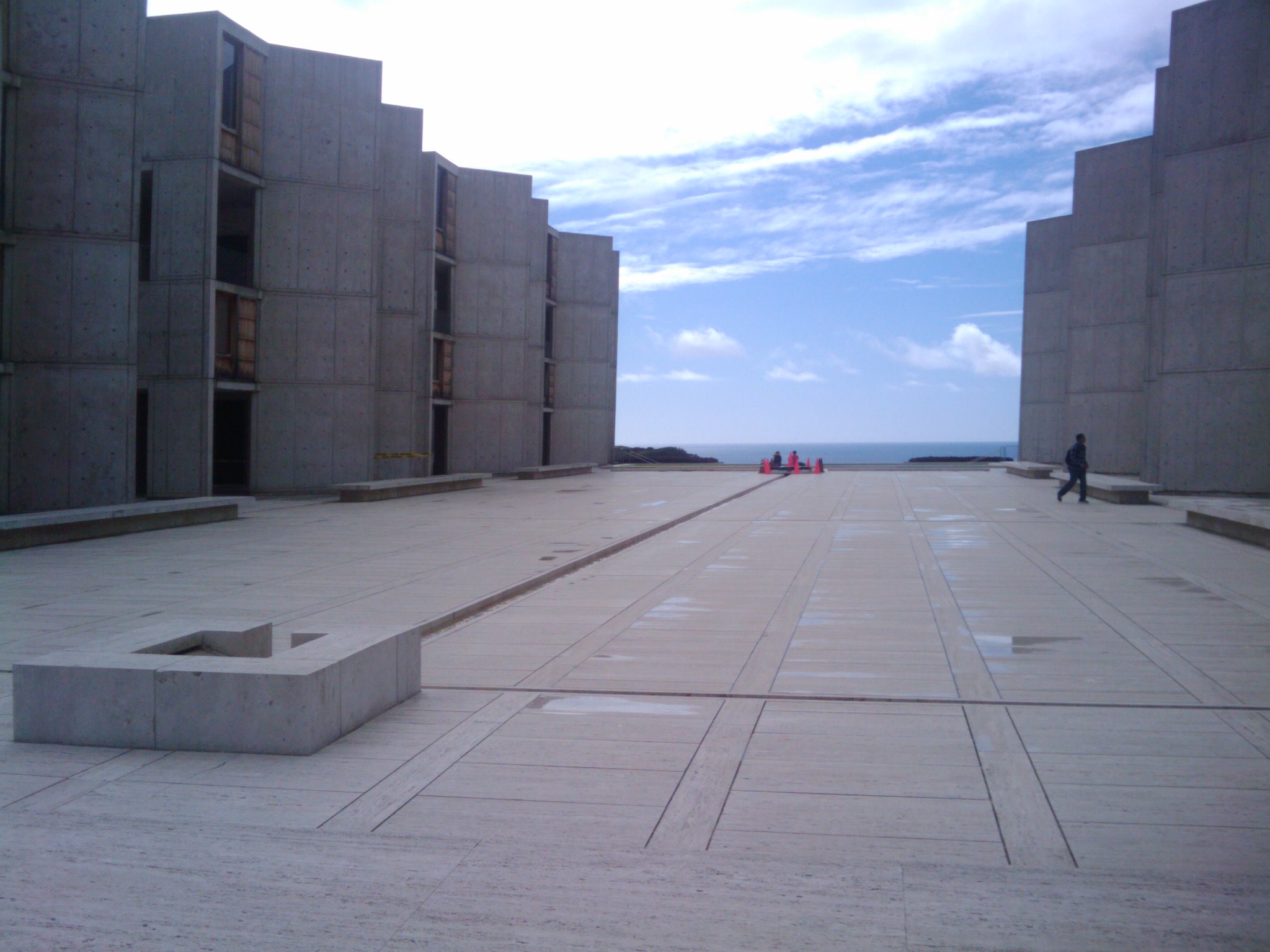
In this extremely classy (and somewhat lengthier) episode of Unfrozen, Greg delivers his report from San Diego, where he got a private tour of the Louis Kahn-designed Salk Institute, and spoke to one of its leading scientists about how the 60-plus-year-old facility, revolutionary at the time, about how effective it has been, not only in leading to scientific discoveries, but in launching a whole ecosystem of research and development along the coastline. But that’s not all – stay tuned for two more guest starts, filling us in on engineered fun (social architecture) and some insights on America’s great homebuilding muddle from the sidelines of the PCBC (California Building Industry Association) conference at the Gaylord mega-resort in Chula Vista.
Show Notes
Intro/Outro: “Spacelab,” by Kraftwerk
--
--
Interviewees:
Greg Lemke, PhD, Distinguished Professor Emeritus, Salk Institute
Ryan Rosen, Friendly Futures
John Galante, President, AE Ventures
--
Discussed:
People
Louis Kahn — architect of the Salk Institute
Greg Lemke — distinguished professor emeritus, Salk Institute
Tony Hunter — Salk professor; discovered tyrosine phosphorylation
Jonas Salk — founder of the Salk Institute
Eero Saarinen — architect of Bell Labs Holmdel and IBM Yorktown
William Pereira — architect of Geisel Library and master planner of UC Irvine
Walter Netsch — SOM architect of Northwestern's University Library
Dawn Clark Netsch — Illinois legislator and comptroller; Walter Netsch's wife
Frank Gehry — architect; designed Facebook/Meta's MPK20 campus
Mark Zuckerberg — co-founder and CEO, Meta
Theodor Geisel (Dr. Seuss) — namesake of UC San Diego's Geisel Library
Cormac McCarthy — novelist, author of The Road; longtime Santa Fe Institute fellow
Bruno Latour — sociologist of science; co-author of Laboratory Life
Steve Woolgar — co-author with Latour of Laboratory Life
Christian Catalini — MIT economist; research on lab proximity and collaboration
Eric Klinenberg — NYU sociologist; author of Palaces for the People
Jan Gehl — Danish urbanist
William H. Whyte — urbanist behind the Street Life Project
Ryan K. Rosen — founder and creative director, Friendly Futures
Aaron Hurst — founder and CEO, U.S. Chamber of Connection
John Galante — president and founder, AE Ventures
Bryan Boyer — University of Michigan; co-author of Chain Drain ("Brian" in the transcript)
Kelly Alvarez Doran — co-founder, Ha/f Climate Design; formerly MASS Design Group
Buildings, Campuses & Places
Salk Institute for Biological Studies — La Jolla, CA
Salk Institute architecture — history and design of the Kahn campus
UC San Diego — University of California, San Diego
Geisel Library — UC San Diego
UC Irvine — William Pereira's radial campus plan
Torrey Pines Mesa — San Diego's research and biotech corridor
La Jolla — San Diego community
Bell Works (former Bell Labs Holmdel) — Saarinen's Holmdel research campus, now adaptively reused
IBM Thomas J. Watson Research Center — Yorktown Heights, NY
Santa Fe Institute — complexity research institute
Northwestern University Library — Walter Netsch's brutalist library
Jussieu Campus — Sorbonne University, Paris
Meta MPK20 — Frank Gehry-designed Menlo Park office
The RaDD (Research and Development District) — IQHQ's downtown San Diego waterfront life-science campus
Gaylord Pacific Resort — Chula Vista, CA
Wild Mile — floating eco-park on the Chicago River
La Jolla Tennis Club — public tennis club, La Jolla
Companies, Organizations & Events
Friendly Futures — Ryan Rosen's social-architecture and neighborhood-games practice
AE Ventures — John Galante's hosted-event company
Builder Innovator — AE Ventures' content platform and summit series
Urban Rivers — Chicago nonprofit behind the Wild Mile
U.S. Chamber of Connection — Aaron Hurst's civic-connection nonprofit
IQHQ — life-science real estate developer
Alexandria Real Estate Equities — life-science REIT and lab campus developer
Scripps Research — La Jolla biomedical research institute
Scripps Institution of Oceanography — UC San Diego
MASS Design Group — nonprofit architecture practice
Ha/f Climate Design — Kelly Alvarez Doran's embodied-carbon consultancy
Zonda — housing market research firm
Future Place — Zonda/BUILDER master-planned community conference
PCBC — Pacific Coast Builders Conference
California Building Industry Association — CBIA
Downtown Denver Partnership — downtown Denver business improvement organization
Mortgage Bankers Association — MBA
White House Council of Economic Advisers — CEA
Bilt Rewards — rent-payment rewards platform
WeWork — flexible workspace operator
Los Angeles Dodgers — MLB franchise
Los Angeles Rams — NFL franchise
Insulating Concrete Forms (ICF) — Insulating Concrete Forms Manufacturers Association
Otter.ai — transcription service used for this recording
Publications, Papers & Works Cited
Laboratory Life: The Construction of Scientific Facts — Bruno Latour and Steve Woolgar (Princeton University Press)
Chain Drain: Why the Built Environment Struggles to Learn and How to Fix It — Bryan Boyer and Greg Lindsay, University of Michigan white paper
Palaces for the People — Eric Klinenberg on social infrastructure
The Social Life of Small Urban Spaces — William H. Whyte, Project for Public Spaces
The Purpose Economy — Aaron Hurst
Aerotropolis: The Way We'll Live Next — John D. Kasarda and Greg Lindsay
Road to Housing Act of 2025 — U.S. Senate Banking Committee housing legislation
Conquest of the Planet of the Apes — 1972 film shot partly at UC Irvine
Show Transcript
Daniel Safarik 00:30
Hello and welcome to Unfrozen. I'm Dan Safarik,
Greg Lindsay 00:33
and I'm Greg Lindsay, and welcome to episode 128, Space Lab. Our guests this week, well, we have several of them because while Dan was chained to the virtual studio recording episodes 126 and seven, I was gallivanting across the North American continent to San Diego, where I was speaking at PCBC, which is like the lead event of the California Building Industry Association, sort of their association of home builders, which we'll get to in a moment. But Dan, it more importantly afforded me an opportunity to play tennis, eat fish tacos, and finally visit the Salk Institute by Louis Kahn, of course. Before we get into that, I want to give incredible thanks to Victoria Johnson, the media relations manager there, who was kind enough to offer me a private tour in a day where there were no public ones scheduled. And before we get into the the heart of Salk and toss it to you for the architectural analysis, two things really struck me about Salk. One is that, like most modernist gems, it feels tiny compared to like sort of contemporary scale. I was shocked by sort of the size of it. And second, you know, of course, listeners, you know it if you even even if you don't know it, because you know that that vista here, framed by Kahn's, you know, concrete sort of eaves coming out of it, which looks like it stretches directly to the Pacific Ocean. Number one, it does not. There are bluffs there, and that's apparently where they were going to build housing for the faculty and a much larger, ultimately over time, campus that was never realized. And the second part, which again we'll get to with our first guess in a moment, is that Salk really is just dwarfed by not only UCSD, the University of California San Diego, across the street, but also this giant biotech pharma cluster that has emerged around Salk and UCSD. So it's it's a fascinating place to visit. But Dan, you did the public tour like 15 years ago, so read us read us the highlights here of Kahn's modernist icon. I
Daniel Safarik 02:25
did well. I don't know if I can really do it justice, but essentially, yes, it's built on a sort of an elevated concrete plinth that edges up to the edge of the the bluff there, descending into the Torrey Pines wilderness and eventually down to the sea. And it has this singular canal that goes down the middle, a rivulet cut into the concrete, and the water flows kind of gently down the slope. And arranged on the other side of it are these symmetrical arrangements of labs where there's a what 45 degree angle with a view toward the ocean, and then one that views views the plaza. Each of those represents the private office of one of the researchers, and then down the middle of the corridor, in each of the two volumes, you've got the the laboratories arranged. And you can describe a little bit more about that.
Greg Lindsay 03:17
Yeah, I managed to pop into that. No photos were were allowed, and yes, as you'll hear from our guests in a moment here about the you know it's it's a classic open plan lab space there you know just 16 zero square feet on each floor plane that can be totally reconfigured which is sort of the key to sort of Sauk's effectiveness there but also I just noted there were a couple other fun little flourishes that came out one no red wine is allowed on the campus because you know any chance of a spill on the travertine marble of the plaza, it basically can't be cleaned or replaced. And same, and same thing with chalk as well. They're terrified of chalk, which is funny because Kahn, you know, assuming how scientists work, put up like basically built-in chalk bores into some of the columns there along the edges, which are now you know they have drawings in place, but also like people are very wary of getting chalk on the marble as well too, and of course, you know the concrete had to go through complete refurbishment because you know it's an icon, but also it's not going to last forever. So it was interesting to sort of see the affordances there, but but yeah, I also think it's interesting. You know, you had the the teak as well, this teak and concrete blend of con that needs sort of constant upkeep, of which there is plenty of budget to go around.
Daniel Safarik 04:24
Yeah, no doubt. I I did see that they did a massive renovation project in the mid 2010 s. Actually, after I visited, you know, that involved quite a bit of work on the concrete.
Greg Lindsay 04:36
Yeah, well, but to me, the most interesting part about visiting it, what reminded me of, is my visits in years past to other sort of like modernist icons of research labs, like Serenin has two, for example, Bell Labs and Holmdel, now most famous probably in pop culture for being the shooting spot for Severance, channeling that dark corporate vibe, and the other being the Thomas J. Watson Research Lab for IBM in Yorktown Heights, New York, where if you didn't already know, I played Watson. As part of the sparring program, but more famously, it has more patents per year than any other building on Earth that come out of it for basic research. And in studying those, I had the same question for about Salk that I did for those two buildings, which is it's a modernist icon, but is it actually a good place to do science? Is it an effective machine for research? And you know that's always the question. They're like, you know, can we organize the labs in such a way that they work with the space and not against it? And so, while asking this question and thinking about it in the context of Bell Labs and these others, Victoria was very kind enough to put me in touch with Greg Lemke, who's a distinguished professor emeritus at Salk, is a neuroscientist, spent decades there, and yeah, is now semi-retired in San Diego. And I, after my trip, I hopped on a Zoom with him and chatted about what does make Salk a fascinating place to work and an effective research lab, which is a combination of both architecture and, of course, the norms and affordances of the people who use it. So let's cut to Greg. So, Greg, as both a neuroscientist and a longtime Salk resident, how did you find the institute to perform? Like, did it work with you or against you, or did you rearrange it to suit your own needs?
Greg Lemke 06:16
Well, definitely. I mean, the building is designed to work with scientists. So, one of the features that's really, really unusual was was unusual for the time is this idea that none of the interior walls in any of the laboratory spaces support any weight. So the entire each floor is essentially a glass box of 16,000 square feet, and I came to the institute in the mid 1980s, 1985, and so it's the actual laboratory spaces and the working spaces, pretty much for the entirety of the institute have been reconfigured multiple times. So what exists today is not what exists in what existed in 1965, 66, whenever the building was first inaugurated. The science has changed very, very dramatically. What we need the spaces to accommodate has changed, and so the the fundamental design of the building has allowed us to to accommodate that over over the years. So it's it's it's really worked very very well for for my science in particular, and for the science that we do at the institute in general.
Greg Lindsay 07:39
How exactly? How has the space changed, and who does the changing? I know there's a facility management team, but like, can you put in requests, or do the PIs sort of reconfigure the space? How does it work in terms of like hierarchy and research?
Greg Lemke 07:53
Well, basically, it's a function of whoever we hire to do science. So it's it's a function of that person's requirements, you know, they're so it it's mainly driven by the fact it's driven by the science that we want to do. As I said, all the interior walls that exist now are actually just drywall. None of the none of those walls support any weight. So the actual floors of the building are are supported by these ingenious trusses that go from the study towers, which are on the interior space of the building near the plaza, to the exterior stairwells, which are on the other side of the building. So there's so we can really do we can really put things wherever we want. Some, you know, so the actual configuration of the space is driven by requirements. There are some, you know, there's some places that need to be dark. For example, a lot of places that use high-end imaging nano microscopy, they need to have ambient light pretty much eliminated. So we can pull walls up to accommodate that. And other spaces we really don't need that. So, in terms of the science, the fact that there are no walls has really been fundamental to how the institutes worked over the years because it's really fostered and facilitated interactions between laboratories that are right next to one.
Greg Lindsay 09:18
Yeah. So, what was a day in the life, like like, what was your circulation pattern, or how did the scientists and researchers there cross pollinate across that? You know, create creative collisions has almost become kind of a joke. This idea of why we need to be together, but it's particularly true in the sciences, if I understand correctly.
Greg Lemke 09:33
Well, it's true in the sciences if you're going to make discoveries, because you know those things really only happen when people from very disparate kind of disciplines bump up against one another, so the you know one of the ways that that's been facilitated at the institute is to put a space that will have. Common pieces of equipment or common things that multiple labs will want to share. So you put, for example, all the chemical benches where people have to come to get sodium chloride and sodium phosphate in one space, and you share those between spaces. Or you put all of the centrifuges that people are going to use to spin things down. You're going to multiple labs are going to use the same center view. Just you put them in this in one space, which is typically in the middle of the building, on middle of the floor. So each floor, this long 16,000 square foot sort of glass shoe box, is really divided into three sections. There's two laboratory sections on the outside, and there's a central section that has these share spaces. It will have the centrifuges. It will have the bacterial incubators. It will have a set of cell culture facilities that labs from the two ends come in and share. And so it's sort of it's set up that way to sort of Foster interactions. Really, there's no way of getting around it. Actually,
Greg Lindsay 11:05
that's interesting. The water cooler effect in everything. Only in this case. Yeah. Yes. What's also the social life it's like in terms of like creating the social affordances for the teams to interact? Like I visited, for example, the Santa Fe Institute in New Mexico, where you know where you know what's his name? McCarthy, you know, wrote *The Road* and other books. There would, of course, mingle with the other scientists. They would have common meals together. Is these kinds of expressions? Do do scientists regularly, frequently cross each other's paths? Not just in the in the flow of getting to equipment, but is like, is there sort of a social programming to encourage those ideas, or how do you talk with them?
Greg Lemke 11:37
There's a little bit of that. I mean, in terms of the actual physical spaces, there's the cafeteria space, which is off the off to the end. There's the grove out at the other end of the building where a lot of people get together that to pick up coffee, the way I just did. So people meet there. People also meet typically. We have regular kind of they're scientific meetings, basically. So, for example, I'm a neurobiologist. We have we have a molecular neurobiology lunchtime meeting every Monday. It's one of the best attended meetings at the institute, primarily because pizza is provided for this meeting, so everybody gets together for that. I mean, in terms of the structure of the building itself, you know, there's a lot of things that facilitate. There's a lot of there's a big common area. There's some things that Lucan had when he designed the building that were a bit goofy. That really never. I mean, when you were out here, you probably noticed he thought you know scientists would be struck by inspiration and they would have to write on chalkboards out in the plaza. So there's this series of chalkboards that was that's you know that only a non-scientist would come up with this idea. So now they're actually they actually have drawings on them. Nobody uses them, but there's a lot of other spaces. There's you know there's a lot of common conference rooms, the library meeting rooms, which are shared by people from multiple disciplines. So there'll be a large sort of conference room, like at the end of the end of one floor, which is actually designed by by Kahn, which are actually they're used by computational neuroscientists, by cancer, by they're used by everyone, and so people get together in those settings as well.
Greg Lindsay 13:32
It's interesting, you know. You mentioned sort of Louis Kahn's not not informed ideas about how scientists would use the space. I do think it's interesting that some of these, you know, really hallowed research labs like Bell Labs at Holmdel and Yorktown Heights for IBM are both by Serenin. The one conversation I had with Frank Gehry before his death was about Mark Zuckerberg commissioning him to build Facebook's campus extension, which was he literally said Mark wanted a giant box so they could configure it. My understanding from Victoria is that you did some analysis of sort of space design, did some work around sensors and things like this, and I'm curious about like, do architects really know the needs of scientists? Can they get the brief? Has anyone studied this systematically about how salt could improve? I'm curious your thoughts there about architects versus neuroscientists or other researchers on who makes this space and who who should be allowed to shape it.
Greg Lemke 14:20
Well, as I said, there are some things that I thought were goofy, but I mean, the ultimate genius of the place is this idea that the labs were going to be open concept. So you know, so for example, scientists like to have their own configurations, like to have their own labs and spaces. But on most of the floors of the building, you can walk in a door on the east end of the floor and walk the entirety to the entire west end of the floor and never open a door, right? And you, when you make that path, if you walk in the center of the left, you will. Be walking from one lab to another lab to another lab, and there's no official demarcation for that. So that was Khan. That was Kahn's original idea. You got to remember that when this building was built, the idea at the time, you know, the sort of consensus configuration is you would get up at the top of a stairwell, or you get off an elevator, and you'd be confronted with a long corridor. I mean, really faceless kind of corridor with a bunch of doors, and those doors would be entrances into the labs, and those were individual lab spaces. You could walk into that, close the door, and you would never interact with the other person on the other side of the wall. So I think that that was Kahn's really, really inspiring idea, and the Salk was the first place where that was actually done. A lot of architects at the time looked at this, and now it's very, very, very, very widely imitated. I always, you know, I've been in science for a long time. I've been around universities for a long time. You know, there's a lot of research buildings that were built the same time as the Salk that have already been torn down and replaced with something else. And so the fact that the Salk has, you know, constantly been been able to, you know, be a adapted for current uses. It's a it's sort of a modern building. Is something that was is very special about the institute, and as I said, it's been widely imitated.
Greg Lindsay 16:35
I'm curious. Did you have a particular moment of serendipity in your own career at Salk, or can you cite an example of one of where that sort of cross-palidation really came to life. It's I know it's always these sort of just so stories, but those are the moments that like make or break entire fields or inventions.
Greg Lemke 16:50
Well, in my own in my own personal career, I started out as a sort of in in the in as a cellular and molecular neuroscientist. So I came to Salk with that training. I was a neurobiologist, and Salk, one of one of our most distinguished and famous scientists, is a man named Tony Hunter, and he discovered a set of he decided discovered an enzymatic activity, which turns out to be fundamental to all biology. It's called it's called tyrosine phosphorylation. It's the modification of one amino acid by putting a phosphate group on. You've got a whole set of enzymes that do this, and typically that's a switch in cells. It it changes the activity of cells. Typically, it's activating it. And so I came here, and Tony was here. And this was in an area where an era of the late '80s, where we didn't really know how many of these enzymes there were. Molecular biology was just trying to figure out how many genes we had in our genome. And so I spoke with Tony, so this was interaction with Tony about how we would go about identifying how many how many tyrosine kinases there were in mammalian genomes. How many how many did we have, and what did they do? So we worked on that, and we we ended up cloning about half. There these these enzymes fall into two classes: one that sits inside your cells as a free protein, and the other that's hooked up to a receptor, which is a receptor for signals outside the cell. And when it receives the signal, typically this kinase, which is part of the receptor, becomes activated. So we cloned my lab ended up cloning about half of those of those genes in your genome, because of talking with Tony, thinking about, and one set of the genes turned out to be expressed in the immune system. And when we made mutants that lack these genes, we made mutant mice. The mice had all sorts of horrible problems with with their immune systems, and so the lab over time actually moved to really working, try to figure out what was going on in the immune system. So for the last 10 or 15 years of my career, I ended up doing immunology as a result of having this interaction with Tony, which I don't know we might not have had if I'd been in a formal, you know, kind of university setting. I mean, the physical setting of the buildings and the institutes is actually translated also into you know our organization scientifically. So, for example, we don't have conventional academic departments here. Every laboratory is sort of an independent thing, and we're organized based on physically where we are. But we don't have a department. We don't have department chairs that are organizing how the science is going to go. And so we and the faculty is small. You know, we can. We are. Less than 60 scientists running laboratories here, so we can get the entire faculty together at one time, and that means because of the way the the buildings are organized, that the plant biologists have to talk to the cancer biologists have to talk to the computational neuroscientists. Have to talk to the new AI people who are working in all areas of biology. Have to talk to everybody, and you have to make a case that your science is interesting and important. And so those kinds of interactions, the fact that we're small and everybody's kind of mixed up together, we don't have we don't have a hierarchy. We don't have an academic hierarchy that actually flows from the architecture, and that that again is another important thing. It's one of the things that makes the Salk not only special architecturally, but special in terms of you know how we do science, how how our science is organized, and how different scientists interact.
Greg Lindsay 21:03
All right. Well, the last question then is: Is how do you see Salk's legacy then as as both a campus and that spatial configuration, and then also its location in La Jolla? Because the other thing that struck me when I visited was not just, of course, how how small these modernist icons always are compared to today, but also how it really seeded, along with UCSD across the street, this gigantic biotech pharma cluster, office buildings as far as the eye can see, and I assume lab space as well too. I'm assuming that's because of the proximity of the researchers to Salk. But do you see its lessons carried into other labs in the later end of your career, or do we not learn those lessons?
Greg Lemke 21:37
Well, you're absolutely right. So I've been here for that whole time. I mean, I wasn't here at the at the outset when the build when the building was built. I mean, I I've seen this amazing photograph of Interstate Five, and the ex there are two exits off of Interstate Five, which are which which are basically nucleated all around this cluster. One is La Jolla Village Drive, which which is a southern exit, and the other one is Genesee. So Genesee now in the morning, when you try to get off that exit, there is so much around it. There's not only there's not only UCSD and Salk and Scripps, these big basic researchers. There's a huge now huge medical center complex, multiple hospitals, all the Scripps hospitals, all the UCSD hospitals, and then all that biotech. Okay, well that exit. I saw a photograph of that exit in 1967, so that was right after the freeway was built. The freeway is that there was an exit, and but the paved road for that exit only extended for about 200 yards east and west of the freeway, and then it was an unpaved road. And so, if you wanted to get to Salk, then you actually had to go another exit south of La Jolla Drat Racks, and then come back up north on North Torrey Pines Road to get to Salk. So, the Salk and UCSC, they were built. All those operations were started almost the same time. They started everything. It was really you were at the edge of the of the scientific world, and they nucleated everything. And so, you know, now San Diego is one of the three big biotech clusters in the whole nation, and that all flowed from that. So I'm not sure. You know, there was a really there was a spirit of kind of adventure and exploration, which was true at that time, which flowed again from the architecture. I mean, you know, the architecture was different. The campus, the UCSD campus, was actually organized differently from you know most other college campuses. Initially, was just purely a graduate school. There are no undergraduates for the first couple years, so that that it flowed out of that. But you know the the the extent to which that happened is really quite dramatic. Now, what's going to happen in the future? I mean, I'm just I'm just constantly amazed by this. I mean, you know, there were developers, there are biotech developers. One of the biggest biotech developers is this company called Alexandria, which builds buildings all over the United States. Lots of stuff around medical center campuses in Boston and New York, but everywhere in all the big things, they just continue, continue to and continue to build. And one of the things that's happened actually in San Diego is it's like the space right around here is really getting built out. So the question is, where do they go? And some of it is now like expanded to other parts of Sandy. Some of it's expanded north, up up sort of Carlsbad area. But some of it is actually also expanded south. And so people are trying. So the so it's amazing how much that. Stands out, and you know you you really never know. I think when you provide people with opportunities that hadn't existed before, if it's in the architecture, it's in the built space, things will happen. So there are developers now trying to make downtown San Diego, where I actually live now, into an architecture space, there's a big, there's another set of developers working down there. This they built this big campus called IQ HQ, which they're trying to get biotech to go into, and we'll see. I think you know, I think there's a possibility for that as well.
Greg Lindsay 25:37
It's amazing to think how much Salk has totally transformed not only science then, but also the urbanism and architecture of San Diego. Six years later, thank you so much, Greg.
Greg Lemke 25:46
Sure, thank you. Take care.
Greg Lindsay 25:51
All right, Dan. So that's that to me is fascinating. That like even at the world's most decorated research facility, it's still the equivalent of well, let's put the water coolers in the center of the floor. Only in this case it's like you know chemical chemical dispensaries, and and yeah, let's get some coffee. Like that's it. That's what we've got. It's it's I love the
Daniel Safarik 26:08
detail of like you know we're just hanging out getting sodium chloride.
Greg Lindsay 26:11
Yeah, exactly, and and it's fascinating. I mean, also the fact that you know that the labs are not sort of locked up in their own sort of quarters, but they are researchers are mixed amongst themselves. There's a paper by Christian Catalini, who I believe is still at MIT, about the Paris Justo Research University, where like labs got randomly sorted because of asbestos abatement, and it produced more multidisciplinary research than like any actual top-down initiative. So I still marvel at how you know just yeah how serendipitous, how chance this is that no one's really perfected a practice of of the art of science, and and it's interesting. One final note we'll put in the show notes is Bruno Latour and and co-author of his. You know, this SOC was their study of like how scientists actually do work, the sociology of science that led to actor network theory. And so here we are, 60 years later, and like it's still like some best practices, open floor plans, and doing what we can. So there you go. That's what makes Sawk Sauck world famous. Well, from there I left I left Sauk and walked across the street over to UCSD to pay my respects to another icon of modernism, William Pereira's Giesel Library. Again, two things that jump out at me: one, I did not know was literally named after Dr. Seuss, and two, again, photography. The photography sort of you know, gives you this false impression when it's shot at dusk. To me, it's always appeared like this sort of almost organic form arising out of it. No, up close, it's like this brutalist icon that looks like a you know, not to be cliche about it, but one of those Yugoslavian memorials to the martyrs kind of thing. Incredible, you know, Eastern Bloc kind of style. But also, I didn't realize that much of the library is underground. You know, not that much of the icons above ground. But yeah, what are what are your thoughts on that? I'm I'm a big Pereira fan, so that was another homage I had to pay.
Daniel Safarik 27:49
Indeed, I'm a fan of Pereiras and of brutalist architecture in general, but particularly around libraries, and that tracks back even to my my alma mater, Northwestern, which has the university library designed by Walter Netch, whose whose wife was later a U.S. representative. Yes, oftentimes the the saying is that libraries that were and university buildings that were conceived at these this time were kind of done under a sort of militaristic mindset. You know, there have been a lot of campus unrest in the late '60s, and some people say that the entire arrangement of not only individual buildings but the entire campus of UC Irvine, which was also master planned by Pereira, was a defensive posture so that gun mounts could be properly placed in case the students became intemperate
Greg Lindsay 28:42
and related to that, I believe that is the the third. I think the fourth series, the fourth in the series of the Planet of the Apes films, in which the ape uprising happens and overthrows humanity in the original 19 6070 series was filmed in that campus. So yes,
Daniel Safarik 28:57
yeah. So it does seem that the the brutalism is Sometimes played, let's just say it's a character actor in a lot of places where maybe that wasn't the original design intent, but boy does it lend itself easily to those types of dystopian scenarios.
Greg Lindsay 29:12
Well, the rest of UC at UCSD, as as Greg mentioned there too, is again covered you know all sorts of glass modernist buildings, you know decades of different styles and what was sort of added to it, but yeah, this this huge biotech cluster and science building surrounding it. It was a fascinating visit. But I escaped off campus from there and hopped hopped in a car and went down to El Pescador to get my fish tacos, which of course was a must. And then it was up the street, just a few blocks to the La Jolla Tennis Club, which, despite the name, is not what you think it is in this case. It's a 110 year old public club where you pay like a nominal fee to use it and maintain upkeep of the little pro shop there and what things and that's where I met Ryan K Rosen of Friendly Futures. Ryan is a social architect, how he describes his practice. Where yeah, they don't just design play structures but new forms of play like games. And rituals and these sorts of things. Ryan and I met actually last fall at Zonda's Future Place conference, devoted to the practitioners of master plan communities because they're always interested in how to bring people together. And so Ryan and I happened to reconnect before my trip, and so we arranged to play tennis as one does. And you know, not only did I manage to hold my own against him, but he was kind enough to sit down for a podcast segment as well, so he and I grabbed a picnic table and I asked him about social architecture. So let's let's hear from Ryan. Okay, Ryan. So what is social architecture? Because there's a lot of talk right now around social infrastructure and like the Aaron Klindenbergs of the world and Gales and talking about reinvesting in our public spaces and in libraries and institutions, but you're doing something a little different. So, what is social architecture?
Ryan Rosen 30:46
Well, I think social architecture is the discipline that creates social infrastructure, and of course, there are other parties that are playing a part in it. But the emergence of social architecture as a field has created a place where you can really just focus singularly on cultivating social infrastructure as opposed to the traditional fields of architecture, landscape architecture. I mean, place making. All these are great, but it's nice to have something specific for social infrastructure.
Greg Lindsay 31:12
Okay, but what do you produce, though? What form does it actually take?
Ryan Rosen 31:14
Well, so what we do as social architects in our specific practice is we focus on play and creating cities that are great for all ages to play, right? So if we break down social infrastructure on our perspective, it's all about using play to cultivate more meaningful and better relationships. So we came up with an approach called placemaking games. It's essentially gamifying public space and creating game systems as a disguise to create social infrastructure, and more or less, it's just creating new opportunities in the public realm, giving people more reasons to do stuff with each other rather than just sitting, you know, chairs next by or next to each other and hoping that some form of conversation comes together.
Greg Lindsay 31:52
Okay, so give some examples of that one. Not not to hate on you know brightly colored chairs that we can move around public spaces, but really you know the cliche of placemaking. But like, what's the next generation? Because like, yeah, because we can make places, but at this point, we're just making places for people to sit down and play on their phones. Yeah, next generation
Ryan Rosen 32:08
is is totally the right terminology because look, we're distracted by our phones. Our social skills aren't as good as they used to be, and if there's not a medium, something for people to do together, they're probably not gonna do something together. So let's look at the library of stuff that we have right now. So you have your existing kind of like assets in a park, like basketball courts, chess tables, bocce ball courts, all stuff that I love and adore. And then you have things that like bids, lifestyle directors, whomever is operating public space, putting on movie screenings, roller rinks in the park, dancing, silent book clubs. There's lots of fun stuff, and that's all great. But the library or the catalog of stuff that we have to do together in the public realm, I think has a lot of room to grow and to innovate. And specifically in the let's say category of play, which I think is the most potent form to build better relationships. So sure, we have playgrounds for ages two to 12. They're valuable, but they're not holistically thought of, right? Basketball courts are great. I love to hoop. I play with my friends all the time. It's not a good spot for my grandma and I to hang out together. She's too good for us. So let's expand our definition or our catalog of what can go into the public sphere, and that's how you start thinking about what's the next generation of the public realm and providing fun things for people to do together, in ways that are optimizing for the outcomes that we want: more social cohesion and wellness, more social interaction, more joy.
Greg Lindsay 33:36
Okay, so what? Give some examples of stuff that your practice, Friendly Futures, has worked on because I'm very curious because like this gets to me my premise that like we have to go beyond making spaces and even like form making to creating new games, creating new rituals. So like, are you not just architects, but like do you have game designers and
Ryan Rosen 33:52
100% So that's kind of how we've transitioned and become more of a a social architectural practice than let's say more of an established design field, and that's because you're thinking spatially, you're thinking about the equipment, but you're also thinking programmatically, you're thinking culturally, you're thinking rituals, you're you're thinking about everything that can plug in and create an improved social experience and make it more likely actually design. I know you mentioned the term engineering serendipity earlier today while we were playing tennis, so I'll go ahead and throw that in there now. Really think about how you do that. So let's give a concrete example. So we're creating a project right now. It's at the Wild Mile, which is a floating eco park on the Chicago River, just outside of downtown Chicago. Really cool spot. And there, you know, it's already a great place to be. It's a nice trail. You go down, you access the river. They have fun programming that they're doing, but they wanted to continue to iterate on what's the next gen of public space and how can they build more community, get more people to hang out with each other, make it a little friendlier and a little bit more fun. So we created a game for them called Cedar, and it's part of this you know emerging field of placemaking games, and they're games that are specifically designed for the. Public realm to again optimize on what the public realm needs because basketball is great but not necessarily optimized for that. So Cedar basically gets a bunch of gamified art along the trail that looks cool when it's just there. There's some furniture as well you can sit on like we. There's like a couple of logs that washed up ashore. So boom, let's chop them up. We'll put them there. They're in for seating. You can informally play whatever you know, kind of traditional games you want, or just hang out. But the exciting part is there's also this game, which is called Cedar, which encourages you to circulate throughout the entire trail, and give you just another really a really fun thing to do together along that trail, not walk near each other, not listen to podcasts while someone nearby listens to a podcast. Actually, interact with each other. So cedar, you play with balls that are made out of seeds and clay. So this is nice symbolic story too of amplifying the park's efforts of rewilding the Chicago River. So every single person that plays cedar is literally a cedar. They're throwing balls made of seeds and clay into the river for that to, well, one day produce a plant. And it's just a fun public art is great, and there's different levels of interaction. But this is actually something where, like in the game, you're designed. If you see someone walking by you, you can ask them to take a celeb shot. It's rewarded in your score. It's just an opportunity of making it as easy as possible to say hello to someone new, or a fun activity to do together. It's very inclusive for all ages. So you know you're throwing a ball against yourself. So it's like golf versus tennis. Tennis you can't play at different levels, even though you know Greg was kicking my butt earlier today. But golf, theoretically, we could. So you're tossing the ball, you're going along the trail. It's a fun thing to do with your grandma, with your friends, with your significant other, with new people, whomever it may be. But it's just that kind of use your term, next gen opportunity to cultivate social wellness and joy in the public realm.
Greg Lindsay 36:59
It's interesting you mentioned our tennis. So yeah, so you know we were playing tennis for an hour here at the La Jolla Tennis Club, which, despite the name and the image that conjures, is actually a it's 110 years old, and it's a public club. You do pay for court time here, but like it's delightfully intergenerational and refreshing. But um, but it's a social structure to support the play, and so like in Cedar, I'm curious how you're doing that one? Because there's a resurgence in interest in private clubs and like golf and tennis both benefit from this sort of structure around it, and pickleball, which maybe we can discuss. But um, but yeah, do you have to design like, you know, we see like efforts in programming and formal programming and having community managers or things like this too. Like, what have you designed in terms of the actual sort of like scaffolding to make sure that like adoption takes place of Cedar and other games?
Ryan Rosen 37:41
Great question. So we wanted the game to be adjustable. So I think for us, one of the most important values in the public realm is multifunctionality. So let's say we put a game in. If you put a pickleball court into the public realm, it's going to be used at least how it's supposed to for pickleball, and theoretically nothing else. So we wanted to have multifunctional spaces. So what does that mean for the game? That means that anyone can come and play, right? So certain games require equipment. So that either can take the model of the spaces providing it, or it's like pickup basketball. You bring your own ball, but you can kind of go play whenever. So there is a passive component to it where it can be used at you know, essentially anytime or whenever the space is open, regardless of whether staff is there to program it or not. So the rules, the culture, the stuff is created and then continue to be co-created with the community so that it can be played passively. But then at the same time, it's just ripe for events, leagues, tournaments, etc. where you can take advantage of, you know, what's called community facilitators to host programming that goes on there too. And of course, you can do other programming in these spaces, whether it's your silent book club or whatever, right? They're multifunctional, but I think members clubs are are great and are obviously filling a role for the desire for more people to bond with people. And let's talk about pickle paddle; these other sports that are blowing up. I think they're just you know evidence of how do you spend time together with your friends as an adult, and people are drinking less and whatnot. You want to go play some sports. You want to go play some fun things. It's cool. These sports are more optimized for social interaction. I love both of them. Again, I don't think they're the best for our public space, but they're great. But these members clubs are popping up. They have staff that are operating them. So you just gotta take the lessons of what they're doing well and apply it to the public realm, so that you can have seasonal events or weekly events, whatever the programming may be, and it can also just function as, you know, a park or plaza, promenade, paseo. They all start with P. All
Greg Lindsay 39:51
right. So in that case, then who's your typical client? Because you are a for-profit business, so there's clients, and then how do you find success? Like, what are the KPIs with. Arts of this in terms of like you know are you counting Holly White style or using sensors or things like this like how how do you actually define outcomes in this particular case? I'm
Ryan Rosen 40:07
so happy you're talking about KPIs real quick. So our clients are a mix of groups, but municipalities, developers, nonprofits, some boutique hospitality concepts, really anyone interested in shared space and activating it in forward-thinking ways. So, I it's blown my you know it's blown me away how excited people are about the world of play. And there's it seems like everywhere I go, there's someone like, can I cuss or not? I won't cuss. Okay, I'll cuss. Oh shit! I'm an adult. I want to play too. There's a lack of that in my life, and they get excited and enthusiastic, and it's so fun. It doesn't even matter. Just so you know, like a side benefit that you're really benefiting your social health, which is arguably the most important indicator for your overall you know health and well-being. So people are getting super stoked on it. So really, our clients are people that share that enthusiasm and are interested in how can we you know level up our let's say community spaces or our public spaces to be more socially dynamic and joyful, and specifically for all ages too, because that's a big one. As far as the KPIs, so we're working on a friendliness metric, still tweaking with how it's quantified, but for us, success is not, you know, spend more money on public space. That's not necessarily how what we think is kind of the best use. It's more about how do you optimize for social connection, and get you know gritty with it and creative and thinking about how actually some you know typical amenities in public space aren't even you know the highest and best use for building community and social interaction. So we actually you know let's get people to spend a little bit less sometimes, but just optimize it and reshuffle where we're prioritizing how that goes. So a friendliness metric and how you can't really quantify or it's more challenging a friendship. Like how do you define that? So we're we're usually we're using now like connections. How many new connections are forged in the public realm? We'd like to start tracking what that connection leads to as well, because to me, friendship is you know proximity and repetition. So what's cool about these games is they're all designed to get the repetition. You want to go play again with the people that you met. So we have the friendship metric, which is essentially new connections made per hour, multi generational use is critical for us. Some of our earlier projects didn't hit that, and we're able to kind of learn some lessons on why. Sometimes, if stuff feels like it's a playground, then just kids play there, and adults feel not welcome. That's one of the big reasons we shifted from play experiences to games, because games have structures, rules, support, i.e. permission on who's allowed to use them, and then you're not risking looking like a fool in public space. You're like, oh, this is for me, and then you go break the rules because they're made up games. Who cares? Have some fun. So those are our two KPIs. I would say our big ones, and also I get increased dwell time. Some more traditional methods too. All
Greg Lindsay 42:58
right, last question. Pickleball changed my mind because, like, I'm a tennis purist. You, I would say, you you play more tennis than I imagined here and played it into into college. But um, but pickleball is interesting to me in many ways. Like number one, I mean, this is a game that burst into popularity what five six years ago. Strikes me as very much sort of pandemic era as well too. But um, but that's sort of proof that we can invent new games, new phenomenon, and I know it's very popular in like the real estate community because like it pencils out very efficiently, much more than tennis courts and that sort of thing too. But like, yeah, how should we how should we see this? And I guess what are the lessons from pickleball in terms of like how do you engineer a new phenomenon or how do we engineer new forms of games and play? Because like that just it borrows, of course, of the of the legacy of paddle sports. But like that's just something that seems to spread like wildfire or kudzu, probably.
Ryan Rosen 43:43
Totally okay. First, let me sell you on pickleball. As a tennis enthusiast, I played tennis my entire life. I played in college. I still play a ton. I just beat my buddy Rodrigo. Shout that out on the podcast. Pickleball is awesome. Why? Because play and games are awesome. So I have a bunch of buddies are now in on paddle, out on pickle. Right. A lot of them are like either former pro or college tennis players, and yeah, paddle is more exciting than pickleball from a high-level racquet sport perspective. Probably, some pickleballers might disagree with that, but who cares? Why we don't have to hate on them? They're all super fun, and most importantly, if you're playing pickleball, that means you are, I guess, not necessarily outside, but you are getting your body moving and having fun with at least one or three other people playing a game together. So for me, I in general am a supporter of all games, and pickleball is super fun, and it's it's a fun challenge to go from tennis to pickleball to paddle to ping pong to squash, mix it up, make up your own racket games. It's really fun to make up your own games and rules. I highly recommend it. Gets the conversation flowing too. Gets those creative juices going. But pickleball is great. I understand why real estate developers are super stoked on it. You can fit three or four courts onto a traditional tennis court, and you pack more people onto it. And the reason I think it's blowing up is because the barrier to adoption is way easier than tennis. There's no. Strings, so you can learn how to play very quickly. Tennis is hard; it's more optimized for social connection. You spend most of your time hanging out, you know, 15 feet away from three other people, and it's just fun. And paddle's blowing up too, right? More challenging than pickleball for a lot of people, and it's just evidence that people are looking for fun stuff to do with their friends and to make new friends, and sports and games just make it easy. Think about playing. Some of you listening might play all the time, and a lot of you probably don't play all that often. But it's just so effortless to build relationships with people when you're busy playing. You're not even thinking about it, and you're you're not trying to like, oh, where did you go to college? You're trying to stumble on you know mutual coincidences, you're just playing and having fun and naturally learning about the other person. So pickleball's great. Yeah, highlight. I'm big fan of pickleball. I think it's awesome. Love that people are playing. I like that real estate developers are recognizing that there are opportunity for new games and sports to enter the public realm in shared spaces because our old school lexicon, like sports, are constantly being created. Basketball is great. I love the NBA. It was invented 130 years ago, so we can create new games. And specifically, I think it's probably the largest or strongest call to action for. There's just a ripe, ripe, ripe opportunity for this next gen of the public realm to create games that are specifically optimized for the public realm and to generate the outputs that everyone is you know really working hard to create. So come join me. Let's design some fun new games.
Greg Lindsay 46:38
Yeah, Dan. So it was fascinating chatting with Ryan because in addition to that, I'm now working with the folks at the Downtown Denver Partnership, which is sort of the the private public private body there in downtown Denver that's very interested in play. They're coming here to Montreal in the beginning of September, after having already gone to Berlin in June, and now they want to come here and research what is the future of urban play. So it's fascinating this moment, right? Of you know, cell phone psychosis, loneliness crisis, all these sorts of things. It's interesting to see that you know past placemaking. We have to get into like ritual construction as well. And and again, we'll add to the show notes here. Aaron Hurst of the U.S. Chamber of Connection, which is another sort of these nonprofit pop-up groups, is hosting a big conference slash workshop on this in October, which I'm considering attending, so so we had a good time there, and then it was finally on to the Gaylord Pacific. Ah, Gaylords! How many Gaylords have you been to, Dan?
Daniel Safarik 47:30
Surprisingly, 00.
Greg Lindsay 47:32
you're missing. I only
Daniel Safarik 47:33
I only know the legend and people talking mirthfully as if being able never to leave the campus is a good thing.
Greg Lindsay 47:42
Yeah, I don't know about that part. Well, for listeners, Gaylord is a very specific, not quite singular because they've expanded. But you know, mega conference hotel. I wrote about an Aerotropolis. The first one was in is in Dallas, Fort Worth, and of course they orbit tend to orbit airports for exactly that reason. One in Denver. There's one National Landing on the Maryland side and that master plan complex. This one was almost standalone on Coronado Bay in Chula Vista, and yeah, you know it's exactly what you would imagine. Complete, complete complex there. But that was not the story. The story, of course, was the conference itself, which was interesting in two respects. One, you're going to hear about I think in our next episode. We're going to be joined by our former guest Brian Boyer, with whom I just wrote our whole paper on chain drain, which we talked about before. That was the subject of my talk there. But yeah, you know, basically in this case, I met all sorts of really fascinating home builders working in California. You know, I mean, home building is a conservative industry, we'll just say, but you know, there you have some really interesting progressive types in both senses of the word, and probably the most interesting people I met were a group of advocates for insulated concrete forms, which Daniel have to explain to me in a moment. But but these guys were basically advocates for it because they were working with insurers and officials to basically take areas of California that have effectively been redlined by the insurers because of wildfire risk, and by changing the building materials and practices around it, make it available, make insurance available to them, kind of thing. And I thought I thought it was interesting because it shows that, like, yeah, the future geography of America, as always, is a combination of sort of technology, policy, and climate and landscape on top of that. But yeah, Dan, exactly what is ICF?
Daniel Safarik 49:18
It's an insulated concrete form, basically the idea that you basically in a in a factory would manufacture the pieces of a building, the the you know structural walls, but they would have insulation bolted to the inside, so they come as one functional unit. The idea being that your building is both comfortably insulated and fireproof. Although, as we've seen, if there are any penetrations in that building, it can combust internally under high temperature conditions, such as we saw with all these massive wildfires that have struck. Well, not just the West Coast, but practically everywhere at this point.
Greg Lindsay 49:54
I say now Madrid and France. You know, basically. Oh, interesting. It's not 100.
Daniel Safarik 50:00
Percent insurance, but it's it's it would be a much better starting point than the balloon framed stucco and wood houses that predominate in California,
Greg Lindsay 50:08
which was very much their point as well too. It is amazing again, despite all the advances, and this factors into the chain train paper as well too. Like you know this idea of doing wood stick construction on site in a world where we have such advanced manufacturing techniques, but that's the the dream of modular, you might say. But yeah, my talks seemed to go over pretty well there. People enjoyed them, and and and while I was there, I had a chance to meet in person John Galante, who's the president of AE Ventures and runs builder the Builder Innovator Summit. John interviewed me before PCBC, and then again at PCBC. So I turned the tables on him, and sitting there in the lobby bar of this enormous Gaylord, basically asked John about you know how chain drain and all this sort of applies to not just home building, but you know also this larger narrative. How do we change these conversations around the American dream and and affordability, and of course the Road to Housing Act that just passed, et cetera. There, so, so let's cut to me and John. All right, John. So we're here at PCBC. We're here at the Gaylord Pacific. Here, how would you describe the vibe of California home builders when it comes to technology, land, the Grand Unified Theory here? Like, what is the vibe, particularly given the huge population losses California has been suffering for years, but even more recently, and the fact that, like you know, the opening session this morning by the president of the California Building Industry Association sort of tells a joke here about like you know what a Berkeley starter home is. It strikes me as kind of bleak here, but like, how how do you think we start to solve this?
John Galante 51:41
Well, they may have incredible issues, but they're typically California laid back. I mean, they are very cool and analytical about what's going on here. They're methodical people. They cope, and they they do innovate, but they innovate without panic, is what I would say. They're, you know, I'm on the East Coast. I mean, we go way faster. We don't wait that long in line for coffee at Dunkin' Donuts, but they're they're calm and methodical, and maybe they're not as ambitious as they should be in tackling this stuff aggressively. But I feel like they're working the problem.
Greg Lindsay 52:36
Yeah, they're they're definitely Yeah, they're definitely staying with the trouble. I would say that one. Well, I'm curious. So you know, here I did two sessions today: opening keynote and did sort of overarching chain drain, of which I know you are a subscriber of, and you had awesome resources for this as well. And one on sort of the the climate crisis as well, and how that leads to. I'm curious, like, where do you think this goes as an industry? How do you think we start to solve? I guess I'm asking you, like you know, solve the universe here. But like you know, your piece of it, where you sit of it, is where like where are the best pressure points to start solving this overarching crisis of American housing, and how you see the industry start to approach it? This is a famously fragmented industry. It it you know we can barely fix ourselves, and the stat that comes jumps out at me is the White House Council of Economic Advisers. Like we're not missing 4 million homes in this country; we're missing like 10 million. So yeah, where do we begin?
John Galante 53:34
Well, I'm a fan of competing, driving things in America at least, and I think if we, as a home building industry, will look at new versus used and our opportunity for new homes to be logarithmically better, different, higher value in terms of total cost of ownership. We could get that recognition. I think we'd get a more aggressive approach to building and solving these problems than we do right now. I mean, and it's it's sad that this is like needs to be a wake up call, right? Because every builder should recognize their number one competitor is a used slash resale home. It's been 85 to 90 percent of the market forever. So whenever there's a downturn in the market and builders start pulling back instead of starting, you know, trying to gain market share, I'm astounded because they have such low penetration and they have a better product that they just don't market well enough. And if they made some additional above code improvements, they would have even better positive differentiation. And if they could learn how to market, they'd be. Able to sell it at better prices, but but so I think and I think competition, even California, is an American trait. I California teams want to compete. Last I checked, the Dodgers are number one in baseball. The Rams made the NFC Championship game. I mean, there's a competitive spirit here, right? The technology industry is notoriously competitive, so maybe, maybe it's competition that will be the wake-up call. The ability to compete and win.
Greg Lindsay 55:36
Although that's funny, because like I think home building is the opposite of the Dodgers right now. The Dodgers acquired Japanese talent. Right now, Japanese home builders are acquiring American home builders, so it's it's vice versa. There, well, that's so one of the things that came up in in chatting with folks at events and around the the conference today to me was was like, yeah, there there I at least more than a few people agreed that like there needs to be some sort of consolidation, scale, interest in manufactured housing, I'm curious your take on like how the how the industry maybe not fixes itself-that's its own sort of grave-but like but achieves that level of scale. Like, do we need to see a push away from on-site wood-frame construction to something more like manufactured homes? Like, with which the Road to America Act did. I have laws of gravity sort of categories, and I would say off-site factory-built components fall in there. There's just no way that that isn't more efficient when you do the economic
John Galante 56:30
analysis, right? Especially with labor shortages. So again, the folks that are the suppliers need to do a better job of communicating that an economic analysis, and then they need to help the builders overcome what the typical obstacles to that are, which is they've got a whole bevy of trade contractors who are used to a specific scope of work where they're doing more, and they're fearful they're scopes are going to be limited because some of that assembly work is done elsewhere. You got to convince them that they're going to be able to make more money if they have to find the people who want to do the work that you've got, and that's easier said than done, because you're kind of at the mercy of your trade partners in terms of your ability to produce a home. Period. So this is like a a Mexican standoff. I hope that's not politically incorrect.
Greg Lindsay 57:38
No, no, we're we're we're definitely using that one. That one's not canceled. That's too good.
John Galante 57:41
Next thing is Zanoff. You know, it's like who's gonna blink first, and you just gotta not blink, right? And so, yeah, that's one of the categories I'd put in that like laws of gravity. I think a laws of gravity category is smart power. There's no way that in the end it's better for us to be burning fossil fuel far away from a home to power a turbine, burning fossil fuel to power our cars when it could be done way more cost efficiently over the long term with renewables, and why wouldn't the builder want to enable a homeowner to generate their own power for their home, for their car, and save $200,000 in 25 years and buy a a Maserati?
Greg Lindsay 58:39
Okay, so the question I have to ask on that one, because this came up in the session, my afternoon session, on sort of like the overall climate, sort of ending on exactly these issues, and someone raised a question of like, right, there's an upfront cost for the builder and the home buyer of installing these systems, whether it's heat pumps, you know, batteries, all sort of generation here. One of the answers I came up with on the spot, so I'm not sure it was a good one, is like, doesn't this sort of push the needle in the direction of single-family rental, build-to-rent, institutional home builder owners that can manage housing as a fleet product, basically multifamily logic, but deployed at single-family scale that can do that upfront investment, get the financing, and then get the long-term payback. It struck me as like that sort of pushes the needle in that direction, but I could be wrong. It might, and that may be one of the methods. But another method may be to get the mortgage industry to look at the total monthly payments related to the house, and grant recognition for energy efficiency and insurance efficiency in terms of the mortgage allowance. So that's a different way to finance it, right? Owner still gets to own the home if they want to own the home. Nobody should have to feel like they have to own a home. Some people push back against that. Some people don't want to be locked in someplace, or they think it's just too much commotion to buy and sell homes. Maybe they're misled about that. Maybe they don't know how easy it has become to buy and sell homes over the last 20 years. But like, I don't know that it necessarily drives everything to build, you know, build a rent sort of model. All right. So last question here. So should be noted here because you know Dan's a Northwestern alum. You and I are actually Illinois Department of Communications, Journalism, Media. The name just keeps changing over the years here. But it's funny because both of us are both of us are trained Illinois storytellers, and so, and obviously it's where you come from in the sense of like how do we tell this story? The story of the American dream is a story rooted in homeownership. I'm curious where where do we take that story, or where do you think that story should go? Because I think it's it's very interesting to me that we live in a world where we all have identical iPhones. Everyone seems, to me at least, to drive a silver Toyota Rav4, and yet there's still so much emotional resonance around home. The idea of having a consistent product that will allow scale to unlock all these other savings that we take for granted in other industries is just off the table because every home has to be a special snowflake. Tell me if I'm wrong here, but I'm curious. Like, what stories do you think we need to be telling around home and housing that would lead to the change that we want to see? Wow. No, I told you to read Grand Unified Theory in this, and here we are.
John Galante 1:01:37
What? What? What? First of all, what is a home, right? And a home isn't just the structure that's built. It's the outdoors. It's the furniture and decorating that goes into it. It's the technology tools that are in that home as well. That's all considered home, right? And so I think it's holistically it has this effect on us as a human. It's almost an extension of who we are. It is an extension of who we are. It's not just an extension of who we are. It impacts who we are, and it impacts who our families are too. The social aspect of it, and I think in my industry, in the event industry, it's one of the industries I'm in. I'm in the media industry too. The event industry, too often, people think the event industry is a logistics business. It's about moving people from point A to Point B in a facility, getting them food and beverage, etc. Human arrows, right? That's the easy part, right? The hard part is defining the niche, getting the buyers and sellers and the content providers all to sync, getting all these expectations aligned before that happens, so that people have some sort of cohesive. That's the hard part, right? And for builders, they get confused that they're just in the construction business, right? It's just about putting a structure up and trying to do that as fast as you can, and it's not all these other impacts on somebody's life. So I think we really need to understand what the American dream is, and it's about somebody having a fulfilling life, a healthy life, a productive life, a entertaining life, an entertained life. You know, it's we can deliver all of that with our partnering relationships, but it's a it takes a rethinking. It's like that classic, you know, the Harvard story about are you in the train business or the transportation business? Right. It's like understand the essence of what you do. So maybe that's a key. Maybe that's a key for us to renew or reform our mission in providing the American dream with the house to just think beyond the dirt and the construction to all the other ways we impact the humans in the home.
Greg Lindsay 1:04:38
So Dan, so as I chatted with John there. I forgot to mention, of course, I met the ICF guys because I did two sessions, like the open keynote and this whole discussion around, you know, where where will we live in 2050 and sort of climate change. And also, that was really interesting. One of the conclusions I reached, like during Q and A, is that you know now with the Road to Housing Act passed, single family rentals are sort of legally secure. Those got stripped out, and like. Yeah, I think it all sort of points to, in a way, like you know, the ongoing sort of corporatization of of housing, because like you're gonna need big pools of money to do retrofits and to do the kind of adaptation that's necessary for places like the Pacific Palisade. So, you know, it's gonna be interesting to end up at a world where like yeah, people are gonna be, and I think this is one of the scenarios I created for my for my keynote there that like you could imagine, for example, like the built credit card. You know, B I L T, the one that's sort of like a local program for housing. Yeah, one of the scenarios like built buys a home builder and starts creating the equivalent of WeWork, but for housing, and not like you know like closet size dorm room We Live stuff. But but yeah, like an entire like housing as a membership, and you know you never own the home, you never even rent it per se. You're basically paying sort of monthly memberships as they roll this sort of stuff out. So really interesting sort of futures that plays out there. So there we are. Well,
Daniel Safarik 1:05:47
certainly there are a lot of inefficiencies to be worked out between the financing committee and the building committee, as you again point out in your paper. And we will learn from an upcoming podcast on the other housing crisis, the renovation crisis, which is the conversation we're apparently not having in the struggle to try to figure out how to solve affordability by simply building more. We do have some practitioners and academics out there who are arguing we need to fix what we already have.
Greg Lindsay 1:06:17
Yes, that definitely came up. I would say maybe we'll have future guest Kelly Alvarez Duran, who now runs Half Climate Design, as we'll discuss with Brian, Kelly had one of the best lines, you know, in in in our in our paper because he was the one who, while he was at Mass Design, you know, that's done incredible work in Rwanda and elsewhere. That yeah, you know, basically we don't have a housing problem; we have a square footage problem, we have a reallocation problem. You know, there's a whole argument we've made that you know there's no need to build anything, and this actually came up in my keynote because the Mortgage Bankers Association, those noted communists, just put out a report. They just put out a report arguing that you know today we talk about affordability and lack of housing, but looking at historical trends in household formation because of American aging demographics, now coupled with the Trump administration's immigration policies, they just did some analysis, and like 20 years from now, you could actually have an oversupply of housing, like in terms of you know basically more production units over time than households will actually form to fill them. And what happens then? And so yeah, increasingly it points to, and we see this in Japan, of course, and we see this in other places that are aging even more rapidly in the states. But yeah, it's the whole question is just simply how to retrofit what we have. We don't need in in the global north at least to construct. This is a bit off topic, but there's a. I was just reading a book review in the FT about a new book arguing that like part of the reason of Africa's continued poverty is that it has never had the kind of urban agglomeration economies that India has had, for example, or East Asia had in 1960. It's a topic for another day, perhaps. Maybe we should invite him on as well. But yeah, we have these images of teeming hyper slums in Lagos and in Kinshasa. And actually, the truth is that Africa has never been able to benefit from the positive effects of cities, which I thought was interesting. So yeah, so there there's our urban future. But you know, here in the global north, yeah, perhaps it's a question of first, do not build. We need a new Hippocratic oath.
Daniel Safarik 1:08:04
Indeed. Well, we will be taking that oath shortly with our next our next podcast. So I'm very excited, and thanks for bringing us all the way full circle from from San Diego and doing the the shoe leather work. We need to do we need to do more of this type of field work, Greg. It's fun.
Greg Lindsay 1:08:20
Exactly. All right. Well, more soon. In the meantime, Dan, stay classy.
Daniel Safarik 1:08:25
You know I will.
Listen On
Also In Season 6
-
133. Regen360
Driven by the same relentless passion that produced the world's most prominent e -
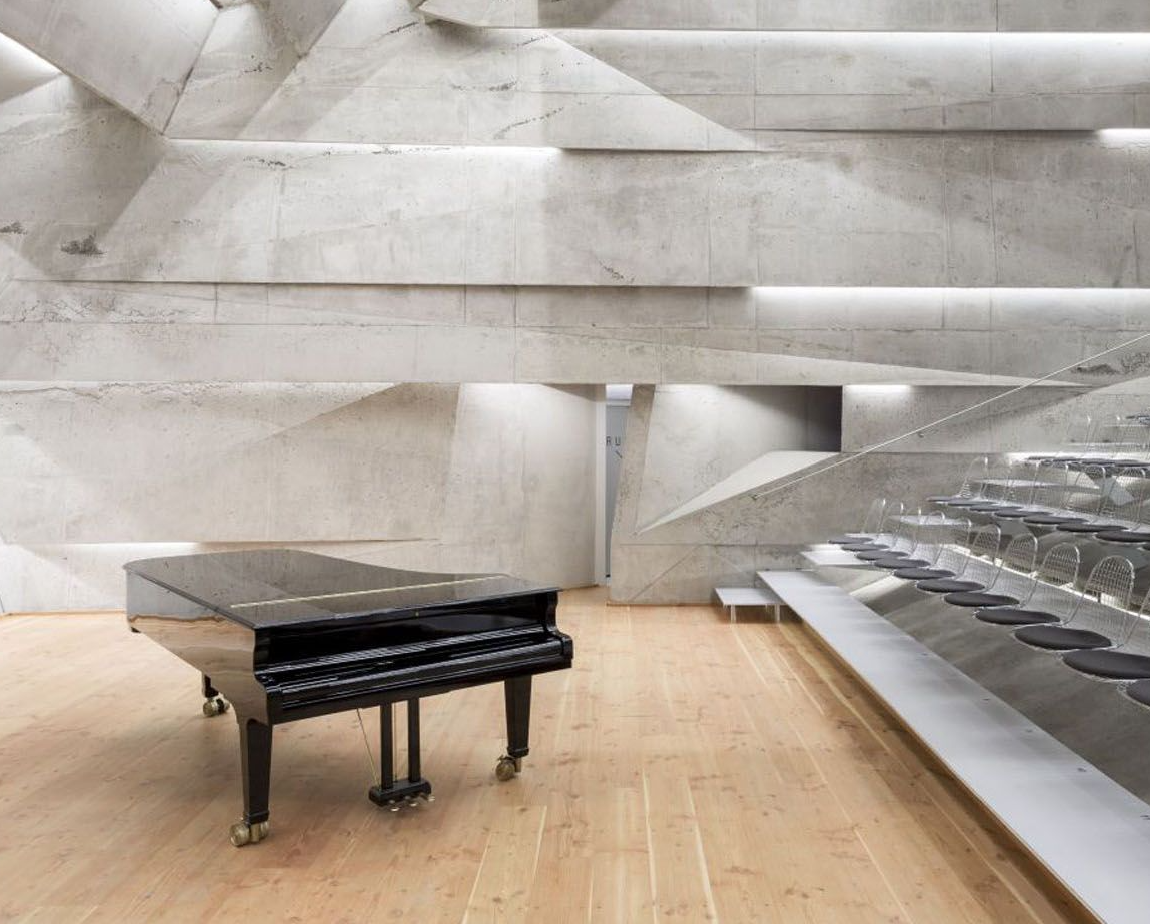
132. Sound and Architecture in Harmony
Unfrozen started as a blog in 2011, using for its title the quote from Johann Wo -
131. Chatting with Barbarians
Forgive them, for they know not what they do. We have already passed the point w -
130. Build or Die
In this episode, Unfrozen continues to focus on a topic of intense and contempor