



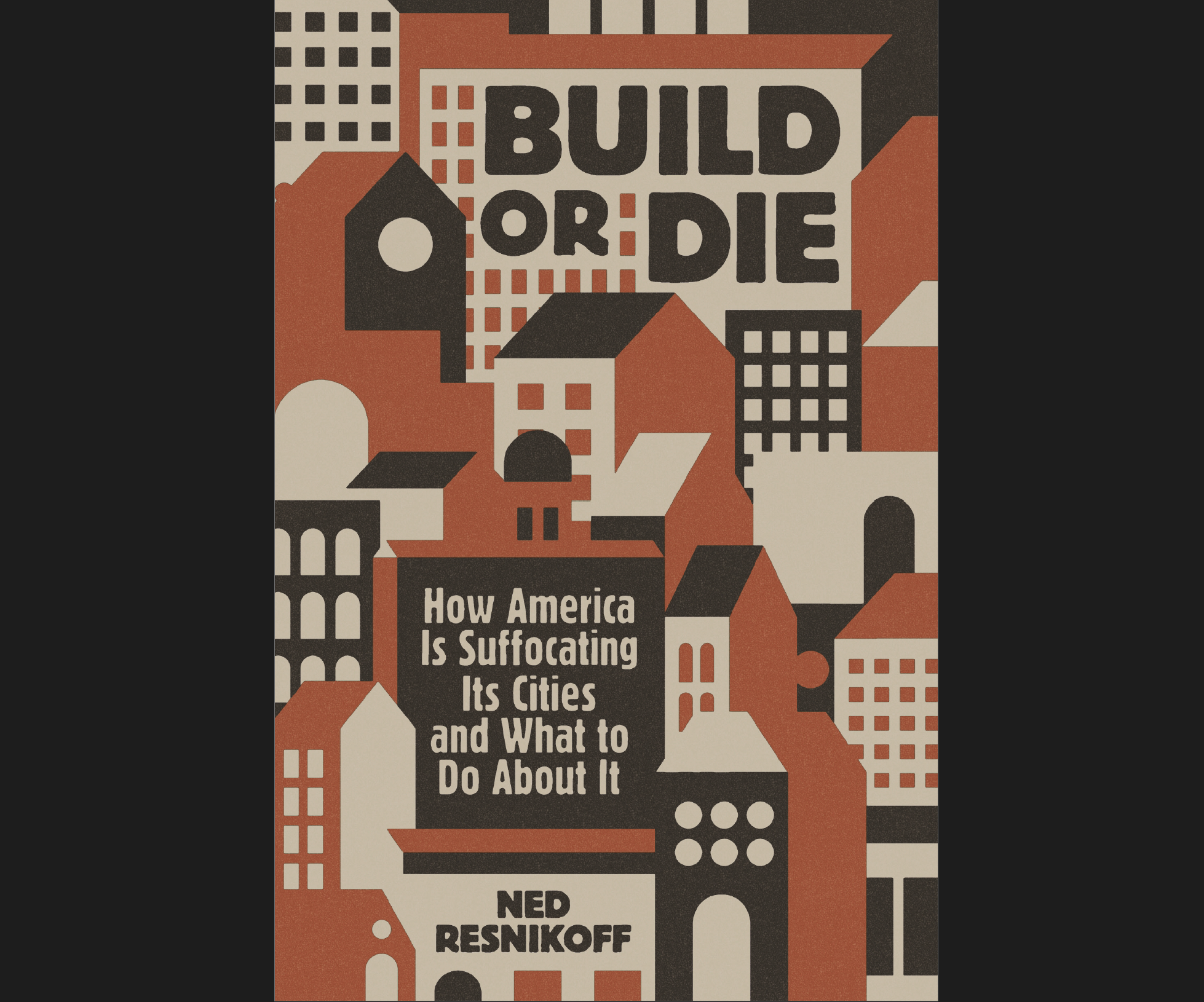
In this episode, Unfrozen continues to focus on a topic of intense and contemporary interest: America’s failure to build enough housing, especially in its most prosperous cities. Our guest is Ned Resnikoff, author of "Build Or Die: How America Is Suffocating Its Cities and What to Do About It," out from Island Press in December 2026. One of his answers? "More bureaucracy, less red tape." If that sounds counterintuitive, wait until you hear the rest.
Show Notes
Intro/Outro: “The Housebuilding Song,” by David Ferguson
--
Discussed:
People
Ned Resnikoff (guest) — Resnikoff Consulting · Public Comment newsletter
Greg Lindsay (co-host) — greglindsay.org
Dan Safarik (co-host) — LinkedIn
Christopher Cabaldon, California State Senator, former mayor of West Sacramento — Senate biography · Wikipedia
Gabriel (Gabe) Metcalf, Head of Planning, California Forever; former CEO of SPUR — California Forever profile · The Planning Report interview
Zohran Mamdani, Mayor of New York City — Office of the Mayor · Wikipedia
Marc Andreessen — a16z profile
Scott Wiener, author of SB 79 — sd11.senate.ca.gov
Organizations, companies, and government bodies
Ned Resnikoff Consulting — resnikoffconsulting.com
NYC Mayor's Office of Mass Engagement — establishing announcement
California Forever — californiaforever.com
SPUR (San Francisco Bay Area Planning and Urban Research Association) — spur.org
Blackstone — blackstone.com
Cornell Tech — tech.cornell.edu
Metro, Portland's regional government — oregonmetro.gov
Atlanta Regional Commission — atlantaregional.org
Town of Atherton, California — ci.atherton.ca.us
City of San Jose — sanjoseca.gov
County of Los Angeles — lacounty.gov
Legislation and policy programs
California SB 79, Abundant & Affordable Homes Near Transit Act — bill text · California YIMBY summary
Road to Housing Act — U.S. Senate Committee on Banking, Housing, and Urban Affairs
New York City "City of Yes" zoning reforms — NYC Department of City Planning
ULURP (Uniform Land Use Review Procedure) — NYC Planning overview
California Environmental Quality Act (CEQA) — Governor's Office of Land Use and Climate Innovation
Publications
Build or Die: How America Is Suffocating Its Cities and What to Do About It, by Ned Resnikoff (Princeton University Press, December 8, 2026) — publisher page
Emergent Tokyo: Designing the Spontaneous City, by Jorge Almazan, Joe McReynolds, Naoki Saito and Studiolab — Oro Editions (see Unfrozen 31, “Emergent Tokyo,” for more).
CRE Daily — credaily.com
Places and building typologies
Amerikamura district, Osaka (site of the zakkyo-building cocktail bar) — Osaka Info
Tokyo Metropolitan Government — metro.tokyo.lg.jp
City of Sacramento — cityofsacramento.gov
City of Austin, Texas — austintexas.gov
City of Portland, Oregon — portland.gov
Show Transcript
GL (00:04.408)
Hello and welcome to Unfrozen Episode 130, Build or Die. I'm your co host, Greg Lindsay.
Dan (00:11.146)
And I'm Dan Safaric. Our guest today is Ned Resnikov of Ned Resnikov Consulting, who has authored the book Build or Die. This book concerns America's seeming inability to build appropriate levels of housing, which is a topic that we have returned to often on this podcast with many angles.
GL (00:29.672)
Just including our last episode on Chain Drain here, as we talked about with Brian Bohrer here. So, why can't America build? It's an ongoing theme here at Unfrozen.
Dan (00:38.432)
Yes, and well Ned with your book coming out in December, you've done a lot of research on this topic. Maybe you can take us in at a high level great title by the way, very manifesto like.
GL (00:50.88)
Certainly the most metal the most metal title I think we've had of any book author on here, yeah.
Dan (00:55.197)
Indeed.
Ned Resnikoff (00:55.813)
Thank you. I I love the title. I did not come up with it. The the person who did come up with it is thanked profusely in the acknowledgements.
GL (01:05.742)
All right, well maybe that's where we start. So that's our choices, right? Build or die. Like please please lay it out here in terms of what we have as our binary option.
Ned Resnikoff (01:13.733)
Yeah, I mean that's basically it. is that that the end of the podcast? I mean, so yeah. No, so I mean the the argument that I'm making in the book is that we have the the crisis that America's quote unquote superstar cities are facing right now is is kind of the opposite of the one that they faced in the 20th century, where at the time you were looking at declining populations, declining tax base.
Dan (01:19.17)
Done, another one in the bag.
Ned Resnikoff (01:41.899)
white flight, a lot of derelict and abandoned buildings, no no resources to provide basic municipal services. and my argument is that today we're facing the opposite problem, where these cities are more prosperous than they've ever been, maybe more prosperous than any cities in the history of civilization. And
the the crisis we're running into is entirely a crisis of an inability to manage that prosperity effectively and to make sure that everyone who lives in these cities or everyone who might want to live in these cities is getting to to share in the in the enormous bounty. And so that's where the the build or die part comes in. We need to we need to build not just the housing but also the transportation infrastructure and the just the institutions
that will allow us to give everyone, not just in these cities, but everyone who experiences the sort of spillover benefits from the existence of these cities, a piece of the amazing wealth that has been created.
Dan (02:56.426)
And so what do you think are the primary vehicles to do that? Because obviously we've we've tried a lot of things. you know, we went through this whole phase of urban renewal, then there was a response to that, which was neighborhoodism, which was very resistant to these large scale type plans. And now we've kind of moved into something that's kind of a hybrid where it's kind of like, let capital do its thing, but capital really is not satisfying all the demand, particularly at the lower and middle end of the scale. what are some of the
What are some of the solutions that might shine out a little bit?
Ned Resnikoff (03:30.469)
Yeah, well I I talk about three overarching categories in the book. There's there's housing, there's transportation, and then there's municipal government governments. And the the the housing part is really broken up into two subcomponents. So on the one hand, we just need to build a lot more housing in places like New York, San Francisco, Los Angeles, other cities. I don't think that's a huge surprise to anyone listening to the podcast. but the other side of that is
where I think there's a a much larger role for direct state intervention. both in terms of designing the rules of the housing market in such a way that we're we're actually getting a lot of home building in in dense infill areas, but then also making sure that people who even in a a healthy housing market, and I'm talking about people making like 50 or below percent of area median income, making sure that
They're getting some sort of additional support that will allow them to get into decent housing. second plank is transportation. That can be summed up simply by breaking the city's addiction to cars, making it so that people who don't drive are no longer second-class citizens in any American city, that there are a variety of other options available. And and that's really important to support the housing piece of this, right? Because when you have a city that is built for cars,
you know, filled with interurban freeways and strodes and so on and so forth, it's really difficult to actually get the sort of healthy density that you need in order to make sure that that land area is being used efficiently. And then the last part is regional governance. And this is sort of the the foundation that supports the other parts of it. But the book includes some recommendations for boosting regional governance to make sure that we get around the collective action problem that makes it so that
NIMBY jurisdictions sitting alongside Yimbi jurisdictions can kind of freeload off of the solutions that are making metropolitan areas more functional without contributing anything to them. And then other recommendations around things like boosting administrative capacity, making sure that local governments and regional governments actually have the the staff, the resources, and the processes that will allow them to
Ned Resnikoff (05:51.459)
solve problems as they arise, build needed infrastructure relatively quickly and inexpensively, instead of just letting things get worse and worse over decades, which is what we've seen happen up until the present day.
GL (06:05.07)
I think the municipal governance piece is the naughty, so I want to come back to that. But but first one asks you, you know, over the last half decade or so, the 2020s here, starting around the pandemic stuff, we've seen various states and municipalities abolish things like parking minimums at sort of the intersection of the built environment and and mobility. And we've seen other promising areas, California passing a raft of housing bills, for example, in last few years. I I assume you're gonna take those as necessary, but far and woefully insufficient. But I am curious, like what are the success stories that you point to in the book or you see in the current landscape here?
with the Congressional Road to Housing Act, for example, as these are the green shoots that point to where we need to go with this.
Ned Resnikoff (06:42.618)
Yeah, I mean there's a lot that's happened so far that I would point to as promising and likely to lead to success down the road. but where there are other things where we actually ha can can see the results happening in real time right now. So on the former side of the ledger, I would put things like California's SB seventy nine, the transit oriented development bill that passed the legislature last year.
I would also place in that category some of the recent reforms that have happened in New York City, around the city of Yes, around the reform to their ULERP system. and in the in the latter side of the program, and and ULERPs are essentially like the ULERP reform, it refers to the the kind of community board guided permitting process in New York, which has been a real obstacle to building housing.
quickly and and where it needs to go. On the other side of the ledger, I would point to places like Sacramento and Austin, Texas, where you actually really are starting to see some significant changes in wet rent prices happening fairly rapidly. Those are also places where while they both have housing crises and and housing shortages, those are of a more recent vintage. So it's not like
San Francisco, which at this point has been an incredibly high cost city for decades. there are places that could kind of see what was on the horizon and stepped in early to counteract it. But you are seeing significant run reductions in Austin. I'm not sure what the exact number is now. And while the Sacramento case is a little bit undersung and hasn't been studied as intently, anecdotally I'm hearing the same thing that a lot of fairly new market rate housing in Sacramento is actually fairly cheap now.
people are seeing their rents go down. And I'm I'm pretty optimistic about the future of of both those cities.
Dan (08:44.256)
That's really interesting. especially, I mean, the Sacramento example, although one doesn't want to be too excited about creating a an affordable bedroom community that is even farther out from San Francisco than the current exerbs extend. but as of course it does have its own center of gravity with the state government, which is which is a source of employment. you know, it's interesting I think one of the more interesting aspects that you pursue here is the idea of a regional government, which
you know, areas like Portland and interestingly enough Atlanta have. what has pr prevented regional governments from forming in other cities? and you give as the as the the Bette Noir example of course is Los Angeles, which is a huge county but it has h you know, seventy odd municipalities and you know go extends up to hundreds if you include some of the collar counties there.
Ned Resnikoff (09:41.264)
Yeah, well, there are regional governments all over the United States. the problem is that a lot of them are either MPOs that were created essentially for the purpose of distributing federal highway money or are otherwise fairly toothless. The the councils of government, as we call them in in California, a lot of them are essentially sort of the League of Nations for all of the
little suburban towns and handful of large cities in a particular region. and and you know when when a little town like like Atherton gets the same vote as San Jose or San Francisco when it comes to setting regional priorities, you can see how how that doesn't really land you in a in a good place strategically. I mean the other issue is that these cogs have they can they play a role in
assigning housing production targets to local governments, but they don't really have any direct land use authority in those in those cities. And that's that's very different from the way it works in a a lot of the rest of the
Dan (10:53.778)
One of the most radical things that I think is suggested in the book is that we should move the touch point of public engagement from the project by project basis where inevitably the NIMBY's will have the loudest voice because it's you know, you're talking about a specific project that is adjacent to a group of people. And of course those people are gonna be the ones who turn up and say, I don't want this here.
And of course it's a subsection of those people, as you point out. It tends to be wealthier, white, older, you know generally speaking, they have they're homeowners and they have something to lose or they think they have something to lose. Whereas if you move to the touch point earlier in the process, i.e. when when the when the regional plans are being put together, like the plans that actually set forth the rules that some of these discretionary discussions in a sense
relitigate in practice, right? Because every time a project comes up it says, these are the rules and it's like, does this project meet the rules? And what you're saying is is that there should be fewer opportunities for public engagement, but broader earlier in the process. If have I got that right?
Ned Resnikoff (12:06.563)
Yeah, exactly. I mean, the way I see it, I I think there's a a tendency, a a common fallacy that democracy is the same thing as voting or community input. And so the more the more opportunities there are to vote, or the more potential veto points there are where you can exercise your authority, therefore the more democratic a system is. I think that's completely wrong. I think that a system is democratic.
when every everyone, as broad a swath of people as possible, have a legitimate voice in the process. And where the the feedback, the input they're providing is something that they can actually see reflected in public policy. And where the the government actually has the authority to carry out the the sort of interests of, you know, majority of the electorate and and also
know the capacity to to make sure that this directly answers to people's interests and their their needs. And so that's that's a big part of why I propose that really most of the input should be happening at the planning stage, be the regional planning stage, I say, because that's the that's the time when you have an opportunity to really be thoughtful about deliberately selecting a representative slice
Of all of the people who live in the region, not just putting up a public notice and waiting for who has the time and the resources to show up, but really saying we are going to intentionally try and seek out a representative cross-section of people. And then because you're talking about the region as a whole instead of an individual project.
There's there's an opportunity to really ask people to think hard about trade-offs. And I think a big part of the problem here is that a lot of these processes are not really deliberative enough. if you're just asking people to give a thumbs up or thumbs down on a new apartment building in their neighborhood, I think that's a a less democratic, less deliberative process than saying, okay, let's look at the region as a whole.
Ned Resnikoff (14:19.587)
Where do we want the housing to go? Where do we want the jobs to go? Et cetera.
GL (14:25.176)
So jumping in on that, I'm curious if you see interesting bodies like this that could help expand that conversation. Like in New York, Merriam Dani's newly created Office of Mass Engagement, for example. I I'm I'm working on a
Book related to sort of the uses of foresight, municipal governance. And I had a recent conversation with former West Sacramento mayor and now State Senator Christopher Cabaldon about this. And he made the point that like we should be using these kinds of foresight techniques to create, if not master plans, but like master visions. And we should reach some sort of agreement that if it conforms to the master vision of that, we do that, as opposed to literally voting on the diameter of pipes, which I did I which I thought he was exaggerating on, but no, he was not. but yeah, I'm curious if you've seen any sort of governance mechanisms that would allow the sort.
sort of like, you know, approve at the outset and then we don't get it mired down to the details where you know NIMBY's can particularly you know gum up the works.
Ned Resnikoff (15:14.361)
Yeah, there's been a lot of really interesting work on this. I think a lot of it so far has been fairly speculative, but I am aware of at least some local governments that have, for example, incorporated scientific polling methods into their feedback process instead of just kind of relying on people to volunteer to step forward and give their opinion. I think that's great. I think things like surveys are good. one thing that
I'm interested in seeing some experiments with is what if we treated providing public feedback on region wide plans or or you know region wide sort of strategic objectives, however you want to put it. what if we treated that like jury duty, where you get a representative but you know, like a geographically representative but random selection of people to sit in a room for a couple of weeks and deliberate with
regional planning professionals about the the future challenges facing the region and where resources need to go, with with everyone also having a kind of a clear idea of what the resource constraints are.
Dan (16:27.69)
Well it seems like it'd be far better to present this in a case where you are, you know, before the lawyers get involved, let's put it that way. Because th your mention of jury duty makes me think about your other major argument, which is that, you know, there's a difference between rule of law and rule of lawyers. And right now we're in a situation where, you know, things get so far down the pike that you're debating, you know, maybe it is the diameter of a pipe, but more often it's about
the incursion of this property into another property line and everything's being fought, you know, but entire huge projects are being tied up, because there's a there's a vested interest of the legal community to get involved. What do we do about that aspect?
Ned Resnikoff (17:11.33)
Yeah. I I have a funny anecdote to share about that, which is when before the before the primary in the California gubernatorial race, I went to the candidate housing forum and I ended up sitting next to an older gentleman who lived in an area of Berkeley that was about to be affected by SB seventy nine, the Transit Oriented Development Bill.
And there was already a new project being proposed there. He was opposed to it and he was telling me about his opposition and he said, you know, we're going to we need to we need to stop this, we need to sue. And I said to him, sue on what grounds? And his response, completely deadpan, was that's for the lawyers to figure out. And
That to me is is just completely emblematic of everything that is wrong with how we treat the intersection of the adversarial legal process and the housing production and planning process. One, because I don't think that these sorts of of essentially fishing expeditions should be going un unpenalized. I mean, I think there needs to be some
some rules that allow for you know, for example, local governments to recoup legal fees from just utterly frivolous lawsuits against them. But two, when you when you compare this to how it works in in a lot of other countries, particularly in Europe, it doesn't you don't have to treat planning like a a series of long drawn out adversarial proceedings.
You can actually have a a central node, like a like a planning office, that really treats this more like a more like a fact finding mission and tries to come up with a determination after everyone provides their provides their input and after they are able to really weigh the the costs and benefits of certain approaches. that to me is that to me is actual planning.
Ned Resnikoff (19:31.887)
And it's a much better way to do it than, for example, with the environmental quote unquote planning process in California, where so much of the burden to actually assess the environmental impacts and then come up with mitigation measures is on developers who are trying to avoid getting sued and get sued anyway. That does not lead to good sort of rational, serious assessments of the the costs and benefits.
Dan (20:03.266)
Yeah and near the end of the book there's a kind of a call to action about how how to get involved and and it and it ranges in scales as one would hope. It would, you know, people people have different capacities to take on these seemingly overwhelming problems. you know, one of them of course at the top of the scale is run for office, which exposes you to a lot of let's say, subterfuge. But there's obviously many smaller scales.
you know, I guess maybe you have I don't know, do you have anecdotal examples of how people have kind of joined and joined the call to action without, you know, running to office and exposing them s themselves to all this kind of ire from the general public, and the media as as is invited by all politicians of all stripes.
Ned Resnikoff (20:55.372)
Yeah, well, I mean the the Yimbi movement really started with people just taking time off from their lunch breaks or in the middle of the day to go to planning commission meetings and say, actually, I support building a new apartment building here. And that was an extremely powerful thing because these meetings are not often especially well attended. It's usually the usual suspects coming and saying the same thing over and over. So
If you show up and say, hey, I actually have a different perspective, and you keep showing up, you can actually make a real impact on how local politicians, local planning commissioners are assessing the political risks and political benefits of building more housing. I mean, I think there's a lot of things you can do, and and people are pretty creative about it. you know, there are people I know who have filed public records requests with their city to
look at some of the some of the behind the scenes deliberations that have gone into blocking housing or building new roads and and use that as a way to kind of publicly shame nimby officials a little bit. you can also just go and talk to your neighbors. I think there's a lot of good work that's been done. I just just just from having things like picnics and
Barbecues and happy hours where people can get together and and discuss these issues. You know, one of the things I really want to emphasize in that chapter and just in my work overall is that for any political movement, conviviality and sociality and just and just fun are really underrated virtues. Like if you if you want to build a a sustainable constituency,
People need to have a reason for showing up other than feeling just like a sense of obligation.
Dan (23:01.194)
Interesting. Yeah, I mean, I do know of somebody who actually takes that advice. actually I'm his boss, so you know and I didn't tell him to do it. But he goes around and he goes to planning meetings and he says, you know, you guys are really not thinking about high density the right way. You know, you have you have this mindset where it's always just about your ex imported suburban lifestyle where everybody has, you know, one point five to two cars per unit and so all of your discussions are about how much parking
is going to be taken up. And it's just you have to really work on these people to make them see how crazy that is in in a developed inner city environment. But that's what we've imported. You know, we've we've taken the suburban lifestyle and we've put it in boxes that are stacked, but otherwise we haven't changed anything about the way that we design. and just that's a that's a one by one battle to strike, but
GL (23:57.817)
I just want to ask since we got so deep in the weeds here on like basically sort of community engagement, your thoughts on sort of how digital technology plays into this.
I was at Cornell Tech when ChatGPT dropped in November 2022. And the first thing we sat around thinking about was how it would be weaponized to basically produce massive environmental review commentary to gum up the works. And sure enough, we've seen reports of this one. There is another, I forget his name, I met this summer here in Montreal at a digital transformation conference aimed to governments. the former interim, I think CIO of the CDC, he had a wild ride here with the current administration, but now he has a startup that is aiming to actually capture
The sort of Zoom meetings of community meetings transcribe it and start doing like AI sentiment analysis to see like, you know, the next anti-data center trends arise. I'm curious your thoughts on like how these kinds of like what happens if we start wiring together these things at scale or or various techniques of technology are used to apply to either hopefully break the logjam in community meetings or potentially weaponize to further fight it.
Ned Resnikoff (24:59.755)
Yeah, I mean I think there's a lot of potential upside and downside with these tools, as as within so many other realms. I mean I think when it comes to doing sentiment analysis on community meetings, I think there's a there's a danger that
As as those conversations get smoothed out and summarized, that you're you're losing the the lone dissenting voices in the sea of people who are showing up to say that they don't want something built in their backyard. But I mean there there are advantages to some of this stuff too. And and one of the interesting experiments I think people are starting to talk about is how do we use AI as part of the permitting process to actually speed up awarding permits for new construction.
I think anything that helps just reduce the amount of of red tape so that for example, I mean it's something as simple as when when you're building affordable housing and you're trying to draw in different public funding streams. Something as simple as just having a a single application that allows you to apply for all of these different things simultaneously.
instead of having to fill out, you know, five to ten different incredibly detailed applications. That's the kind of thing that can drop costs and save time for affordable housing developers to a to a non-trivial degree. And I think some of these AI tools might give us an opportunity to start to to patch up those systems and make them work a little bit more efficiently. But I again the I think the the danger from them and especially the danger of just
being able to inundate new projects or local planning departments with you know slop legal filings and slop public comments like that's also a considerable risk.
GL (26:58.902)
It. All And pivoting, the other, my other pet obsession at the moment here. you know, one of the things about the Road to Housing Act that sort of gummed it up here and threatened its passage was some of the provisions there around institutional investors acquiring homes and particularly single-family rentals and built-to-rent. that legislation seems to have settled the issue. But I'm curious where you stand on that one too, because like it is kind of thing where, you know, for better or for worse, homeownership is the ways Americans accumulate wealth because of the various tax advantages and 30-year mortgages. And yeah, and now I was I have a piece right in front.
Front of here, that we've had this conversation here in CRE Daily here about how it's spurred institutional shift towards build-to-rent, where instead of having facing caps on acquiring existing homes, now it it's arguing we're gonna see a sort of supercharged build-to-rent mass communities here. I'm curious where that sort of falls in sort of policy desirability from your perspective. Like it's one way to build homes, but also do we want Blackstone to capture that ongoing rise in home prices, or can it be used as part of a way to basically create a sort of, I don't know, to pull back some.
Ned Resnikoff (28:03.818)
Yeah, I think there are two separate questions here when it comes to the bill to rent stuff. One is about the desirability of having more single family rental opportunities in some single family neighborhoods. And then the other one is about who is actually building and renting those those properties.
And on on the former question, I would say actually from a fair housing perspective, build to rent is very much a good thing because it allows households that probably couldn't afford a down payment, couldn't afford to buy a home in a particular neighborhood to to still have access to that neighborhood. on the other question about whether it's necessarily Blackstone or these other large institutional investors that we want doing it,
You know, I've I've seen some evidence that large large corporate landlords like that are are less responsive when it comes to things like keeping keeping the buildings in shape, having adequate maintenance. I I think there are there are trade-offs though, because like there's also but who el who has the capacity to actually build at scale right now? so I and and also I mean, you know, speaking from
Personal experience and also just from what a lot of people I I know have experienced, you know, small landlords can also be pretty negligent or abusive. it's it's not just the big corporate Goliaths that are often bad landlords. so I mean the way I think about it is do we want these gigantic oligopolistic firms being like the the sort of mega landlords?
No, probably not. Is direct regulation limiting their ability to build housing or or acquire single family housing going to lead us to the results we want? I'm I'm a little skeptical. To me, the way to approach this is to think about what makes an apartment building or a single family home such a desirable asset for one of these REITs in the first place?
Ned Resnikoff (30:20.082)
And what makes it a desirable asset is that it is an asset that the value of is just shooting through the roof year over year because it's scarce. And so to me, it's it's more about okay, how do we how do we prize open these markets so that smaller scrapier developers and smaller landlords are also able to you know, on in the former case, build the housing and the latter case rent the housing.
so that you don't have essentially a a captured market.
Dan (30:57.58)
Speaking of smaller and scrappier, one of the other anecdotes that I really enjoyed reading in the book was about there's kind of a dissection of some small artisans who practice in places like Tokyo. And why doing that in such a massive city?
Where you'd think the real estate pressures would be so intense that there would be no room for small practitioners. In fact, it's the opposite because of a number of things, but including oddly enough, the l superscale regional government, but the very small scale streets and the very small scale lots and the relative lack of permitting red tape that's involved in getting commercial space. I mean, what kinds of what kind of lessons can we take from a place like
Tokyo and where do you see examples of that happening in the US, i if any, and and what kind of obstacles would have to be overcome in order to to get there?
Ned Resnikoff (31:57.771)
Yeah, I mean I think there are a couple of lessons that we can take from Tokyo and Japanese cities in general. the first one is that urban density and urban agglomeration allows for the sort of market differentiation that allows craftspeople to pursue small niche sort of passion disciplines. You know, it's a lot it's a lot harder to
make a living, you know, doing like handcrafted sort of weird, funky clothing that suits your personal taste and maybe the tastes of a a subculture of people in a in a suburb where you're you just don't have access to that much of a a potential customer base. It's it's a lot easier to do it in a city like Tokyo where there are millions and millions of people. So just
Odds are, even if it's a small percentage of the population in absolute numbers, there's a a lot of people from that subculture in the city. So I think density, sort of supporting thriving niche arts and crafts cultures is one thing. I think the other thing is that Tokyo and other Japanese cities make very efficient use of land, both because they build tall, but also because they allow for
smaller you know smaller lot sizes and commercial properties on those lots that take up less floor space. so I think I mentioned Zakyo buildings in in the in the book. These are you know narrow mid-sized towers maybe like five to to seven stories tall.
On small lots where each floor is a separate business establishment. And one of the one of the best cocktail bars, maybe the best cocktail bar I've ever been to in my entire life, was in this narrow little Zakyo building in the America Murray district of Osaka, where the the bar probably had a total seating capacity of like eight people. And it had it had two staff there. There was like no kitchen or anything.
Ned Resnikoff (34:17.565)
It was just this this small space where two guys were making like the best martinis and old fashions that that you've ever had in your entire life. something like that was able to exist, both because they did not need to purchase very much square footage in order to start something up, but two, the per square foot cost was lower because of the fact that
such efficient use is being made of all of the the square footage and all of the land area in Osaka. So y i i it you know you're you're when you're looking for a place to to situate your business you have so many different options. there are obviously thriving craft cultures in some parts of the in many parts of the United States. I think unfortunately a lot of local industries like that are getting priced out
You know, I've I was just talking to someone recently about what's happened to the to the restaurant scene in San Francisco for over the past 20 years, for example. I think I think Portland, Oregon is probably one example of a city that has really kind of held on to that kind of craft culture, although the, you know, prices have been going up there as well. But I think what you can see from Tokyo is that there's no inherent trade-off between
having a mega city and also having those sort of modest niche businesses and in fact those two things can mutually support one another.
Dan (35:49.407)
That's an area that we've explored extensively in episodes such as Emergent Tokyo, which is a just a great book if you've ever seen that. it looks at those typologies in like surgical sections and explains exactly how they work. So it was it was fun to read a different take on that same phenomenon and how it could be applied elsewhere.
Ned Resnikoff (36:00.789)
Mm-hmm.
Ned Resnikoff (36:09.449)
Yeah, and I I relied on that book pretty heavily in writing that chapter.
GL (36:13.684)
all so to take that and then flip it around to be as perverse as possible, Ned. I'm curious if your, particularly in a California context, your thoughts on projects like California Forever. The master plan would-be community out there. I'm sure you're familiar with I I I spoke with Gabe Metcalf, formerly at Spur, who joined that project as its sort of master planner of it, arguing that we need to build, in addition to densifying California cities, there need to be master plan communities. And there are many, many projects around the world like this. I'm curious your thoughts on that particular project and
Or yeah, the idea of if we cannot build in our politically l like, you know, jammed up environments, should we be trying to do large-scale assemblage and building new cities out in the fringes? I I think we're all in a great area where think this should go, but I would love to hear your thoughts on it.
Ned Resnikoff (37:00.009)
Yeah, well I'll I'll just say I I love Gabe, but we disagree pretty intensely about this this one project. I have I have a few concerns about it. One is well, I think some sort of greenfield development in order to get the amount of housing we need is probably necessary. I think we need to be judicious about where and how we do it. And so I would much rather see building building up.
Around existing suburban and exurban areas. you know, in both in part because those are areas where we already know there are some jobs and businesses. So you're not putting people far out away from any sort of existing infrastructure. the the VMT aspect of it, vehicle miles traveled, is also really important to me, making sure that we're able to
get people to the sort of central city in that metropolitan area, using if if there is not existing transit infrastructure, then then at least having it in an area where it's possible to build out some sort of transit link that people will use fairly reliably. And then you know the other part of it to me is a is a political dimension where I think who actually owns the city where you live is important. And
I have I have some real doubts about how democratic a community like California Forever would actually be, given that it's being built with major investments from people like Mark Andreessen, who I think has been supportive of a number of different kind of utopian sort of right leaning and orientation city building projects around the world.
I just I I I don't have much confidence that what you're going to end up with is a city where people actually have some sort of some sort of stake in the i in the functioning of the the region as a whole. and you know, I'll I'll just say one other thing, which is I think that some of these city building projects are
Ned Resnikoff (39:20.807)
In attempt to do an end run around politics, the sort of slow boring of hard bulls that co goes into land use reform in existing cities. And I actually don't think that there's any escape hatch from it, because it's not like you're going to create a substitute to San Francisco. You at the end of the day, you you still need to figure out how to make San Francisco work as a city, because California Forever is not going to become the new center of gravity for the region. It's just not.
Dan (39:50.785)
Yeah, this is a case where the the the commercial and preferential realities do collide with even the the most extreme ambitions of some very wealthy people. yeah, the the agglomeration effect cannot be defeated in that kind of scenario. I'm wondering if you know, all I d I do like the idea that that your your book while while rightfully taking
and you know, taking aim at the massive inefficiencies of the way that government is organized, it is not an anti government book by any means. And in fact you've argued in some cases that, you know, w as a country we are way understaffed in terms of
civ civic employees of all kinds. and I think I'm not exactly sure how you count them, but that includes not just people in the planning community, but police, you know, people who are responsible for maintaining the order and integrity of of cities. and it's something like I think you said in Finland it was something like ninety nine per one thousand people and and in the US it's like
ten or fifteen, depending on what city we're talking about. can you talk a little bit about that? What's that?
Ned Resnikoff (41:03.144)
Yeah, I d I don't remember the exact numbers. Yeah, and I I said I don't remember the exact numbers and I also want to be a little bit cautious because I am comparing two different data sources using different collection methodologies there. So it's not exactly like to like. But I I think it is true that the Scandinavian countries in particular, the the Nordic countries, and much of Western Europe in general, they there's
Dan (41:17.345)
Okay.
Ned Resnikoff (41:32.179)
much larger and much more empowered civil service administrations at every level of government, local, state or regional and and national. And I think that's I think that's really important for just making sure that we are providing basic public services in an effective, kind of muscular way that the government is responding to to problems as they as they emerge.
that it's actually able to kind of answer to the to the concerns of the people who live in these places. and I think it's also important for democracy because if for example you know to to pick an example from from California, if you vote for a multi-billion dollar housing bond to build new affordable housing
Then you, as the voter, deserve some sort of assurance that that program is going to be ministered effectively, efficiently, and that the housing is going to get bill at both a reasonably high quality and a reasonably low cost. And because we don't have the planning infrastructure, the sort of financial analyst infrastructure, any of those civil service jobs that are are really key to fulfilling those sorts of functions, we end up
farming it out to consulting firms or nonprofits that often are also not especially efficient or equ well equipped at doing these sorts of things. and and the entire the entire project just suffers. And so I think you know in in in a lot of cases people treat questions of public administration like there's this sort of
binary between more bureaucracy, less bureaucracy, more red tape, less red tape. I would say we actually need more bureaucracy and less red tape. And what I mean by that is that we need an empowered, effective, competent, well compensated civil service that operates obviously under under some constraints and and s oversight, but also has the autonomy and the resources
Ned Resnikoff (43:53.684)
To respond decisively and effectively to problems and emerging circumstances.
Dan (44:02.442)
Well thank you for those clarifications because they may seem contradictory to many people who are used to hearing certain kinds of rhetoric. so again I want to thank you very much, Ned, for joining us today. This is Ned Reznikov, he's the author of Build or Die, a kind of manifesto about how Mer America can get back on track in building housing for its population. And the book's coming out in December, so keep an eye out for it. Thanks a lot, Ned.
Ned Resnikoff (44:29.31)
Yeah, now available for pre order on bookshop dot org.
Listen On
Also In Season 6
-

132. Sound and Architecture in Harmony
Unfrozen started as a blog in 2011, using for its title the quote from Johann Wo -

131. Chatting with Barbarians
Forgive them, for they know not what they do. We have already passed the point w -
129. Chain Drain
The AECO (architecture / engineering / construction / operation) supply chain is